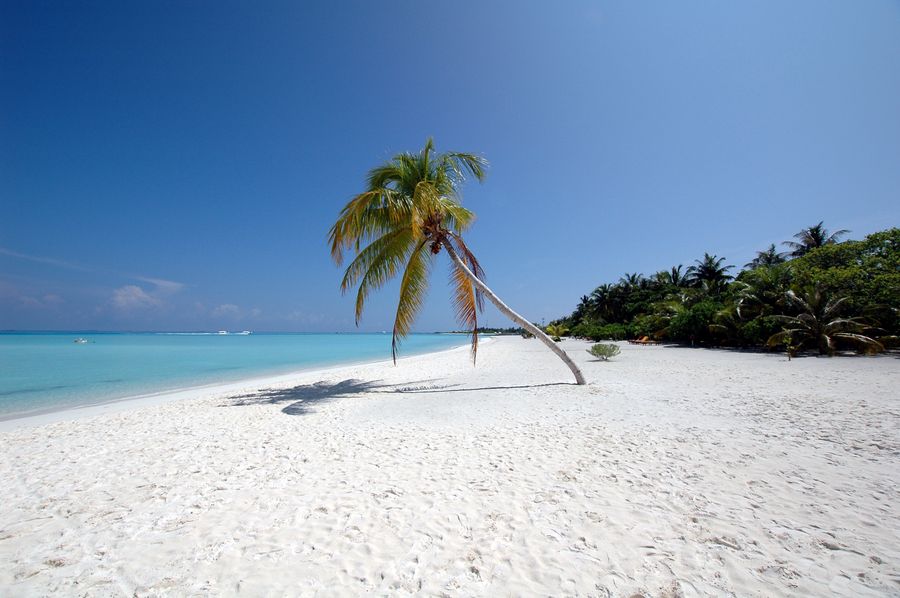
Dhivehi is the national language of the Maldives and is spoken on inhabited islands throughout the atolls. It has its own script, Thaana, which runs right to left and is used on signs, ferry boards and official documents. English is widely used in tourism and education.
01
The language of the islands
Dhivehi is the national language of the Maldives. It is spoken on inhabited islands from the northern atolls to Addu, and it is the language of government, schools and everyday conversation. The number of speakers is not large, but the language is used across a wide stretch of ocean, and it holds the islands together as a single speech community.
The form of Dhivehi spoken varies from atoll to atoll, and islanders can often tell where someone comes from by their speech. The differences are mostly in vocabulary and pronunciation, though the detail of how far one dialect reaches into another is a matter for linguists rather than a settled map. The written language is more standardised than the spoken forms, which is useful for anyone learning to read.
- National language: Dhivehi is used in government, education and daily life.
- Regional variation: Speech differs between atolls, mostly in vocabulary and accent.
- English: Widely used in tourism and education, especially on resort islands.
02
Thaana, the right-to-left script
Thaana is the script used to write Dhivehi. It is written from right to left, the opposite direction to English. The letters are based partly on Arabic numerals and partly on local forms, which gives the script its distinctive look. Vowel signs are placed above and below the consonants, so a single word can carry marks on both sides of the line.
The script is used on island signs, ferry boards, mosque inscriptions and official documents. Learning to read it takes time, but the alphabet is not large. Many visitors notice the right-to-left layout on signs before they know anything else about the language, and the vowel marks above and below are the next thing to catch the eye.

03
Words from many shores
Dhivehi has borrowed words from several languages over the centuries. Arabic and Persian influence is present, as are words from Portuguese, Dutch and English. The mix reflects the islands' position on old trade routes across the Indian Ocean, where ships from several directions passed and sometimes stayed.
The specifics of which word came from where are a matter for linguists, and the picture is not always clear. What is certain is that the language has absorbed outside terms while keeping its own grammar and script. English words continue to enter everyday speech, particularly in tourism and technology, and younger speakers move between the two languages easily.
04
English in daily life
English is widely used in the Maldives, especially in tourism and education. Resort staff usually speak English, and signage at Velana International Airport and in Malé is often bilingual. On local islands, English is common among younger people and those working in guesthouses, and it is the language most visitors will manage with.
That said, Dhivehi remains the everyday language of the islands. A few words of Dhivehi are appreciated, and learning to recognise the script helps when reading signs or ferry timetables. Guesthouses can usually help with pronunciation, and staff are used to explaining the difference between the written and spoken forms.
05
Learning a few basics
Visitors do not need Dhivehi to travel in the Maldives, but a handful of words can be useful. Greetings, thanks and simple questions are worth learning, and they are usually received warmly on local islands. The script is harder to pick up quickly, but recognising a few letters helps with signs and place names.
Language classes are not common for visitors, but guesthouses on local islands may offer informal help. Books and online resources exist for those who want to study Thaana seriously. The right-to-left direction is the first thing to get used to, and the vowel signs above and below the consonants take longer to read fluently.
06
Where you will see Thaana
Thaana appears on official signs, mosque plaques, school noticeboards and ferry timetables. In Malé, shop signs often combine Dhivehi and English, and the two scripts sit side by side on the same board. On local islands, the script is part of everyday life, from harbour notices to the names of streets.
The script is also used in printed books and newspapers, though English-language media is common in tourist areas. Seeing Thaana in place is the easiest way to appreciate its right-to-left layout and the vowel signs that sit above and below the consonants. A walk through a local island harbour will show more of it than any guidebook.

FAQ
Questions people ask
What is the Thaana script and how is it written?+
Thaana is the script used to write Dhivehi, the national language of the Maldives. It is written from right to left, unlike English. The letters are based partly on Arabic numerals and partly on local forms, and vowel signs are placed above and below the consonants. It appears on signs, ferry boards and official documents.
Is Dhivehi spoken differently on different atolls?+
Yes, Dhivehi varies from atoll to atoll, mostly in vocabulary and pronunciation. Islanders can often tell where someone comes from by their speech. The written language is more standardised than the spoken forms, which helps with reading. The exact reach of each regional form is a matter for linguists rather than a settled map.
Do people in the Maldives speak English?+
English is widely used in tourism and education. Resort staff usually speak English, and signage at the airport and in Malé is often bilingual. On local islands, English is common among younger people and those working in guesthouses. Dhivehi remains the everyday language of the islands.
Where did Dhivehi loanwords come from?+
Dhivehi has borrowed words from Arabic, Persian, Portuguese, Dutch and English over the centuries. The mix reflects the islands' position on old Indian Ocean trade routes. The exact origin of individual words is a matter for linguists, and the picture is not always clear. English words continue to enter everyday speech.
Can visitors learn to read Thaana quickly?+
Thaana takes time to learn, but the alphabet is not large. The right-to-left direction is the first thing to get used to. Vowel signs above and below the consonants add complexity. Books and online resources exist for serious study, and recognising a few letters helps with signs and ferry timetables.
Is Dhivehi used on resort islands?+
Dhivehi is the national language and is spoken on resort islands, but English dominates in tourism settings. Resort staff usually speak English with guests. Behind the scenes, Dhivehi is the everyday language among Maldivian staff. Guests may hear it in conversation and see it on official signs.
What does the Thaana script look like?+
Thaana has a distinctive appearance, with letters derived from Arabic numerals and local forms. It runs right to left, and vowel signs sit above and below the consonants. The script is used on mosque plaques, school noticeboards and harbour notices. Visitors often notice the right-to-left layout on signs before anything else.
How is Dhivehi written in official documents?+
Official documents in the Maldives use Thaana, written right to left. Government notices, ferry timetables and school materials are in Dhivehi. English translations may appear alongside in tourist areas. The written language is more standardised than spoken forms, which helps with official use.
Are there resources for learning Dhivehi before a trip?+
Resources for learning Dhivehi exist, including books and online materials. Guesthouses on local islands may offer informal help with greetings and pronunciation. Learning a few words is useful, but visitors do not need the language to travel. The script is harder to pick up quickly, though recognising letters helps with signs.