01
You book a room at the live rate
The price on the page is the live rate for the dates you picked. Nothing is added to it for carbon.
Sequence
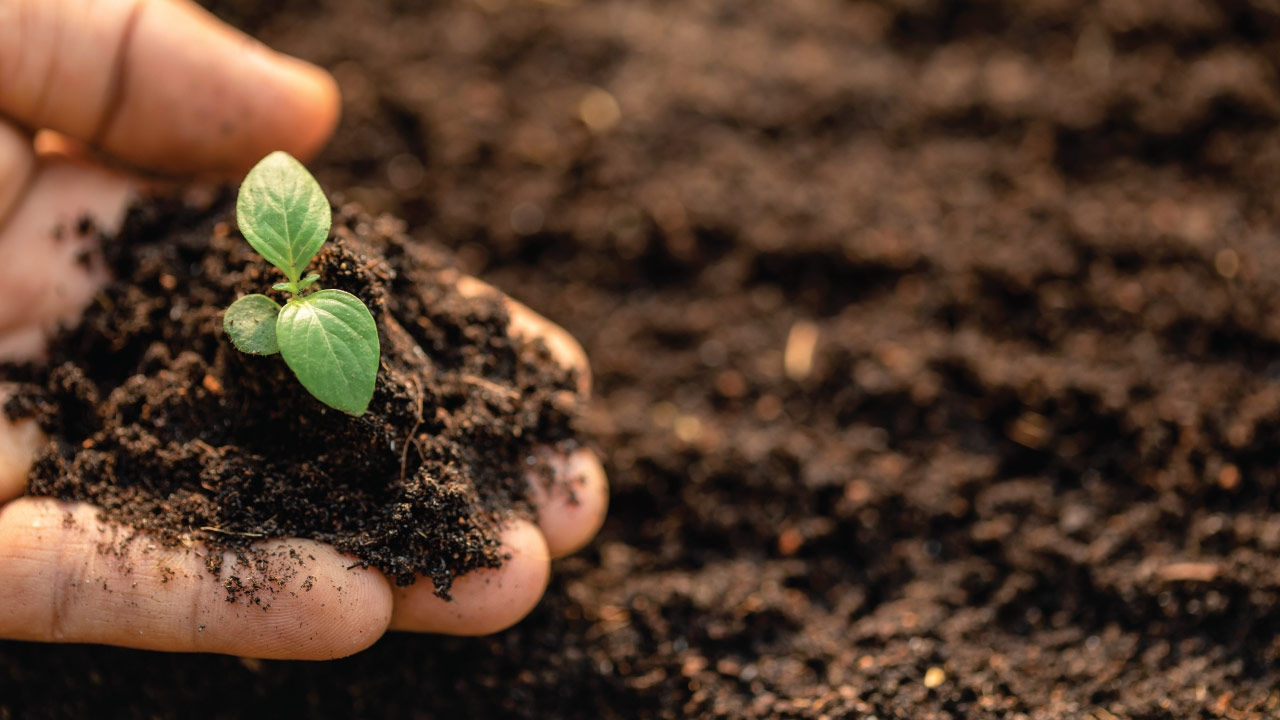
Four steps, in this order. Nothing in them is optional, nothing is added at checkout, and none of it needs anything from you beyond the booking itself.
The tonne is not an average spread across a year and not a block bought in bulk at the end of one. It is funded booking by booking, and the credit is verified before it counts.
01
The price on the page is the live rate for the dates you picked. Nothing is added to it for carbon.
02
Every single booking funds one tonne, whichever IMPT site it was made from.
03
The tonne is matched to a registered climate project and retired there, so the same tonne cannot be counted twice.
04
What was offset is attached to that journey rather than to a year-end total.
That is the whole mechanism. One booking, one live price, one tonne, reported back against the trip it belongs to.
Climate context
The Maldives is among the lowest-lying countries on Earth. Its average elevation is commonly cited as about 1 to 1.5 metres above sea level. That proximity to the ocean shapes almost every environmental question in the country, from coastal flooding to the health of the reefs that surround the islands. Carbon emissions are not an abstract concern here: they contribute to the warming and sea-level rise that these islands face directly, and the country's future is closely tied to how quickly global emissions fall.
IPCC assessments identify low-lying small island states and atolls as among the places most exposed to sea-level rise, storm surges and coastal flooding. The Maldives government has long raised sea-level rise in international climate talks, making the case that island nations face serious risks from a problem they did little to create. That diplomatic voice has been consistent over many years, even as the scientific picture has become clearer and the need for adaptation has grown more urgent.
Coral reefs are the country's first line of defence. Mass coral bleaching events hit Maldivian reefs in 1998 and 2016, and reefs were affected again during the global bleaching event of 2024. The extent of damage varied from place to place, and some reefs recovered better than others. Corals bleach when sea temperatures stay above normal for weeks; they can recover if the heat eases, and recovery depends on water quality and herbivorous fish. Healthy reefs break waves before they reach the shore and supply the sand that builds and maintains the islands.
The link between carbon and the Maldives is therefore both global and local. Global emissions drive the warming that stresses reefs and raises seas, while local pressures such as poor water quality and overfishing can weaken the ability of reefs to bounce back. Understanding this connection is the first step for any traveller who wants to visit with care, and it helps explain why the country's climate diplomacy is so persistent.
Coastal habitats
Seagrass meadows and mangroves are 'blue carbon' habitats: they store carbon in their sediments and roots. In the Maldives, these habitats are part of the coastal fabric, though they are often less visible than the coral reefs that draw most attention. Laamu Atoll has extensive seagrass meadows, the size of which is not precisely mapped in every location. Seagrass also shelters juvenile fish and feeds turtles, making it important for both biodiversity and local fisheries.
Mangroves and wetlands occur on several islands, for example around Huraa (North Malé Atoll), on Kulhudhuffushi (Haa Dhaalu), in the protected wetland on Hithadhoo (Addu Atoll) and in the wetlands of Fuvahmulah. These areas hold carbon in waterlogged soils and provide nursery habitat for fish and birds. They also buffer the coast against erosion and storm surge, functions that become more valuable as sea levels rise. Some of these sites are formally protected, while others remain vulnerable to development pressure.
The health of blue carbon habitats is closely tied to reef health. Reefs break waves and supply sand that builds and maintains the islands, and the sheltered conditions they create allow seagrass and mangroves to thrive. When reefs are degraded, coastal erosion can increase, threatening the very habitats that store carbon. Conversely, healthy seagrass and mangrove systems can trap sediment and support reef water quality, creating a mutually reinforcing relationship between different coastal ecosystems.
For visitors, these habitats offer a different way to experience the Maldives, away from the beach and the reef edge. A walk through a mangrove wetland or a snorkel over a seagrass meadow reveals a quieter side of island ecology. Understanding their role in carbon storage and coastal protection adds context to the country's climate story, and it highlights why conservation efforts extend beyond coral reefs alone.
Travel emissions
For a typical Maldives holiday the long-haul flight to Velana is usually by far the largest part of the trip's carbon footprint. This is a simple consequence of distance: most visitors arrive from Europe, Asia or other far-off regions, and the flight dominates the emissions total. Seaplanes, domestic flights and speedboats add fuel use for the last leg, though their contribution is generally smaller than the international journey. No precise figures are given here because they vary widely by route and aircraft.
The pattern is common to many long-haul destinations, but it is worth stating plainly because it shapes how travellers can reduce their impact. Choosing a closer origin, combining trips rather than taking several short ones, and staying longer in one place can all lower the emissions associated with a holiday. Within the Maldives, the choice of transfer method matters: a speedboat to a nearby atoll uses less fuel per passenger than a seaplane to a distant one, though the best choice depends on the trip.
It is also important to recognise that the last leg is not trivial. Seaplanes and domestic flights are energy-intensive, and speedboats consume fuel too. Reducing the number of separate transfers, or choosing an island within speedboat range when it fits the itinerary, can make a measurable difference. These are general principles rather than rules, and the right balance will depend on time, budget and the experience a traveller seeks.
Understanding the footprint is not about guilt. It is about making informed choices where they are available, and about recognising that the largest share of emissions comes from the journey to the country rather than from activities on the islands. That knowledge can help travellers plan trips that are both rewarding and more considerate of the environment that makes the Maldives special.
Practical steps
Ways to lower the footprint in general terms include fewer separate transfers, staying longer rather than taking several short trips, combining islands within one atoll, choosing a speedboat-range atoll when it fits the trip, and local-island stays that use public ferries. The best choice depends on the trip. These options are not about deprivation; they often lead to a more relaxed and immersive holiday, with less time in transit and more time enjoying the islands.
Reef-safe habits are equally important. Use mineral sunscreen and a rash guard, keep fins away from coral, never stand on the reef, take nothing, and do not feed fish. These simple practices reduce direct damage to the reefs that protect the islands and support marine life. Sun protection and heat management are part of the same picture, since comfortable travellers are more likely to respect the environment around them.
Plastic is another area where individual choices add up. Refill a bottle where filtered water is offered; many resorts and guesthouses offer this, though it is worth checking in advance. Carry rubbish back from sandbanks and boat trips, and avoid single-use plastic where possible. These actions reduce the waste stream that can end up on reefs and beaches, and they signal to hosts that visitors care about the places they visit.
Finally, IMPT's official mechanism is straightforward: every hotel booking made through IMPT funds one tonne of verified CO2 offset, retired against a registered climate project, included in the price. This does not remove the emissions of a trip, and it does not replace the need to reduce them where possible. It is one component of a broader approach that includes thoughtful trip planning, respect for reefs and coastal habitats, and a willingness to learn about the country's climate challenges.
Vouchers
You do not have to book a room to fund a tonne. Both vouchers live in the IMPT app.
The register
The credits are retired against registered climate projects: biogas and biomass on farms, forest restoration and REDD+, wind, solar, hydro and bio-based construction. The list below is read straight from the IMPT project register.
Descriptions come from the register itself and are published in English. The 18 shown here are spread across the register's countries; the rest are in the app.
By category
40 projects across 10 countries
See all projects on IMPTQuestions
Registering takes about a minute and does not commit you to a booking.
Create an IMPT accountYes. It is funded by the booking itself, so there is nothing to add at checkout and nothing extra to pay.
One tonne of verified CO₂, on every single booking, whichever IMPT site the booking was made from.
Registered climate projects across several categories, sustainable agriculture, forest restoration, wind, solar and eco-construction among them. The current register is listed on this page.
Yes. The Carbon Credit Voucher is delivered instantly by email and does not depend on a stay.
The account keeps your bookings and the offsets that came with them in one place, whichever IMPT site you booked from.
The Maldives is among the lowest-lying countries on Earth, with an average elevation commonly cited as about 1 to 1.5 metres above sea level. The IPCC identifies low-lying small island states and atolls as among the places most exposed to sea-level rise, storm surges and coastal flooding. This makes even small changes in sea level significant for the country's islands and communities.
Corals bleach when sea temperatures stay above normal for weeks. Mass bleaching events hit Maldivian reefs in 1998 and 2016, and reefs were affected again during the global bleaching event of 2024. The extent varied, and recovery depends on whether the heat eases, as well as on water quality and the presence of herbivorous fish that help keep reefs clean.
Healthy reefs break waves before they reach the shore and supply the sand that builds and maintains the islands. This natural defence reduces coastal erosion and storm damage, and it creates the sheltered conditions in which seagrass and mangroves can grow. When reefs are degraded, the islands lose an important buffer against the sea.
Blue carbon refers to carbon stored in coastal habitats such as seagrass meadows and mangroves, which hold carbon in their sediments and roots. Laamu Atoll has extensive seagrass meadows, and mangroves and wetlands occur on several islands, for example around Huraa, on Kulhudhuffushi, in the protected wetland on Hithadhoo and in the wetlands of Fuvahmulah.
For a typical Maldives holiday the long-haul flight to Velana is usually by far the largest part of the trip's carbon footprint. Seaplanes, domestic flights and speedboats add fuel use for the last leg, but their contribution is generally smaller. The exact share varies by origin and itinerary, so no single figure applies to every trip.
Ways to lower the footprint in general terms include fewer separate transfers, combining islands within one atoll, and choosing a speedboat-range atoll when it fits the trip. Staying longer rather than taking several short trips also helps. The best choice depends on the trip, and these are general principles rather than fixed rules.
Local-island stays that use public ferries can be part of a lower-footprint trip, since ferries are a shared form of transport. However, the best choice depends on the trip, and the international flight usually remains the largest part of the footprint. Local-island stays also offer a different experience of the Maldives, with closer contact with island communities.
Use mineral sunscreen and a rash guard, keep fins away from coral, never stand on the reef, take nothing, and do not feed fish. These habits reduce direct damage to reefs, which are already under pressure from warming seas. They are simple to adopt and make a meaningful difference when practised by many visitors.
Every hotel booking made through IMPT funds one tonne of verified CO2 offset, retired against a registered climate project, included in the price. This is the official mechanism. It does not remove the emissions of a trip, and it is intended as one part of a broader approach that includes reducing emissions where possible.
Refill a bottle where filtered water is offered; many resorts and guesthouses offer this, though it is worth checking. Carry rubbish back from sandbanks and boat trips, and avoid single-use plastic where possible. These steps help keep waste off reefs and beaches and reduce the environmental pressure on the islands.
On the record
Google Cloud, 3 September 2026
Case study on automating carbon offsetting with AI, across 8 million listings in 195 countries.
The Sunday Times, 14 June 2026
“We built a carbon-neutral hotel booking app for good people.”
Irish Independent, 3 September 2026
IMPT secures partnerships in India, Mexico and Georgia.
{{ t.rotuloA }}
{{ t.introA }}
{{ t.introA2 }}
{{ p.n }}
{{ p.p }}
{{ t.cierreA }}
{{ x }}
{{ t.rotuloB }}
{{ t.introB }}
{{ t.rotuloP }}
{{ t.introP }}
{{ t.introP2 }}
{{ t.rotuloCat }}
{{ total }}
{{ t.ctaProjects }}{{ f.a }}