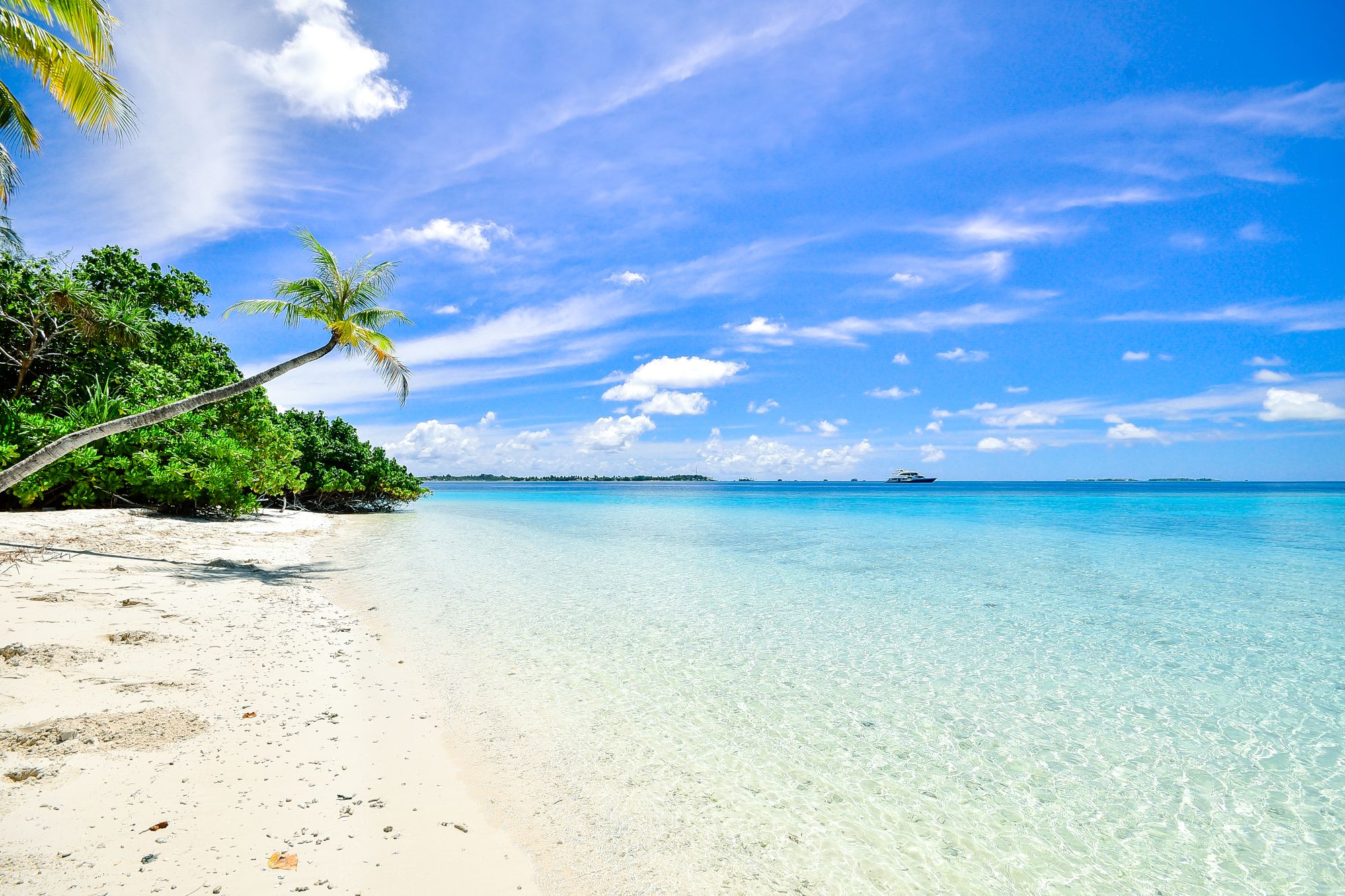
Seagrass is easy to swim over and easy to miss. In Laamu Atoll the meadows are extensive enough to be a destination in their own right, best visited by snorkel or from a boat, slowly, with fins kept clear of the beds.
01
What the meadows are
Seagrasses are flowering plants that grow underwater in shallow, sandy ground. They form beds rather than single plants, spreading by root and shoot until a patch becomes a meadow. In Laamu Atoll these beds are extensive, lying in lagoon shallows and along sheltered edges where the water is calm enough for them to hold.
The plants trap sediment with their roots and slow the water moving over them. That settles sand and mud out of the current and keeps the lagoon floor stable. The result is clearer water nearby and a soft, structured habitat that many animals use and few visitors notice.
From the surface a meadow can look like a dark, flat patch of seabed. It is worth looking again. The longer you hover over one, the more movement you see in it.

02
What lives in the beds
Young fish use seagrass as nursery ground. Small species and the juveniles of larger ones find cover among the blades and feed on the growth that settles there. Sea turtles graze the beds, and rays work over the sand at their edges.
Sightings vary. Some swims bring turtles within a few metres, others bring only small fish and the occasional ray passing through. The meadows are a habitat, not an exhibit, and the animals move with tide, light and food.
The best approach is to drift slowly along an edge, where the bed meets sand or coral, and let your eyes adjust. Movement at the edge of vision is usually what gives an animal away.
03
How to visit without harm
Snorkel is the natural way to see a meadow. A boat can drop you upwind or uptide of a bed and pick you up later, so you drift over it without effort. Follow a guide's advice on where to enter the water, since some beds sit close to boat channels or shallow reef.
Keep fins clear of the plants. A fin stroke can cut blades and stir sediment, and standing on a bed does more damage than most people expect. Float rather than wade, and keep your body horizontal and your kick shallow.
Anchors tear seagrass, so boats should use moorings or hold off while you swim. Ask before you go. If a boat has no mooring and no one aboard to hold position, choose another site.
- Float, do not stand. Trampling a bed compresses it and cuts the plants.
- Fins clear. Keep your kick shallow and away from the blades.
- No anchoring. Use a mooring or hold the boat off the beds.
- Nothing removed. Taking coral or shells out of the country is not allowed.
- No feeding. Feeding fish changes behaviour and harms the reef.
04
Pairing meadow and reef
A seagrass swim is a good contrast to a reef snorkel. The reef gives colour, structure and fish in numbers. The meadow gives a quieter, flatter landscape where patience pays and small things are the point.
Many boats can do both in one outing, entering the water on a reef edge and drifting over a bed later. Ask the boat crew which order suits the tide that day. Currents decide the plan more than preference does.
Diving is a separate matter. Recreational diving in the Maldives is capped at 30 metres, and meadows are shallow, so they are snorkel country. Divers will usually spend their time on the reef instead.
05
Reaching Laamu
Laamu Atoll has a domestic airport at Kadhdhoo, reached by scheduled flight from Velana International Airport, with a boat transfer at the end. Seaplanes fly in daylight only, and speedboats can run day or night, so the route depends on where you stay.
Resorts arrange transfers as part of the booking. On inhabited islands, guesthouses know the current ferry and boat timetables and can advise on the practical combination. Public ferries link islands within the atoll on set days, but timetables change.
Once on an island, meadow visits are short boat rides rather than expeditions. That makes Laamu a reasonable place to spend several nights and take a meadow swim when the water is calm.
- By air: scheduled flights to Kadhdhoo, then a boat.
- By seaplane: daylight only, arranged by the resort.
- Ferries: within the atoll on set days; timetables change.
- Ask locally: guesthouses know current boat times.
06
When to go
The meadows can be visited all year. The two monsoons change the water more than the wildlife. Iruvai, the northeast monsoon from roughly December to April, brings drier, calmer weather and easier crossings. Hulhangu, from roughly May to November, is windier with passing showers and choppier water.
For a shallow snorkel, calm matters. A windy day stirs the lagoon floor and cuts visibility over a bed. If the water is murky, the reef may be the better choice that day and the meadow can wait.
Air and sea stay warm throughout, so there is no cold-water season to plan around. Light exposure is the other consideration: midday sun over shallow water is strong, and a rash guard helps.

FAQ
Questions people ask
Where are the seagrass meadows in Laamu Atoll?+
The meadows lie in the shallow lagoons and sheltered edges of Laamu Atoll, spread across several areas rather than concentrated at one site. Guesthouses and resorts on the islands know which beds are close and reachable by boat. Ask them where to enter the water, since some beds sit near channels or shallow reef.
Can I see turtles and rays on Laamu's seagrass?+
Turtles graze seagrass and rays work the sand at the edges of the beds, so both are possible. Sightings vary with tide, light and the day. Drifting slowly along the boundary between bed and sand gives the best chance, and keeping a respectful distance means an animal is more likely to stay.
Is it safe to snorkel the seagrass beds in Laamu?+
The beds are shallow and usually calm, which suits snorkelling. The main risks are boat traffic and current near channels. Go with a guide or a boat crew who know the area, enter where advised, and stay visible at the surface. Check conditions with your guesthouse or resort on the day.
Should I wear fins over Laamu's seagrass?+
Fins are useful for a gentle drift, but keep the kick shallow and your body horizontal so the blades stay clear of the plants. Standing on a bed does more damage than a fin stroke. If you are not confident in fins, snorkel without them over the shallowest parts and float rather than wade.
Can boats anchor on the seagrass in Laamu?+
Anchors tear seagrass and leave scars that take a long time to recover. Boats should use a mooring where one exists, or hold off while swimmers are in the water. Ask the crew before you set out. If there is no mooring and no one to hold position, choose a different site.
Do I need a guide to visit Laamu's seagrass meadows?+
Not always, but a guide or boat crew helps. They know which beds are reachable, where the current runs, and where boats pass. Some islands in Laamu have community-led conservation interest, and access or local arrangements can change. Confirm current arrangements with your guesthouse or resort before planning a visit.
What is the best time of year for Laamu's seagrass?+
The meadows can be visited all year. Calm water matters more than season, because wind stirs the lagoon floor and cuts visibility. Iruvai, roughly December to April, is drier and calmer. Hulhangu, roughly May to November, is windier with passing showers. Pick a still day whatever the month.
How does a seagrass swim compare with reef snorkelling in Laamu?+
They are different experiences. A reef gives colour, structure and fish in numbers. A meadow is flatter and quieter, and rewards patience with small movement and grazing animals. Many boats combine the two in one outing, entering on a reef edge and drifting over a bed later. Ask the crew which order suits the tide.
Can I dive the seagrass meadows in Laamu?+
The meadows are shallow, so they are snorkel country rather than dive sites. Recreational diving in the Maldives is capped at 30 metres, and divers usually spend their time on the reef. If you dive, treat the meadow as a snorkel between dives and follow the dive centre's advice on sites and conditions.