
The reef is not scenery. It is the structure that holds the sand in place and breaks the swell before it reaches the beach. Snorkellers and divers can protect it with a handful of habits, most of them learned in the first ten minutes of a briefing.
01
Fins and buoyancy
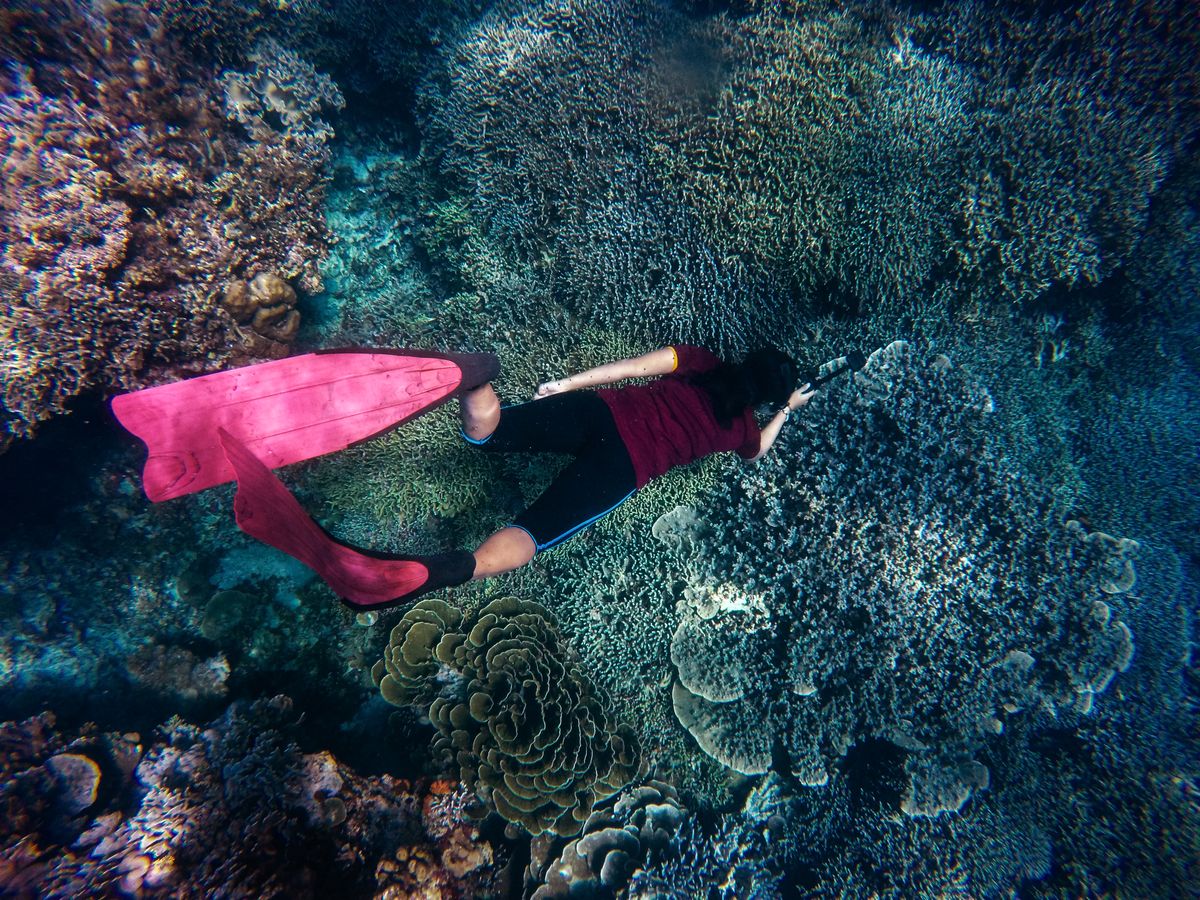
Most reef damage from visitors is accidental. A fin kicks a coral head, a knee rests on a ledge for a second, and a patch that took years to grow is gone. The fix is simple: keep your body and your fins clear of the reef at all times, and treat the water above the coral as a no-go space for hands, knees and fins.
Buoyancy is the other half. Snorkellers should stay flat and horizontal, with arms close to the body, and look down rather than reach down. Divers should sort out weighting and trim before descending, and carry out a buoyancy check with the dive centre. If you cannot hold a depth without touching the bottom, say so and get help.
Photographers are the usual offenders. A camera in front of the mask narrows attention, and a body drifts down while the eye is on the screen. Set the shot up from a distance, keep the reef behind you, and accept that some pictures are not worth a broken branch of coral.
- Stay horizontal. Keep your body flat and your fins behind you, not below.
- Look, do not reach. Arms close to the body; no hands on coral or rock.
- Check before you descend. Ask the dive centre for a buoyancy check on the first dive.
- Give the camera space. Frame the shot from a distance and keep the reef clear.
02
Nothing taken, nothing fed
Taking coral, shells or sand out of the country is not allowed, and the rule is worth following in spirit as well as in law. A shell on the beach is often a home, and a piece of coral on the sand still breaks down into the material the beach is made of. Photographs are the only thing that should leave with you.
Feeding fish changes behaviour. Fish that learn to expect food crowd snorkellers, lose their wariness of predators and stop grazing the algae that would otherwise smother coral. Bread and fruit are not part of a reef diet. If a guide offers food to bring fish close, decline.
Wildlife needs distance. Turtles surface to breathe and need a clear route to the top. Sharks and rays should be watched from a respectful gap, and never chased or cornered. A good rule is to let the animal choose the distance; if it moves away, you were too close.
- No souvenirs. Coral, shells and sand stay on the island.
- No feeding. Do not offer bread, fruit or fish to reef fish.
- Keep a gap. Give turtles, sharks and rays room to move away.
- No touching. Hands off coral, and no standing on the reef flat.
03
Sunscreen and skin
Sunscreen choice comes up on every island because some ingredients in common products are linked to coral stress. The advice most often given is to use a mineral sunscreen, with zinc or titanium as the active ingredient, and to apply it before you get in the water so it soaks in rather than washing off.
A rash guard does more than any cream. A long-sleeved top and leggings cut the area that needs sunscreen to the face, hands and feet, and they last all day in the water. Many snorkellers find they use far less product and get less burnt.
The same logic applies on the boat and the beach. A hat and a shirt are better than repeated application, and a lycra layer dries quickly between snorkels. If you are unsure what is sold locally, bring your own mineral product; supplies on small islands are limited.
04
Rubbish and choosing operators
Carry your rubbish back to the boat or the island. Plastic bags, wrappers and lost hair ties are eaten by fish and turtles, and even a small item can take a long time to break down. A dry bag with a pocket for litter is a useful habit, and it costs nothing to pick up a piece of plastic you pass on the reef.
Choose operators that brief before every trip. A good briefing covers buoyancy, distance from wildlife, no touching and no feeding, and it is repeated rather than assumed. Ask at the dive centre or the excursion desk what the boat does about sunscreen, gloves and feeding, and watch whether the crew follow their own rules.
Gloves are worth a question. Some dive centres discourage them because they encourage handling, while others allow them for wreck or cold-water diving. The answer tells you something about the operation.
05
Why the reef matters
The reef is the island's defence. Coral grows into a ridge that breaks the swell before it reaches the shore, and the lagoon behind it holds the sand that makes the beach. Remove the coral and the waves reach further inland, and the beach moves or disappears.
Reefs also support the catch that feeds the islands and the marine life that visitors come to see. A bleached or broken reef is not just a loss of colour; it is a loss of shelter for fish, and a weaker barrier against the sea.
That is why the habits on this page are not only for divers. A snorkeller who stays off the coral, a visitor who takes nothing and a boat that briefs its guests all help keep the structure that makes a Maldivian island a place to visit.

06
Before you go
Sort out your own kit where you can. A well-fitting mask and fins make it easier to stay flat and calm in the water, and a rash guard reduces the sunscreen you need. If you are hiring, check the fit before you leave the jetty.
Ask about the briefing and the boat's rules when you book, not when you are already on the water. The answer is a fair guide to how the trip will be run, and it is easier to change plans on land.
Finally, remember that rules and guidance change. Local councils, resorts and dive centres set their own practices, and official advice on sunscreen and protected areas can be updated. Check with the operator or the official source before you travel.
FAQ
Questions people ask
Why should snorkellers keep their fins off the coral?+
A single fin kick can break coral branches that took years to grow, and the damage is often invisible to the person who caused it. Keeping horizontal with fins behind you, and staying a body length above the reef, removes the risk. Snorkellers who cannot float flat should practise in open water first or ask for a buoyancy tip.
Is touching coral ever acceptable in the Maldives?+
No. Coral is a living animal colony, and touching or standing on it damages the surface and can introduce infection. The same applies to shells and sand, which are part of the beach system. Taking coral or shells out of the country is not allowed. Look, photograph and leave everything where it is.
What sunscreen should I use on a Maldives reef trip?+
Mineral sunscreens with zinc or titanium are the type most often recommended, because some ingredients in common products are linked to coral stress. Apply before entering the water and wear a rash guard to reduce the area needing cream. Advice can change, so check with the dive centre or the official source before you travel.
Why is feeding fish harmful on Maldivian reefs?+
Feeding changes fish behaviour. Fish that expect food crowd snorkellers, lose wariness of predators and may stop grazing the algae that would otherwise smother coral. Bread and fruit are not part of a reef diet. If a guide offers food to bring fish close, it is reasonable to decline and to choose an operator that does not feed.
How close can I get to turtles and sharks in the Maldives?+
Let the animal set the distance. Turtles need a clear route to the surface to breathe, and sharks and rays should never be chased or cornered. A respectful gap and a calm, horizontal position are better than a close photograph. If the animal moves away, you were too close, and the dive centre can advise on local practice.
Should I carry my rubbish back on a reef snorkel trip?+
Yes. Plastic bags, wrappers and lost hair ties are eaten by fish and turtles, and even small items take a long time to break down. A dry bag with a pocket for litter is a simple habit, and picking up a piece of plastic you pass on the reef costs nothing. Boats and guesthouses usually have bins on land.
How do I choose a reef-safe dive or snorkel operator in the Maldives?+
Ask what the briefing covers before you book. A good operator repeats buoyancy, distance from wildlife, no touching and no feeding before every trip, and the crew follow their own rules. Ask about gloves and feeding, and watch how the boat is run. Practices vary between islands, so check with the dive centre or excursion desk.
Why does the reef matter to a Maldivian island?+
The reef ridge breaks the swell before it reaches the shore, and the lagoon behind it holds the sand that makes the beach. Without healthy coral, waves reach further inland and the beach can move or disappear. The reef also shelters the fish that support the local catch and the marine life visitors come to see.
Do reef-safe habits differ between resort and local islands in the Maldives?+
The habits in the water are the same everywhere: no touching, no taking, no feeding and a respectful distance. On local islands, swimwear is limited to designated beaches and shoulders and knees are covered in the village. Alcohol rules differ too. Check with the guesthouse or resort for local practice before you go.


