
Maldivian diving is built around the shape of the atolls. Channels cut through the reef, submerged pinnacles rise inside the lagoon, and the tide decides where the fish are. Most diving is done from boats, and the dive centre sets the plan around the current.
01
Thilas, kandus and reef walls
An atoll is a ring of reef around a lagoon. The diving follows that structure. On the ocean side, the reef drops away as a wall, often close to the surface and falling into deep water. Inside, scattered pinnacles rise from the lagoon floor. Divers know these as thilas, and they gather fish around their sides.
A kandu is a channel, a gap in the reef ring that lets water move between the open ocean and the lagoon. Channels are where the current runs hardest and where the larger animals tend to be. A dive centre will usually time a channel dive to the tide rather than the clock.
Many dives finish on the reef top at the mouth of a channel, where the slope is gentler and the coral is close to the light. Ask the dive centre which of these three settings a site offers before you sign up, so you know whether to expect a wall, a pinnacle or a drift.
- Thila. A submerged pinnacle inside the lagoon, often circled by fish.
- Kandu. A channel through the reef ring, dived on the incoming or outgoing tide.
- Wall. The ocean-side reef drop, often close to the surface.
- Reef top. The shallow shelf where many dives end.
02
Currents and how they are read
Water moves in and out of the lagoon with the tide, and that movement sets the character of a dive. An incoming current usually brings clearer water and feeds the reef; an outgoing current can carry sediment and reduce visibility. Neither is good or bad in itself, but each suits different sites.
Dive centres read the current before entering the water, often by watching the surface, the mooring line or the behaviour of fish at the channel mouth. Follow the briefing closely. If the plan is a drift, the boat follows the divers rather than the divers returning to a fixed point.
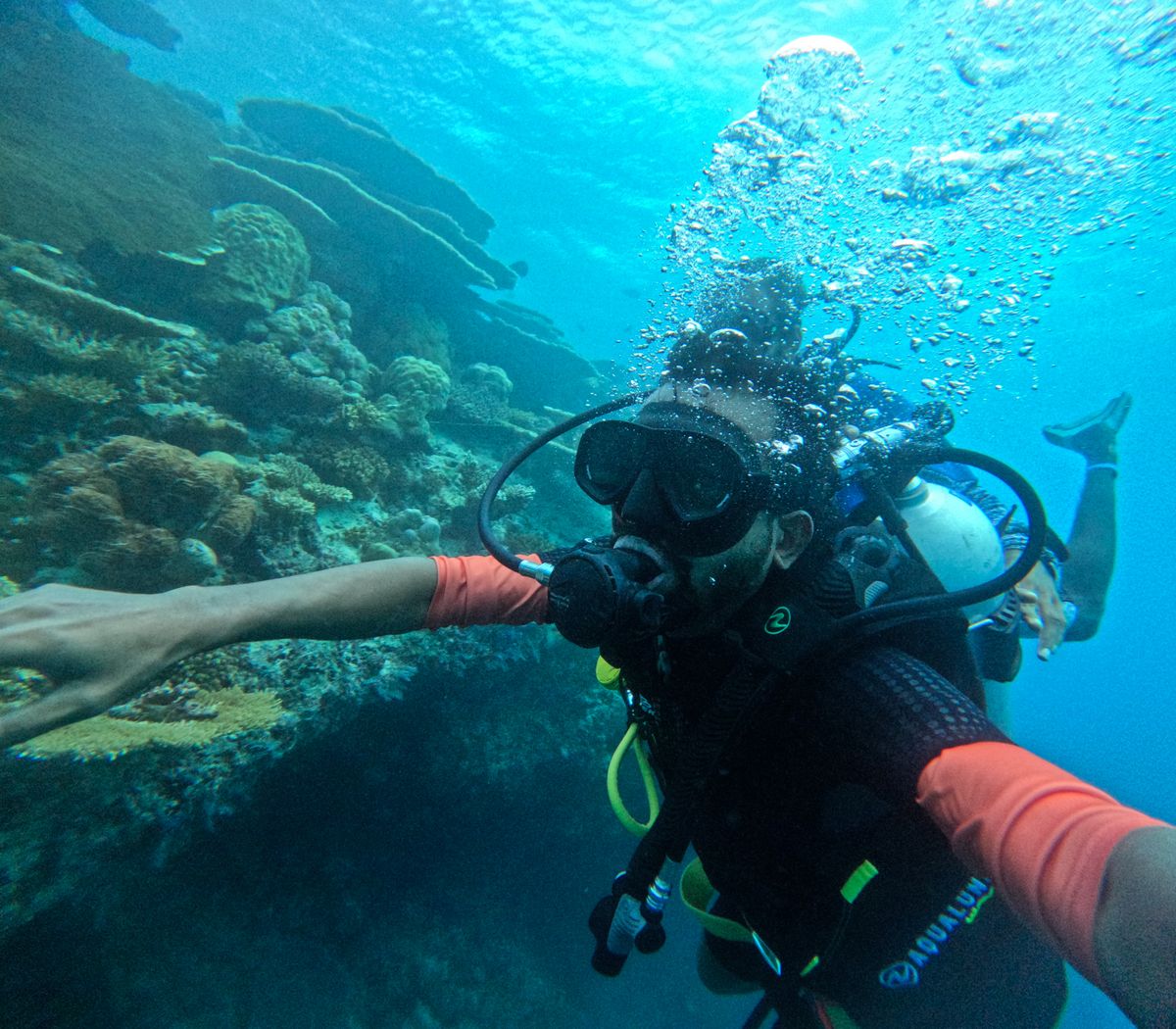
Currents can be strong, and some channels are for experienced divers only. Be honest with the dive centre about your certification level and recent diving. A guide who knows your experience will place you on a suitable site rather than the most demanding one.
03
Depth, certification and insurance
Maldives regulations cap recreational diving at 30 metres. That limit applies to all recreational divers, whatever their certification, and dive centres plan profiles within it. Deeper wrecks and walls may sit below the limit, so a site is dived to the depth the rules allow rather than the depth of the seabed.
Bring your certification card and logbook. Dive centres check both before taking you out, and a logbook helps a guide judge what you have actually dived recently. If you have not dived for a while, expect a check dive or a refresher before joining the main boat.
Dive insurance is worth arranging before you travel. Treatment for diving injuries often involves a chamber and transport, and standard travel policies may not cover it. Confirm what your policy includes, and check whether the dive centre requires proof of cover.
04
Visibility through the year
The year turns on two monsoons. Iruvai, the northeast monsoon from roughly December to April, is drier and calmer. Hulhangu, the southwest monsoon from roughly May to November, brings more wind and passing showers. Air and sea stay warm all year, so a wetsuit is a matter of comfort rather than necessity.
Visibility changes with the season and with the side of the atoll you are diving. Currents, plankton and runoff all affect how far you can see. A site that is clear in one month can be murkier in another, and the ocean side often differs from the lagoon side on the same day.
Rather than planning a trip around a single visibility figure, ask the dive centre what conditions are typical for the month you plan to travel. Manta and whale shark sightings also follow the seasons, and a dive centre can say what is likely when you visit.

05
Liveaboards, resorts and guesthouses
There are three common ways to dive in the Maldives. A liveaboard moves between sites while you sleep, which suits divers who want several dives a day and access to remote channels. Resort islands have their own dive centres and boats, with diving fitted around a stay on one island.
Guesthouses on inhabited islands often work with a nearby dive centre. These are usually cheaper and smaller in scale, and the boat may carry a mixed group. Guesthouse islands do not serve alcohol, and swimwear is worn only on designated beaches, so plan the day around the dive schedule and the island's rules.
Whichever you choose, ask how many dives a day are typical, whether tanks and weights are included, and how far the boat travels to sites. On a liveaboard, also ask about the cabin and the crossing between atolls in rough weather.
- Liveaboard. Moving base, several dives a day, remote sites.
- Resort dive centre. Diving from one island, boats arranged on site.
- Guesthouse diving. Smaller scale, often with a partner dive centre.
06
Marine protected areas and the reef
Some reefs and channels sit inside marine protected areas, where rules can restrict anchoring, fishing or certain kinds of diving. The dive centre will explain what applies at a site. Follow its guidance, and do not assume a site is open simply because a boat visits it.
Touching or standing on coral harms the reef, and so does feeding fish. Collecting coral or shells is not allowed, and taking them out of the country is prohibited. Keep your buoyancy controlled and your equipment close, especially in a channel where the current pushes you along.
Reef-safe habits matter more in the Maldives than in many destinations because so much diving happens close to living coral. A short briefing from the dive centre usually covers the local rules. Listen to it, and ask if anything is unclear before you enter the water.
07
The gap before flying
Diving leaves nitrogen in the body, and flying too soon after a dive raises the risk of decompression illness. The safe interval depends on your dive profile, so follow the dive centre's guidance on the gap before flying rather than a fixed rule from elsewhere.
This applies to seaplanes as well as international flights. Seaplanes fly at low altitude but are still flights, and operators and dive centres set their own requirements. If your last dive is close to your departure, tell the dive centre early so the schedule can be planned around it.
Build the gap into your itinerary rather than leaving it to the last morning. A final day without diving, spent on the island or in Malé, is the simplest way to avoid a rushed departure. Ask the dive centre to confirm the interval when you book your dives.
FAQ
Questions people ask
What is a thila in Maldivian diving?+
A thila is a submerged pinnacle rising from the lagoon floor inside an atoll. Fish gather around its sides, and divers usually circle it rather than descend straight down. Thilas are common across the atolls and are often dived in mild current, which makes them a good introduction to Maldivian reef diving.
How do currents affect diving in the Maldives?+
Water moves in and out of the lagoon with the tide, and channels carry the strongest flow. Dive centres time channel dives to the tide and brief divers on whether to expect an incoming or outgoing current. Drift diving is common, with the boat following the group rather than the group returning to a fixed point.
What is the depth limit for diving in the Maldives?+
Maldives regulations cap recreational diving at 30 metres. The limit applies to all recreational divers regardless of certification, and dive centres plan profiles within it. A site may sit deeper than the limit, in which case it is dived to the permitted depth rather than to the seabed.
Do I need my certification card and logbook to dive in the Maldives?+
Dive centres check certification before taking divers out, and a logbook helps a guide judge recent experience. Bring both, and be ready for a check dive or refresher if you have not dived for a while. Ask the dive centre in advance what it requires.
Is dive insurance needed for diving in the Maldives?+
Dive insurance is worth arranging before travel. Treatment for diving injuries often involves a chamber and transport, which standard travel policies may not cover. Confirm what your policy includes and whether the dive centre asks for proof of cover before you join a boat.
How does visibility change through the year in the Maldives?+
Visibility varies with the monsoon and with the side of the atoll. Iruvai, roughly December to April, is drier and calmer; Hulhangu, roughly May to November, is windier. Currents, plankton and runoff all affect clarity, so ask the dive centre what is typical for your travel month.
Should I dive from a liveaboard or a resort in the Maldives?+
A liveaboard moves between sites and suits divers wanting several dives a day and remote channels. A resort dive centre fits diving around a stay on one island. Guesthouses on inhabited islands often work with a partner dive centre on a smaller scale. Ask about daily dive numbers and boat distances.
What are the rules for marine protected areas in the Maldives?+
Some reefs and channels sit inside marine protected areas, where rules can restrict anchoring, fishing or certain diving. The dive centre explains what applies at a site. Touching coral, feeding fish and collecting coral or shells are not allowed, and taking coral or shells out of the country is prohibited.
How long before flying should I stop diving in the Maldives?+
The safe interval depends on your dive profile, so follow the dive centre's guidance rather than a fixed rule from elsewhere. This applies to seaplanes as well as international flights. Tell the dive centre your departure date early and plan a final day without diving.


