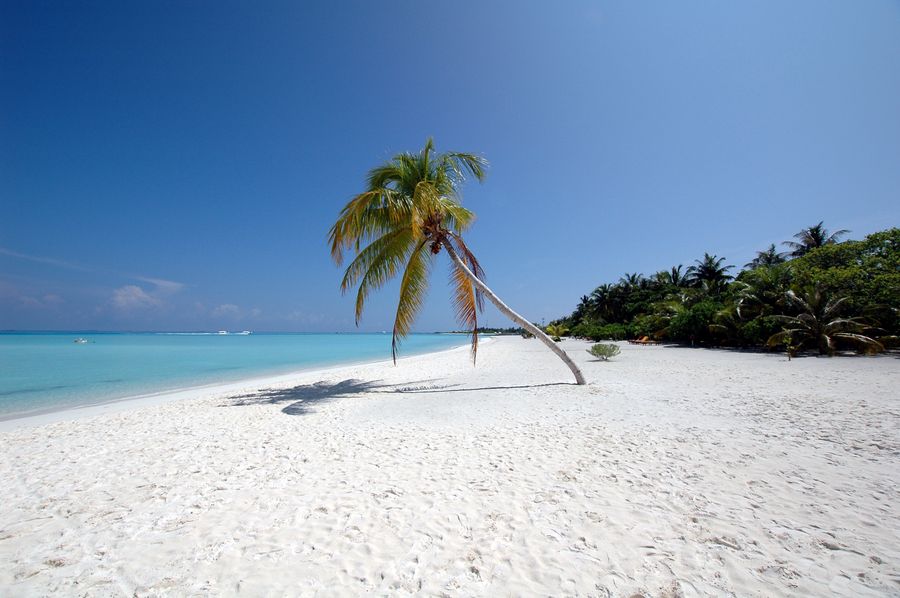
Most visitors see the Maldives from a resort or a guesthouse. A local island visit adds the other half: a village with its own rhythm, where fishing boats land their catch and Friday prayers close the shops. The rules are simple and the rewards are ordinary and real.
01
What a local island visit is
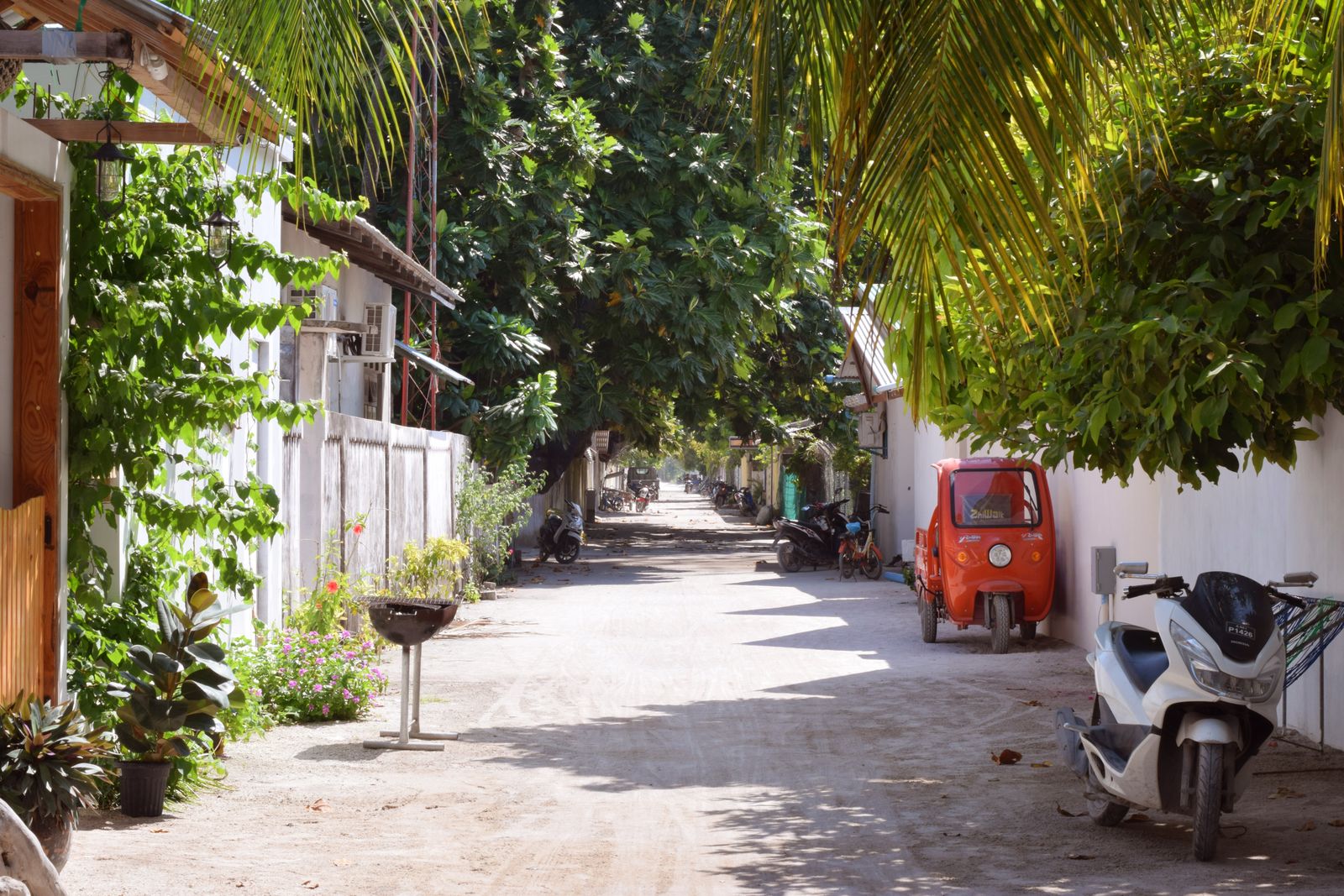
An inhabited island is a village with a harbour, a mosque, a school, a few shops and cafes. People live there all year. The streets are sandy or paved, the houses are close together, and the fishing boats come and go with the tide. It is not a resort with a village theme; it is the village itself.
Visits are arranged by guesthouses on the island or by resorts nearby. Some resorts run guided trips to a neighbouring inhabited island, with a walk through the village and time in the harbour. Guesthouses on local islands arrange visits to other islands in the same atoll, often by public ferry or by dhoni.
The visit is usually short, a few hours. There is no set circuit. You walk, you look, you buy a tea, and you leave. The point is to see how the country lives when it is not on holiday.

02
Dress and conduct in the village
In the village, shoulders and knees are covered. That applies to men and women. Swimwear belongs only on designated beaches, often called bikini beaches, and not on the village streets or in shops. A sarong over swimwear is the usual solution when walking back from the beach.
Ask before photographing people. A nod towards the camera is enough. Some people will agree, some will not, and either answer is fine. Avoid photographing inside the mosque unless invited, and take shoes off before entering.
Alcohol is not available on inhabited islands, and importing it is not allowed. This is not a rule aimed at visitors; it is the law of the country. Drinking happens on resort islands, not here.
03
Friday prayers and Ramadan
Friday midday prayers close many businesses for a period around noon. The harbour is quiet, the shops pull down their shutters, and the streets empty towards the mosque. Visits at this time are possible but there is little to see, and it is better to plan around it.
During Ramadan, eating and drinking in public in daylight is avoided on local islands. That includes water on the street. Cafes may be closed or serving only later in the day. Visitors are not expected to fast, but they are expected to be discreet.
The rhythm of the island changes with the fishing day too. Boats leave early and return in the afternoon. The harbour is busiest when the catch comes in, and quiet in the middle of the day.
- Friday noon. Shops and cafes close around prayers.
- Ramadan. No eating or drinking in public in daylight.
- Fishing day. Harbour busy early and when boats land.
- Afternoon. Village quiet; many people indoors.
04
What to see and eat
The harbour is the centre of the island. Dhoni and fishing boats tie up along the quay, and the smell of tuna and diesel is part of the place. It is a working harbour, so keep clear of ropes and moving boats.
The mosque is usually the largest building, white with a minaret. It is a place of worship, not a monument, and visitors should wait to be invited before going inside. The school is nearby, and the streets around it are full of children at the start and end of the school day.
Cafes serve short eats with tea: mas huni, bajiya, gulha, and small savoury pastries. These are ordinary food, eaten between meals. A cafe is a good place to sit for half an hour and watch the street. There is no need to book and no need to hurry.

05
Getting there and back
Local islands are reached by public ferry, by dhoni, or by speedboat from a nearby resort or guesthouse. Public ferries link islands within an atoll on set days, and timetables change. Guesthouses know the current ones and can confirm the return leg before you go.
If you are staying on a resort island, the resort arranges the visit and the boat. If you are staying on a local island, the guesthouse arranges it. Either way, the return trip matters as much as the outward one, because ferries do not run on demand.
The crossing itself is part of the visit. A dhoni moves slowly and the reef passes under the hull. A speedboat is quicker and wetter. Neither is a tour; both are transport.
06
Doing it well
A local island is somebody's home. The visit works best when it is treated as a walk through a working village rather than a sightseeing stop. Buy something small, ask before taking a photograph, and keep voices low near the mosque and the school.
Do not touch or stand on coral, and do not collect shells or coral from the beach. Taking coral or shells out of the country is not allowed. The reef is the reason the island exists, and it is protected for the people who live there.
The most useful thing a visitor can do is to be ordinary: dress modestly, greet people, and accept that some parts of the island are not open to visitors. A short visit done well leaves a better impression than a long one done badly.
- Cover up. Shoulders and knees in the village.
- Ask first. Before photographing people.
- Buy a tea. Small purchases support the island.
- Leave the reef. No coral, shells or feeding fish.
FAQ
Questions people ask
Can I visit a local island from a resort?+
Yes. Many resorts arrange guided visits to a nearby inhabited island, usually by dhoni or speedboat, with a walk through the village and time in the harbour. The resort sets the schedule and the rules for the trip. Ask at the reception or the excursions desk, and confirm what to wear and what to bring.
What should I wear on a local island visit?+
Cover shoulders and knees in the village. That applies to men and women. Swimwear is only for designated beaches, often called bikini beaches, and not for village streets or shops. A sarong over swimwear is the usual solution when walking back from the beach. Check with your guesthouse if you are unsure.
Is alcohol available on local islands?+
No. Inhabited islands do not serve alcohol, and importing alcohol and pork into the country is not allowed. Drinking happens on resort islands. This is a national rule, not a local preference, and it applies to visitors as well as residents. Plan accordingly if a drink is part of your day.
How does Ramadan affect a local island visit?+
During Ramadan, eating and drinking in public in daylight is avoided on local islands, including water on the street. Cafes may be closed or open only later in the day. Visitors are not expected to fast, but they are expected to be discreet. Check the dates and the local practice with your guesthouse before you go.
Can I take photographs on a local island?+
Ask before photographing people. A nod towards the camera is enough, and either answer is fine. Avoid photographing inside the mosque unless invited. Photographs of the harbour, the streets and the beach are usually fine. Keep the camera low near the school and during prayers, and follow any instructions from your guide.
How do I get to a local island and back?+
Public ferries link islands within an atoll on set days, and guesthouses know the current timetables. Resorts arrange visits by dhoni or speedboat. The return leg matters as much as the outward one, because ferries do not run on demand. Confirm the return boat before you set out, and allow time for changes.
What food can I eat on a local island visit?+
Cafes serve short eats with tea: mas huni, bajiya, gulha and small savoury pastries. These are ordinary food, eaten between meals. There is no need to book. If you are visiting during Ramadan, check whether the cafe is open in daylight, and avoid eating or drinking in public during the day.
Is a local island visit suitable for children?+
Yes, with the usual care. The village is a working place with boats, motorbikes and a harbour, so children need to stay close. Dress rules apply to children as well. Ask your guesthouse or resort about the pace of the visit and whether a shorter walk would suit a young family.
Can I swim at a local island?+
Swimming is allowed on designated beaches, often called bikini beaches, where swimwear is acceptable. Not every inhabited island has one. Ask your guesthouse or resort before you go. Do not touch or stand on coral, and do not collect shells or coral from the beach, as this harms the reef.