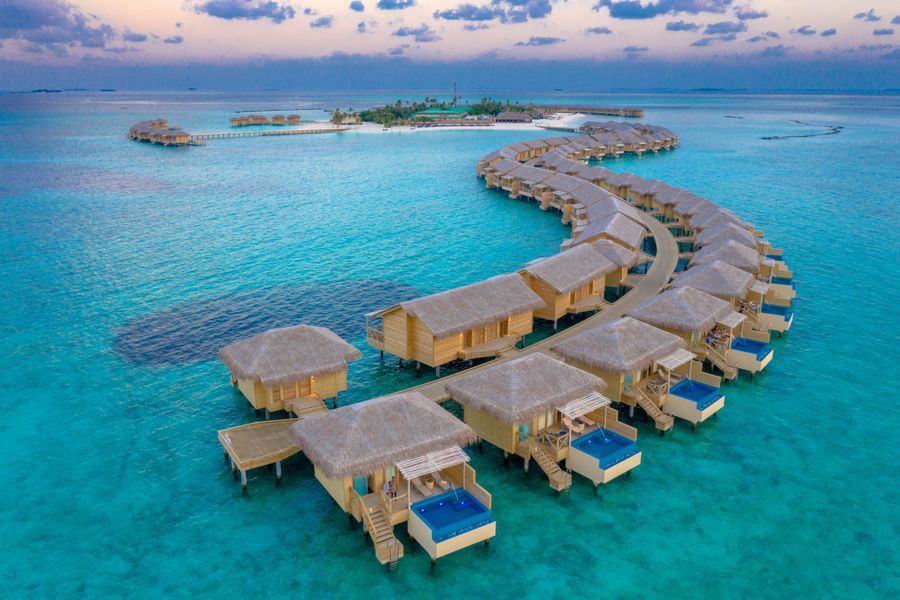
The last leg is the part of a Maldives trip that most often goes wrong, and it is almost always for the same reason: a flight that lands after the last seaplane. Here is how each transfer works.
01
Start with your landing time
Almost every international flight lands at Velana International Airport, on Hulhulé island next to Malé. From there, every stay in the country is reached one of four ways: speedboat, seaplane, domestic flight, or public ferry. Which one applies depends mostly on how far your island is, and on one detail that catches people out: the time your flight lands.
Seaplanes fly in daylight only. Speedboats can run at night. Domestic flights run to a schedule. So a flight that lands in the evening can turn a seaplane transfer into an overnight stop near Malé, while the same arrival is no problem for an island in speedboat range.
- Speedboat range: atolls up to roughly 75 km from the airport, such as North and South Malé.
- Seaplane range: further atolls such as Baa, Raa, Lhaviyani and Ari, in daylight.
- Domestic flight range: the far north and south, such as Laamu and Addu, often with a boat after landing.
02
Speedboat
Resorts in North and South Malé, and some nearer parts of other atolls, usually transfer guests by speedboat from the jetties in front of the arrivals hall. Resort staff meet arrivals inside the terminal and walk guests to the boat.
Speedboats run at night, which makes them the safest choice for a late arrival. Crossings can be bumpy in the southwest monsoon, so keep valuables and medication in a bag you can hold.
Guesthouse islands such as Maafushi and Thulusdhoo are served by shared speedboats on published departure times. Guesthouses usually book seats for guests and can tell you the current schedule.

03
Seaplane
Seaplanes leave from a dedicated terminal on the airport island, a short shuttle from international arrivals. Resorts book the seat and send the timings; flights are often grouped, so a wait in the lounge is normal.
Seaplanes need daylight to land on the lagoon. The last departures of the day are in the afternoon, which means an international arrival in the evening usually needs a night in Hulhumalé or Malé first, with the seaplane the next morning.
Seaplanes carry less luggage than airliners, and allowances are set by the operator and the resort. Soft bags pack more easily than hard cases.
04
Domestic flight and boat
For the far atolls, a domestic flight from the domestic terminal at Velana to a regional airport is the usual route. Regional airports include Dharavandhoo in Baa, Kadhdhoo in Laamu, Maamigili in South Ari and Gan in Addu, among others.
After landing, a boat usually completes the trip to the island. Resorts and guesthouses arrange this link and time it to the flight. Domestic flights fly to a schedule and are less affected by daylight than seaplanes, but connections still need planning against your international arrival.
05
Public ferry
Public ferries link many inhabited islands with Malé and with each other. They are the slowest option and run on fixed timetables, often with no service on Fridays. They suit flexible trips between guesthouse islands rather than a tight connection from an international flight.
Ferries leave from terminals in Malé, which is reached from the airport by road across the Sinamalé Bridge or by a short boat ride.
06
If you land late
A late landing is not a problem if your island is in speedboat range. For seaplane and many domestic flight islands, it usually means a first night near the airport. Hulhumalé, the island connected to the airport by road, has many hotels and guesthouses for exactly this purpose, and is a short drive from the terminal.
Booking that first night as part of the plan, rather than as a fallback, removes the stress of racing a last seaplane.
FAQ
Questions people ask
Do seaplanes fly at night?+
No. Seaplanes fly in daylight only, so evening arrivals for seaplane islands usually stay near Malé the first night.
Who books the transfer?+
Resorts arrange their own transfers, and guesthouses usually book shared speedboat seats or domestic flight connections for guests.
Can I take the public ferry from the airport?+
Ferries leave from Malé rather than the airport, run to a timetable, and often not on Fridays. They suit flexible trips more than tight connections.
What is Hulhumalé?+
A reclaimed island linked to the airport by road, with hotels and guesthouses. It is the usual place for a first night after a late arrival.
How far from the airport can a speedboat transfer reach?+
Speedboats serve atolls up to roughly 75 km from the airport, including North and South Malé. Resorts in that range usually meet arrivals at the terminal and walk guests to the jetties in front of the arrivals hall. Crossings can be bumpy in the southwest monsoon.
Where do seaplanes leave from at Velana airport?+
Seaplanes use a dedicated terminal on the same airport island, reached by a short shuttle from international arrivals. The resort books the seat and sends the timings. Flights are often grouped, so a wait in the lounge is normal before departure.
Which regional airports do domestic flights serve?+
Domestic flights from the domestic terminal at Velana reach regional airports including Dharavandhoo in Baa, Maamigili in South Ari, Ifuru in Raa, Kadhdhoo in Laamu and Gan in Addu. A boat usually completes the trip to the island, arranged by the resort or guesthouse and timed to the flight.
Can I reach Malé from the airport by road?+
Yes. A bridge links Malé with the airport island, and a short boat ride also crosses. Public ferries leave from terminals in Malé rather than the airport, so a ferry connection means crossing to the city first. Check the current timetable with the operator or your guesthouse.
What happens if a late arrival misses the last seaplane?+
A missed last seaplane means an unplanned night near Malé. Seaplanes need daylight, and the last departures are in the afternoon. Booking a first night in Hulhumalé or Malé as part of the plan, rather than as a fallback, avoids racing the last flight. Ask the resort for the latest connection time.