
Baa is the atoll to choose if manta rays are the reason for the trip. It is also a working atoll of fishing islands and craft villages, and it rewards a stay of several nights more than a day visit.
01
Baa in two minutes
Baa is the southern half of the Maalhosmadulu atoll pair, north and slightly west of Malé. Its Dhivehi name is South Maalhosmadulu. Its administrative code letter is F, used on island signs and ferry boards.
The atoll was designated a UNESCO Biosphere Reserve in 2011. That status covers the whole atoll, its inhabited islands, resort islands and reefs, and is why Baa has a Biosphere Reserve office, ranger-managed sites and a set of rules for visitors that other atolls do not.
Most people come for one thing: manta rays. During the southwest monsoon, currents push plankton into Hanifaru Bay, a small reef-ringed bay on the eastern side of the atoll, and mantas arrive to feed. Whale sharks are sometimes seen there too.
- Distance: computed below from coordinates, measured as a straight line from Velana International Airport.
- Usual transfer: seaplane in daylight, or a domestic flight to Dharavandhoo followed by a boat.
- Island types: resort islands, and inhabited islands with guesthouses such as Dharavandhoo, Goidhoo and Thulhaadhoo.
02
Getting there
Baa sits beyond comfortable speedboat range for most travellers, so the transfer is either by air or by a long boat ride. Resorts on Baa typically arrange a seaplane from the seaplane terminal on the airport island. Seaplanes fly in daylight only, so if your international flight lands after dark, plan for a first night near Malé or in Hulhumalé.
The second option is a scheduled domestic flight to Dharavandhoo Airport, inside the atoll, followed by a short boat transfer. This is the usual route for guesthouse stays on Dharavandhoo and nearby inhabited islands, and some resorts use it as well.
Public ferries and shared speedboats do link Baa with Malé, but schedules are limited and can change with the weather. Guesthouses on inhabited islands are the best source for the current timetable.

03
Hanifaru Bay and the mantas
Hanifaru Bay is a small, shallow bay on the reef of an uninhabited island on the eastern side of Baa. The shape of the reef funnels plankton when the current runs the right way, and when concentrations build, reef manta rays gather to feed, sometimes in large numbers and sometimes not at all.
The bay has been a marine protected area since 2009. Scuba diving inside the bay is not allowed; visits are snorkel only. Rangers manage how many people and boats can be in the bay at the same time, and visits are made with licensed operators through resorts and guesthouses.
The manta season follows the southwest monsoon, broadly from May to November. Feeding events depend on tide, current and plankton, so no operator can promise a sighting on a given day. Staying several nights in the atoll gives more chances than a single day trip.
- Snorkel only. Diving in the bay is not permitted.
- Keep your distance. No touching, chasing or blocking a manta’s path.
- No flash. Flash photography is not allowed in the bay.
- Ticketed. A fee is charged per visit and collected through your operator.
04
Where to stay
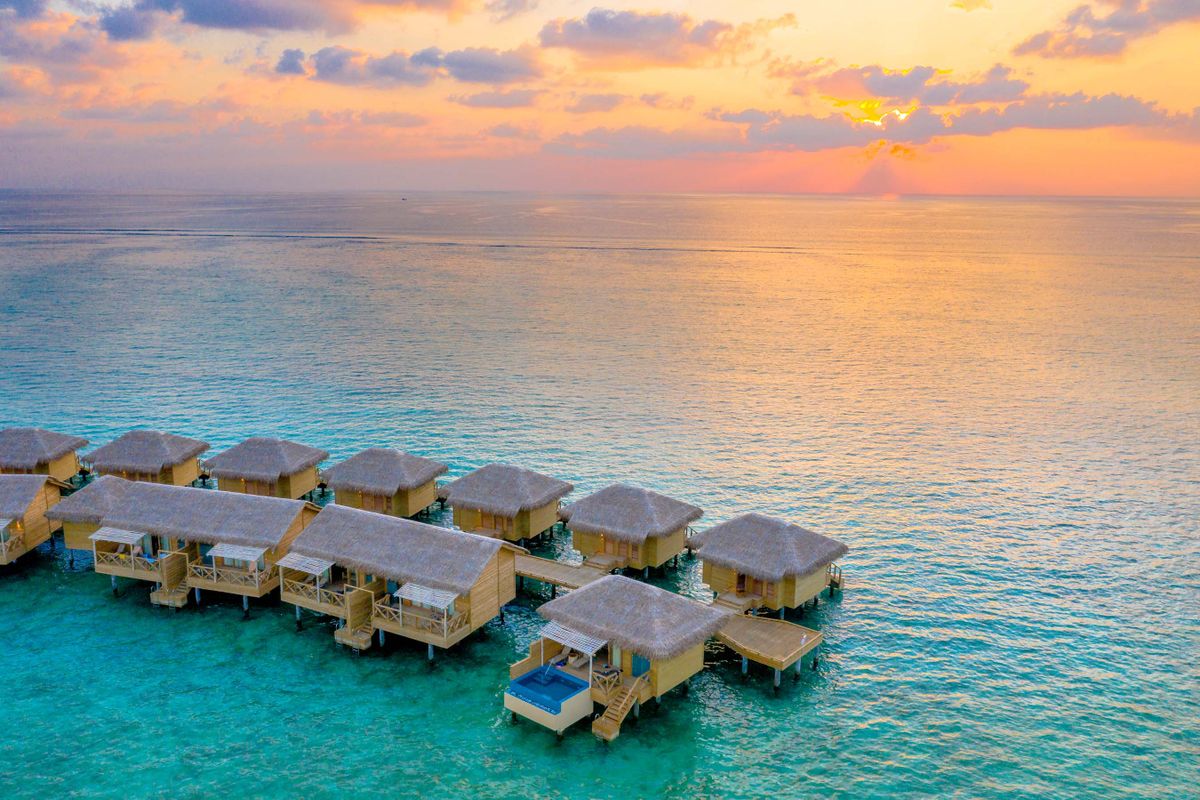
Baa has two very different ways to stay. Resort islands are the hotel: one island, one property, a house reef, and transfers arranged for you. Several Baa resorts are within a short boat ride of Hanifaru and will arrange trips when the mantas are feeding.
Inhabited islands such as Dharavandhoo, Goidhoo and Thulhaadhoo have guesthouses, local cafes and village life. Alcohol is not served on inhabited islands, and swimwear is for designated beaches. Dharavandhoo has the domestic airport, which makes it the simplest local-island base.
Thulhaadhoo is known for traditional lacquer work, a craft of turned and painted wood. Goidhoo is a large island with wetlands and long beaches.
05
When to go
The year turns on two monsoons. The northeast monsoon, Iruvai, runs roughly from December to April and is the drier, calmer half of the year. The southwest monsoon, Hulhangu, runs roughly from May to November, with more wind, passing showers and choppier crossings.
For Baa, that trade-off is the point. The southwest monsoon is wetter, but it is also when the mantas come to Hanifaru. If mantas are the reason for the trip, the southwest monsoon is the season to plan around. If calm seas and dry days matter more, the northeast monsoon suits better, and mantas can still be seen at cleaning stations elsewhere in the atoll.
06
Getting around the atoll
Inside the atoll, everything moves by boat. Resorts run their own boats for excursions. On inhabited islands, guesthouses arrange speedboat trips to sandbanks, reefs and neighbouring islands, and public ferries run between some islands on set days.
Distances inside Baa are short compared with the trip from Malé, but sea conditions decide how comfortable a crossing is. Mornings are often calmer than afternoons.
FAQ
Questions people ask
Can I dive at Hanifaru Bay?+
No. Diving inside the bay is not allowed, and visits are snorkel only. Dive centres in Baa run manta dives at cleaning stations elsewhere in the atoll.
Is a manta sighting guaranteed in season?+
No. Feeding depends on tide, current and plankton. Staying several nights in the atoll during the southwest monsoon gives more chances.
Can I reach Baa if I land at night?+
Not by seaplane, which flies in daylight only. Plan a first night near Malé, or check whether a domestic flight to Dharavandhoo fits your arrival.
Is there alcohol on Dharavandhoo?+
No. Dharavandhoo is an inhabited island, and alcohol is only served on resort islands and licensed boats.
What does the UNESCO Biosphere Reserve status mean for visitors to Baa Atoll?+
The designation covers the whole atoll, including inhabited islands, resort islands and reefs. It brings a Biosphere Reserve office, ranger-managed sites and visitor rules that apply in places such as Hanifaru Bay. Rules, visitor caps and fees can change, so ask your resort or guesthouse for the current requirements when you book.
How do I get from Dharavandhoo Airport to my guesthouse?+
Dharavandhoo has the domestic airport inside the atoll, and a short boat transfer usually follows the flight. Guesthouses on Dharavandhoo and nearby inhabited islands arrange these transfers and know the current boat times. Confirm the connection with your guesthouse before booking, as schedules can change with the weather.
What should I wear on the inhabited islands of Baa Atoll?+
On inhabited islands such as Dharavandhoo, Goidhoo and Thulhaadhoo, shoulders and knees are covered in the village. Swimwear is worn only on designated beaches, often called bikini beaches. Alcohol is not served on inhabited islands, and importing alcohol or pork is not allowed. Resort islands set their own dress norms.
Can I visit Hanifaru Bay without staying at a resort?+
Yes. Visits are made with licensed operators, arranged through resorts and guesthouses. Guesthouses on inhabited islands can book snorkel trips to the bay in season. A fee is charged per visit and collected through your operator. Rangers manage how many people and boats are in the bay at once, and the rules can change.
What is there to see on Thulhaadhoo and Goidhoo?+
Thulhaadhoo is known for traditional lacquer work, a craft of turned and painted wood. Goidhoo is a large island with wetlands and long beaches. Both are inhabited islands with guesthouses, so the usual local-island rules apply: no alcohol, covered shoulders and knees in the village, and swimwear only on designated beaches.


