
Hanifaru is one of the best known manta feeding sites anywhere, and one of the most carefully managed. Knowing how the season and the rules work is the difference between a good visit and a wasted boat ride.
01
What happens at Hanifaru
Hanifaru is a small bay cut into the reef of an uninhabited island in Baa Atoll. On its own it is unremarkable: shallow, sandy, a few hundred metres across. What makes it famous is what the current does to it.
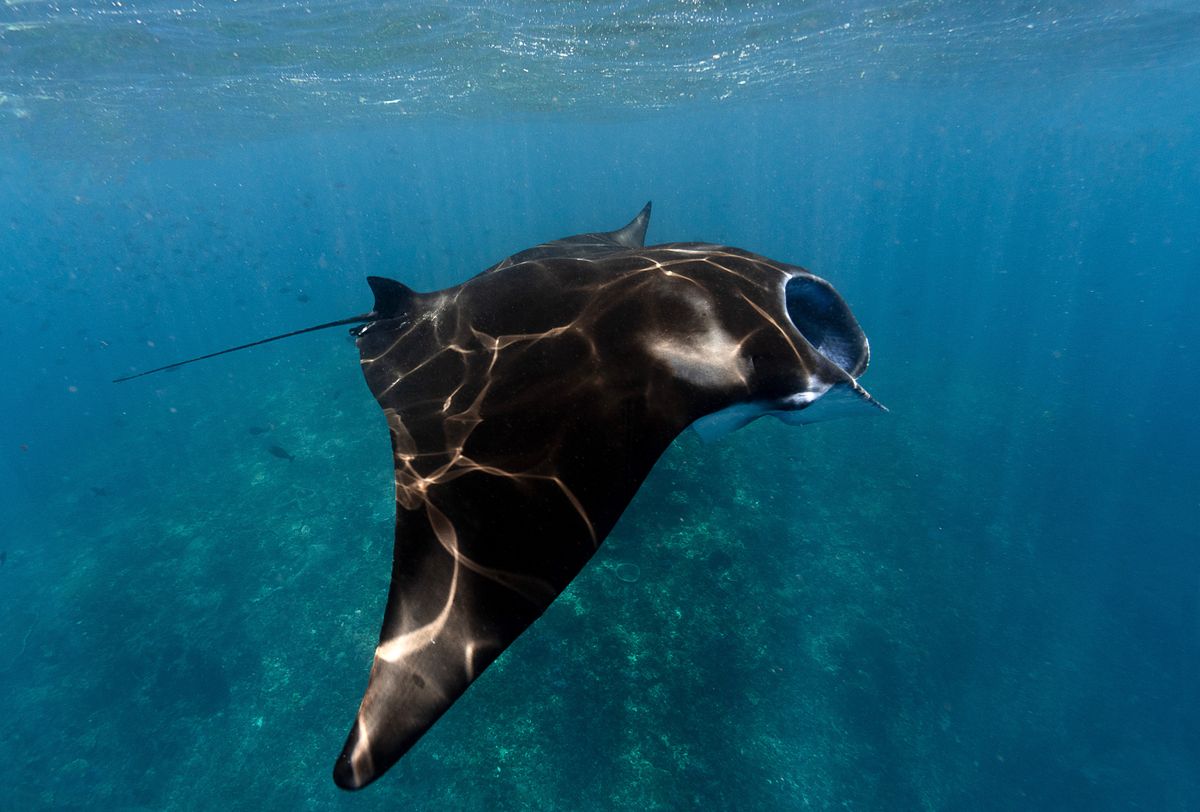
During the southwest monsoon, currents carry plankton across the atoll. When the tide and current line up, the shape of the reef traps and concentrates that plankton inside the bay. Reef manta rays follow the food. On a strong day, dozens may feed together, looping and barrel-rolling through the water column. Whale sharks sometimes join them.
On a weak day, there may be none. The bay is a natural feeding site, not an attraction, and the mantas keep their own schedule.
02
Why it is protected
Hanifaru was declared a marine protected area in 2009, and Baa Atoll became a UNESCO Biosphere Reserve in 2011. The protection exists because a feeding site this concentrated is fragile: too many boats, swimmers or divers can drive the animals off.
Scuba diving inside the bay was stopped so that bubbles and divers below would not disrupt feeding. Today, visits are snorkel only, numbers are capped, and rangers are present in season to manage the bay. A visitor fee is collected per visit and supports the management of the reserve.
03
When to go
The season follows the southwest monsoon, broadly May to November. Within that window, feeding is linked to tides and plankton concentration rather than to the calendar alone, so local operators watch conditions day by day and go when the signs are right.
The practical consequence is that time beats timing. Staying several nights in Baa during the season, at a resort or guesthouse that runs Hanifaru trips, gives the operator room to choose the best day. A single day visit gives one chance.
Outside the season, mantas are still seen at cleaning stations in Baa and elsewhere, where small fish pick parasites off them. Those are dive and snorkel sites rather than feeding events.
- Southwest monsoon: feeding at Hanifaru, broadly May to November.
- Northeast monsoon: Hanifaru is quiet; mantas move to cleaning stations, often on the western sides of atolls.
04
How a visit works
Visits are made by boat with a licensed operator, arranged through your resort or guesthouse. Boats wait outside the bay while rangers manage how many groups can enter at a time. When it is your turn, the guide briefs the group and you enter the water from the boat.
Time in the water is limited so that other groups can enter. Guides keep the group together and position you at the edge of the feeding, not in the middle of it.
- Snorkel only. No scuba inside the bay.
- Distance. Keep clear of the animals; no touching or chasing.
- No flash. Flash photography is not allowed.
- Fins up. Stay at the surface and avoid kicking near the reef.
- Follow the ranger. Instructions from rangers and guides apply in the water.
05
What to bring
A well-fitting mask and snorkel matter more than anything else, since visibility drops when plankton is thick. Many operators provide gear, but a mask that does not leak makes the experience far better.
A rash guard or thin wetsuit helps with sun and with the stinging plankton that sometimes comes with feeding events. Leave sunscreen on the boat where possible, or choose a mineral one and apply it well before entering the water.
06
Staying nearby
Several Baa resorts are a short boat ride from the bay and run trips when conditions are right. On inhabited islands, Dharavandhoo is the closest guesthouse base and has the domestic airport. Both options can be reached from Velana by air.
FAQ
Questions people ask
Can I scuba dive at Hanifaru?+
No. Diving inside the bay is not permitted. Manta dives are run at cleaning stations elsewhere in Baa.
Will I definitely see mantas?+
No. Feeding depends on tide, current and plankton. More nights in the atoll in season give more chances.
Can children go?+
Operators set their own minimum ages and swimming requirements, because the bay is open water. Ask your resort or guesthouse.
Can I visit from Malé in a day?+
Seaplane or domestic flight timings make a day trip difficult, and feeding is not predictable. Staying in Baa is the practical option.
What is the difference between visiting Hanifaru in season and out of season?+
In season, broadly May to November, plankton collects in the bay and mantas come to feed. Outside those months the bay is quiet, and mantas are seen instead at cleaning stations around Baa, where small fish pick parasites off them. Those are dive and snorkel sites, not feeding events.
Is snorkelling gear provided for a Hanifaru trip?+
Many operators provide gear, but a well-fitting mask and snorkel of your own are worth bringing, since visibility drops when plankton is thick. A rash guard or thin wetsuit helps against sun and against the stinging plankton that sometimes comes with feeding events. Ask the operator what is supplied.
What rules apply in the water at Hanifaru?+
Visits are snorkel only, with no scuba inside the bay. Keep clear of the animals and do not touch or chase them. Flash photography is not allowed. Stay at the surface, keep fins away from the reef, and follow instructions from rangers and guides. Time in the water is limited so other groups can enter.
How do boats manage numbers at Hanifaru?+
Boats wait outside the bay while rangers manage how many groups can enter at a time. When a group's turn comes, the guide briefs it and the group enters from the boat. Guides keep the group together at the edge of the feeding rather than in the middle of it. Caps and rules are reviewed, so confirm current arrangements with your resort or guesthouse.
Where can I stay to visit Hanifaru?+
Several Baa resorts are a short boat ride from the bay and run trips when conditions are right. On inhabited islands, Dharavandhoo is the closest guesthouse base and has the domestic airport. Both can be reached from Velana by air, usually with a boat transfer afterwards. Guesthouses know the current ferry and transfer timetables.


