
Start early at the Malé Fish Market on Boduthakurufaanu Magu, where tuna boats unload from about 7am and the floor is wet by 8. The adjacent produce market sells betel leaf, breadfruit and packets of rihaakuru, the fermented tuna paste you will meet again on guesthouse plates. Walk five minutes north to the waterfront near the President's Jetty and the Tsunami Monument, then cut inland to the 17th-century Friday Mosque (Hukuru Miskiy) — coral-stone walls, lacquered calligraphy, and a modest dress code for visitors. Allow two hours for this loop at a slow pace; it is flat and shaded in parts but humid by 10am.
01
Morning: the fish market and the old harbour quarter
The Old Friday Mosque sits within a walled compound along Medhuziyaaraiy Magu and is the single most rewarding stop in the city. Non-Muslim visitors cannot enter the prayer hall during services, so time your look between prayer times and cover shoulders and knees. A short walk east, the Sultan Park and National Museum give an air-conditioned hour of coral-stone carvings, royal thrones and a lacquerware collection; the museum closed its upper galleries for renovation at the time of writing, so check locally before paying the entry fee. I would book one of the small hotels on or near Boduthakurufaanu Magu rather than a resort island for a single night — the walkability is the whole point.
02
Midday: the streets, the shade and where to eat
Malé is roughly 2 square kilometres, so the practical answer to getting around is walking, with the occasional taxi. From the museum, head along Chaandhanee Magu towards the artificial beach on the eastern edge — a seafront promenade of kiosks, families and ferries leaving for Hulhumalé. Shorts and sleeveless tops are fine on the promenade but not in the old-town lanes, where a sarong over the shoulders is the polite default. The lanes running between Majeedhee Magu and the harbour hold tailors, bookshops, phone repair stalls and small cafés; it is a working city, not a resort, and that is precisely why a half-day here is worth it.
For lunch, choose between the short-eats counters around Majeedhee Magu — mas huni with roshi, kulhi boakibaa, and the ubiquitous tuna-and-chilli hedhikaa — and the guesthouse restaurants on the waterfront, which are pricier. As a rough band, a plate of short eats and a tea runs a few dollars, while a sit-down seafood lunch will cost several times that. I would eat cheaply at midday and save the sit-down meal for the evening. The Islamic Centre's golden dome near the harbour is a landmark rather than a visit, and the busy street below it is the easiest place in the city to flag a taxi.
The heat peaks between 11am and 3pm, so build in a shaded stop. The aptly named Sultan Park, the air-conditioned cafés on Majeedhee Magu and the national library area all work. Budget-wise, Malé hotels are usually cheaper than resort islands but not cheap in absolute terms; the best-value choices are the guesthouses in the Henveiru district, five to ten minutes' walk from the ferry terminals.
03
Afternoon: ferries as the main event
The public ferry network is the best-value sightseeing in the country. From the main terminal near the President's Jetty, ferries run to Villimalé, the local island just across the water, roughly every 15 to 30 minutes in daytime and a few times after dark; the crossing takes ten to fifteen minutes. Villimalé has a proper local beach, small cafés and a lighthouse-framed east coast that faces the open sea — a completely different afternoon from the capital. Buy tickets at the jetty window, carry small change, and note that timetables are posted on the concourse and change seasonally.
Hulhumalé, the reclaimed island to the north-east, is linked to the airport island of Hulhulé by a road bridge and to Malé by frequent ferries and, on the newer route, a bus across the Sinamalé Bridge. If you have a late flight, it is the smart base: hotels there are typically newer and larger than Malé's, with more space and quieter streets, and the airport is a 10 to 15 minute drive. I would book Hulhumalé for one night before a flight and Malé when the ferry terminals and markets are the priority. Skip the so-called 'sandbank' excursions sold on the street — you can reach the same views for less on the Villimalé ferry.
04
Evening, and the split-stay logic
Return from Villimalé before dusk, or stay for the sunset from its western shore and take a later boat back — check the board at the jetty rather than assuming an hourly service. Back in Malé, the fish market is finished but the cafés along the harbour come alive, and the area around the artificial beach serves grilled tuna, garudhiya and rice into the evening. For an early departure, note that the airport ferry from Malé runs frequently but the queues at peak hours are real; allow an hour door to door, more in the rain.
The best months for this city day are December to April, the drier north-east monsoon, when walking and ferry crossings are less likely to be rained off. May to November brings squalls, and ferries to local islands can be suspended in rough weather — build in slack. If your trip combines a resort with the capital, put Malé at the start rather than the end: the markets and mosques make sense on the way in, when you are fresh, and the airport transfer is straightforward. From our own booking data, Malé and Hulhumalé see the most searches of any city in the country, followed by the guesthouse islands of Maafushi and Dhigurah — a night in the capital fits naturally into both itineraries.
05
Practical details that save a wasted day
Ferry timetables in the Maldives are set by operators and shift with the season, so photograph the board at the terminal when you arrive. Fares are collected in cash in local currency or dollars; small notes are easiest. Friday is the quietest day of the week in the city: many shops close for part of the day, the fish market is thin, and the streets empty around prayer times. If your only full day in Malé falls on a Friday, plan the mosque exterior, the waterfront and a ferry crossing instead of shopping.
Dress for a working city: shoulders and knees covered in the old-town lanes and mosques, sandals rather than trainers for the wet market floor, and a light rain layer in the wet season. Cash machines exist on Majeedhee Magu, but cards are accepted in most cafés and hotels. When booking, choose a hotel within a ten-minute walk of the ferry terminal if a day-trip to Villimalé matters to you; the fringe of Henveiru and the streets behind the artificial beach are the sweet spot.
Where to stay
Hotels to consider
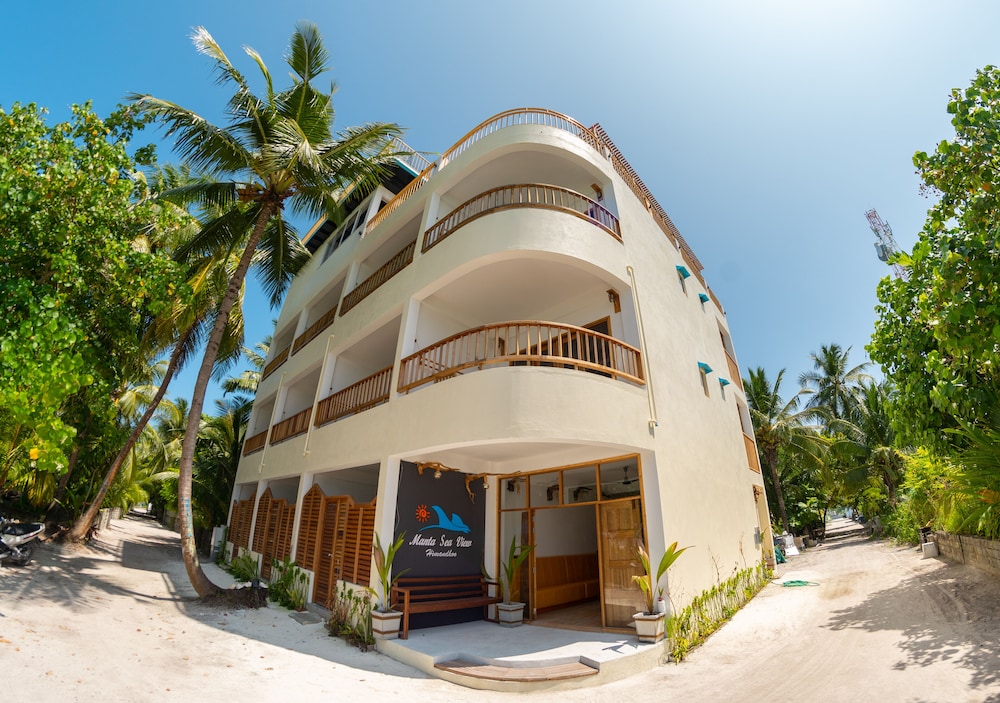
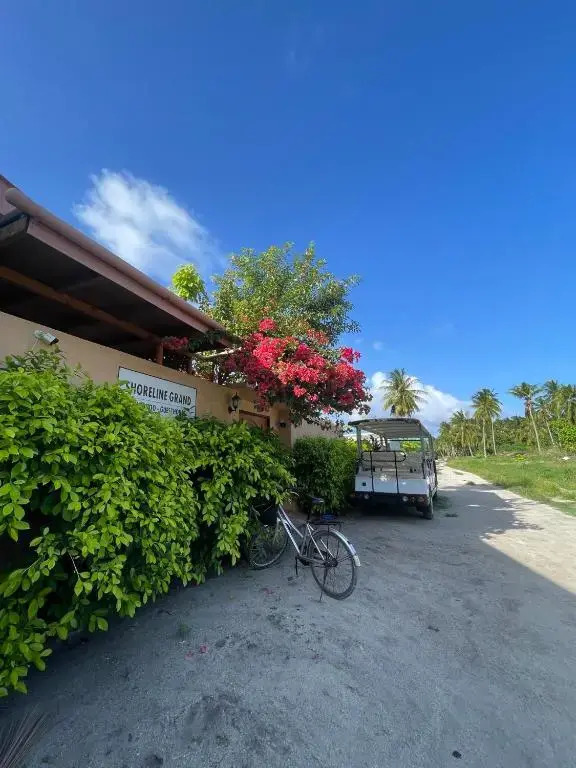
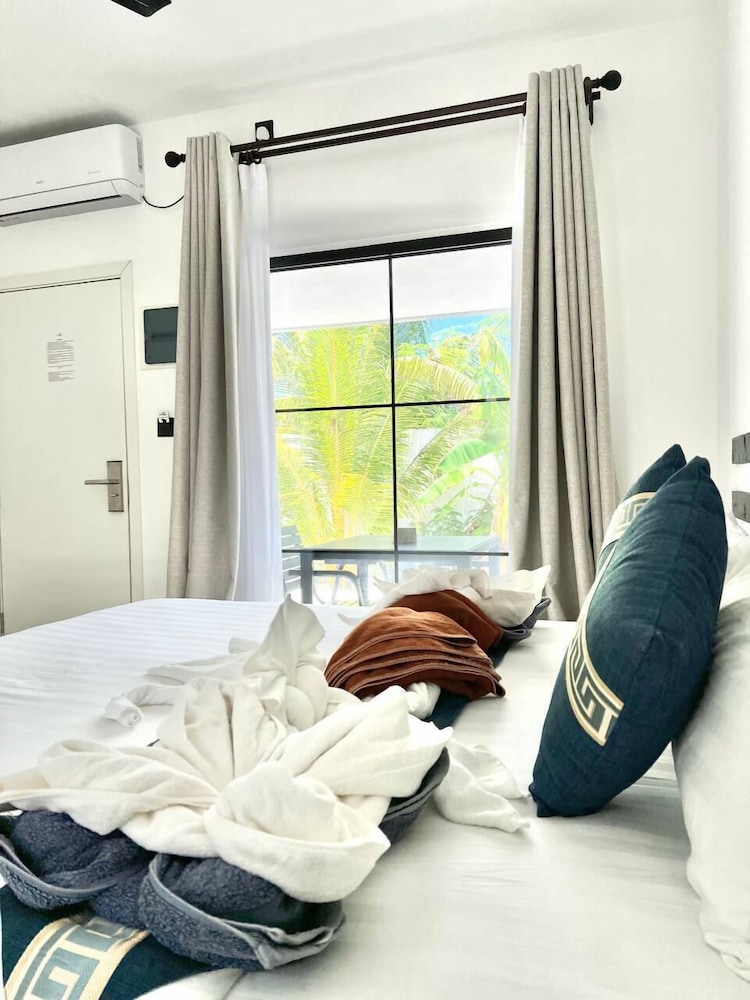
Where to stay
Hotels to consider
FAQ
Questions people ask
Can I see Malé in a single day between flights?+
Yes, if you have six hours or more on the ground. The airport is on a separate island, so allow 45 to 60 minutes each way by ferry or taxi across the bridge, plus immigration. Focus on the fish market, Old Friday Mosque and one ferry to Villimalé rather than trying to cover the whole city.
How do I get from Velana International Airport to Malé?+
A public ferry links the airport island of Hulhulé with Malé in roughly 15 to 20 minutes, with frequent daytime departures. Taxis cross the Sinamalé Bridge and take 15 to 25 minutes depending on traffic. Hulhumalé is a 10 to 15 minute drive from the airport.
What should I wear in Malé?+
Cover shoulders and knees in the old-town lanes and at the mosques, and remove shoes before entering religious buildings. Shorts and sleeveless tops are fine along the artificial beach promenade. A light cotton layer is practical in the heat, and a rain jacket helps between May and November.
Is the public ferry to Villimalé worth it?+
Absolutely. It is one of the cheapest and most interesting things to do in the capital, with crossings every 15 to 30 minutes in daytime and a ten to fifteen minute ride. Villimalé has a local beach, cafés and a quieter east coast. Check the return timetable at the jetty before you set off.
What food should I try in Malé?+
Look for mas huni with roshi, kulhi boakibaa, and tuna-and-chilli short eats at the cafés around Majeedhee Magu. For dinner, grilled tuna and garudhiya with rice are the local staples. The fish market in the morning shows you exactly what is in season.
Should I stay in Malé or Hulhumalé?+
Choose Malé if your priority is the markets, mosques and ferry terminals, and you want to walk. Choose Hulhumalé for newer, larger hotels, quieter streets and a quick airport transfer before an early flight. Both make sense for a single night at the start of a trip.
When is the best time to visit Malé?+
December to April brings the drier north-east monsoon and is the best window for walking and ferry trips. May to November is wetter, with occasional ferry cancellations in rough weather. Friday is the quietest day in the city, with many shops closed and the fish market thin.
How much does a day in Malé cost?+
Costs vary, but short eats and tea are inexpensive, sit-down seafood meals cost several times more, and public ferry fares are minimal. Malé hotels are usually cheaper than resort islands but not budget in absolute terms. Carry small notes in local currency or dollars for ferries and markets.


