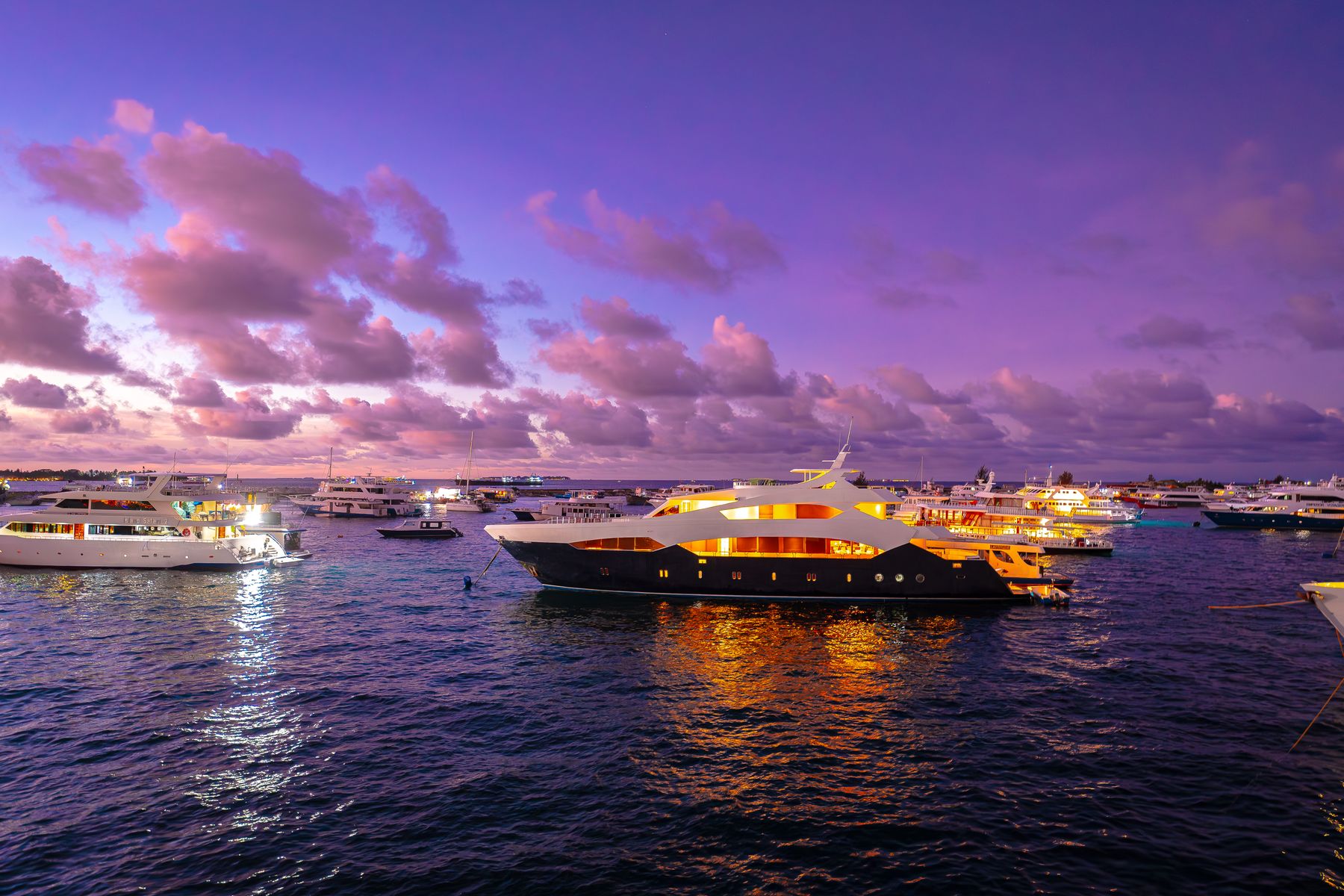
The dolphins you will almost certainly see in the Maldives are spinner dolphins, named for the leaping corkscrew spin they perform, often at dusk. They are residents, not migrants, so sightings do not depend on a lucky season the way whale sharks at South Ari Atoll do. What does vary is how close your accommodation sits to a known resting channel. Spinners feed offshore at night and return in the morning to sheltered lagoons and sandy-bottomed channels to rest, which is why the reliable trips are short runs to a specific reef pass, not long open-water searches.
01
Why Spinner Dolphins, and Where They Live
The strongest concentrations sit in a few recognised areas. South Ari Atoll around Dhangethi and Dhigurah has regular spinner activity and a boat culture built around it. Baa Atoll's Hanifaru Bay is famous for mantas between roughly June and October, but the surrounding channels also hold dolphins year-round. In North and South Malé Atoll, the Vaavu Kandu area and the channels near Guraidhoo are the usual targets for resorts within an hour's speedboat ride of Malé.
02
What a Dolphin Trip Actually Looks Like
Most resort trips run 90 minutes to two and a half hours, usually departing late afternoon so you catch the pre-dusk active period. Expect a dhoni or a small speedboat, 8 to 20 guests, life jackets, and water. Crews watch for birds and surface disturbance, then idle near the pod rather than chasing it. That matters: repeated high-speed pursuit pushes dolphins away and is the single most common reason a trip comes back empty. If your boat is racing alongside a pod at full throttle, that is a bad operator, whatever the brochure says.
The honest expectation is fins, backs and the occasional full leap, often within 20 to 50 metres of the boat. There is no guarantee of swimming with them, and many atolls restrict in-water encounters entirely. Do not book a trip marketed as a guaranteed swim. Bring reef-safe sunscreen, a hat and a dry bag. Seas are calmest from December to April on the western atolls; the wetter southwest monsoon from May to November brings choppier afternoon crossings, so morning departures become the better bet.
03
Matching the Trip to Your Base
If dolphins are a priority, the geography of your hotel choice effectively decides your odds. A resort in South Ari Atoll such as the Dhigurah or Dhangethi area gives you a 15-to-30-minute run to known channels and the option of joining a local island excursion, which is usually cheaper than a resort excursion. North Malé Atoll properties within 45 minutes of the airport can reach dolphin channels near Vaavu in under an hour, making a half-day trip realistic even on a short stay.
Island-guesthouse stays on Dhigurah, Dhangethi, Maafushi or Fulidhoo pair well with local dolphin excursions and cost far less than resort excursions, though boats are smaller and departures depend on the day's sea state. My booking preference for a dolphin-focused trip is a guesthouse on Dhigurah for the short run to South Ari's channels, or a North Malé resort if you only have three or four nights and cannot afford a seaplane connection south. Skip atolls without a known resident pod unless you are going for something else entirely.
04
Timing, Alternatives and What to Skip
Dolphins are present all year, but the practical window is the calm-weather period. December to April brings flat crossings and reliable late-afternoon departures; June to October is better for mantas at Hanifaru and whale sharks off South Ari's western edge, so you can pair dolphins with larger marine life. Sunrise trips exist and are quieter on the water, but spinner activity peaks in the late afternoon, so I would book the 4pm slot over the 6am one unless your schedule forces it.
Skip any trip that promises dolphins plus five other stops in three hours. Skip operators who cannot tell you which channel they are heading for. If you are staying on a liveaboard, dolphin sightings usually come as a bonus en route between atolls rather than as a dedicated outing, and that is fine. If a hotel cannot confirm a dolphin excursion, ask its dive centre — dive boats often know the resident pods better than the front desk does.
Related articles

Related articles


FAQ
Questions people ask
Which atoll in the Maldives is best for dolphin trips?+
South Ari Atoll and the channels of North and South Malé Atoll are the most reliable. South Ari around Dhigurah and Dhangethi has resident spinner dolphins close to shore, while Vaavu Kandu is the usual target for Malé resorts within an hour's speedboat ride.
What time of day are dolphins most active?+
Late afternoon, roughly from 4pm until sunset, when spinner dolphins are moving back into resting lagoons. Morning trips can work but the surface activity is usually quieter. Calm seas from December to April make those afternoon crossings far more comfortable.
Can I swim with dolphins in the Maldives?+
Most resorts do not allow it, and several atolls restrict in-water encounters. Dolphins rest in these lagoons during the day, so boats that chase or corner them disturb that cycle. Treat any operator guaranteeing a swim with real caution and ask what the rules are before booking.
How much does a dolphin trip cost?+
Local island excursions are generally much cheaper than resort-run trips, and prices vary by island and boat type. Ask your guesthouse or hotel for the current rate rather than relying on older reviews, and confirm whether the quoted figure includes tax, water and snorkelling equipment.
How long does a dolphin excursion take?+
Most are 90 minutes to two and a half hours door to door, including the run to the channel. From North Malé Atoll the crossing is typically under an hour each way. From Dhigurah, dolphin channels are 15 to 30 minutes offshore by dhoni.
Will I definitely see dolphins?+
No. They are wild animals and sightings depend on sea state and boat behaviour. Your odds are good in South Ari and around Vaavu, but a responsible operator will not guarantee a sighting. Book a trip you would enjoy for the boat ride and sunset alone.
Are dolphins in the Maldives there year-round?+
Yes. Spinner dolphins are resident, so sightings are not limited to a season the way manta and whale shark encounters are. The limiting factor is the weather and sea state, with the calmer northeast monsoon months from December to April giving the most comfortable crossings.
Should I take a seaplane for a dolphin trip?+
Only if you are already staying at that atoll. Seaplane transfers are expensive and unnecessary just for dolphins. If your trip is short, a North Malé Atoll hotel with a fast speedboat link to the Vaavu channels is the practical choice.


