
Of the many islands in the Maldives, only a share are inhabited. The rest are a mix: some are worked seasonally, some are visited for a picnic and left, and some are simply left alone. What they have in common is that the sea and the weather keep changing them.
01
An archipelago of empty islands
The Maldives is made up of a large number of islands, and only some of them are inhabited. The rest fall into a few loose groups. Some are used for a season and then left. Some are visited for a day and left by evening. Some are not visited at all, or only rarely, and are left to the birds, the crabs and the trees.
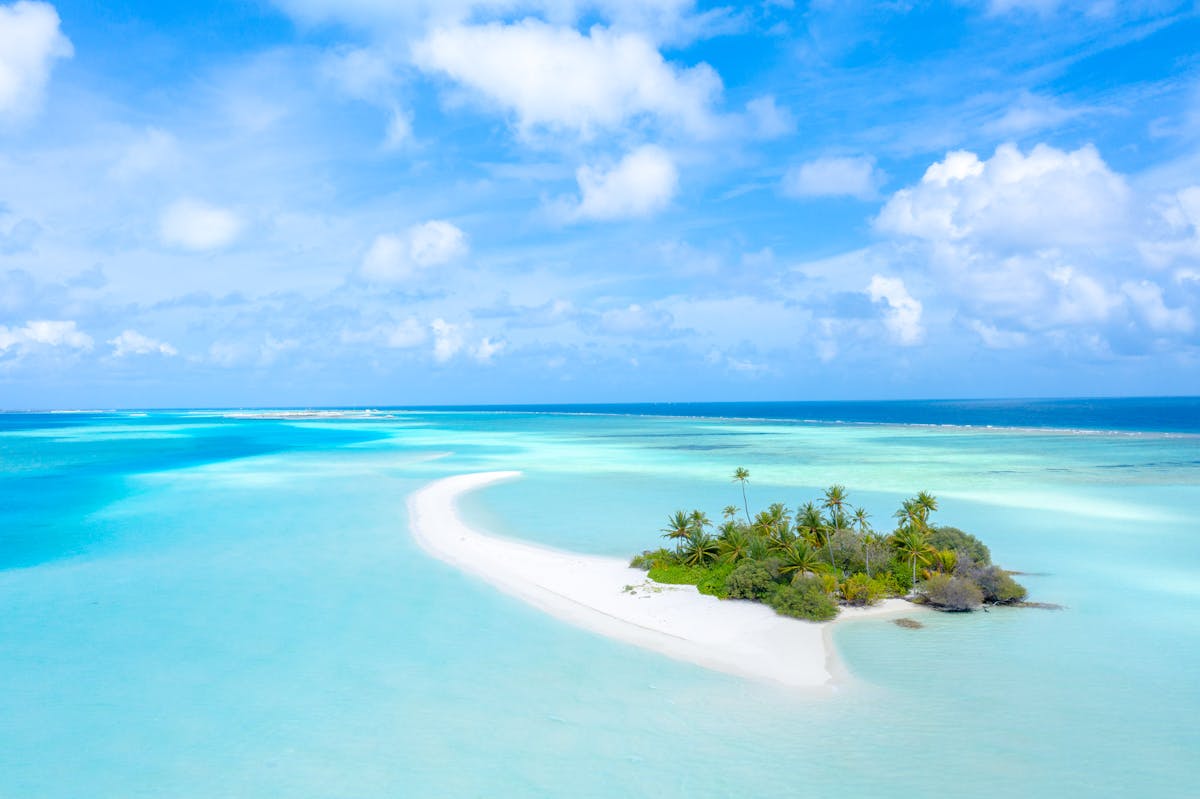
An uninhabited island is not necessarily a small one, and not necessarily a bare one. Many carry thick vegetation, a beach and a shallow lagoon. What they lack is a village, a harbour, a mosque and the daily life that goes with them. That absence is what makes them useful for some purposes and valuable for others.
02
Fishing camps and picnic days
Some uninhabited islands are used as fishing camps. Fishermen may stay for a stretch of the season, drying or salting catch, repairing gear and using the island as a base. The camp is often simple and temporary, and it may leave little behind when the season ends.
Others are used for picnics. A boat takes a group across for the day, with food, water and shade, and brings them back in the afternoon. On local islands, a picnic on a nearby uninhabited island is a common outing. The island is used and then left as it was found, or should be.
Access and use vary. Some islands are held or managed by a resort, some by a local council, and some are used by custom rather than by any formal arrangement. It is worth asking the guesthouse or the boat captain which islands are open to visitors and which are not.
- Fishing camps. Seasonal stays for fishing, drying catch and storing gear.
- Picnic days. A boat out, a day ashore, a boat back before dark.
- Left alone. Some islands are rarely or never visited.
03
Shaped by weather and sea
An uninhabited island is not fixed. Its shape changes. Storms move sand, erosion takes a bite out of one shore and adds to another, and the vegetation shifts with the salt and the wind. A channel may silt up; a beach may widen or narrow over a few seasons.
The two monsoons set the pattern. Iruvai, the northeast monsoon from roughly December to April, is drier and calmer. Hulhangu, the southwest monsoon from roughly May to November, brings wind, passing showers and choppier crossings. The sea stays warm all year, but the direction of the swell and the currents changes with the season, and that is what works on the shore.
What this means for a visitor is that an island described in a guidebook a few years ago may look different now. A beach may have moved; a landing point may have changed. Local knowledge, from the guesthouse or the boat crew, is more reliable than an old chart.

04
Birds, turtles and the reef
Islands with no people can be important for wildlife. Some are used by seabirds for nesting, though which species and which islands varies. Some beaches are used by turtles coming ashore to nest, again depending on the island and the season. Disturbance is the main risk, so keeping a distance and not walking over nesting areas matters.
The reef around an uninhabited island is often in good condition, but not always. Coral bleaching, storms and fishing all leave marks. The usual rules apply: do not touch or stand on coral, do not collect coral or shells, and do not feed the fish. Taking coral or shells out of the country is not allowed.
If you visit, take everything away with you. That includes food waste, packaging and anything that might blow away. Leave the island as you found it, and leave the wildlife undisturbed.
05
Visiting an uninhabited island
There is no single rule for visiting an uninhabited island. Some are easy to reach and commonly visited; others are not. Access may depend on the resort, the guesthouse, the boat operator or the local council. It is best to go with someone who knows the island and the current arrangements.
Landing can be simple or not. There may be no jetty, and the boat may anchor offshore while you wade in. Take footwear for the reef and the shallows, and take water and shade. There are no facilities, no shops and no shelter beyond the trees.
On the island, the usual local-island habits apply if you are coming from a local island: swimwear only on designated beaches, shoulders and knees covered elsewhere, and no alcohol. On an uninhabited island there may be no such designations, so keep swimwear for the beach and the water.
- Take everything away. Food waste, packaging, bottles, nothing left behind.
- Keep off the coral. Do not touch, stand on or collect coral or shells.
- Leave wildlife alone. Do not feed fish or approach nesting birds or turtles.
- Ask first. Check access and any local rules before you go.
06
Why the empty islands matter
Uninhabited islands are part of the country's working landscape. They provide space for fishing camps, a place for a day out, and a buffer against storms and erosion. Some are held in reserve for future use. Others are simply left, which is a use in itself.
For a visitor, they offer a different kind of day: no buildings, no roads, no schedule beyond the boat. That is the appeal, and it is also the responsibility. The island is only as unspoiled as the last visitor left it.
If you want to see one, ask locally. The guesthouse or the boat captain will know which islands are used for picnics, which are fished and which are best left alone.
FAQ
Questions people ask
What is an uninhabited island in the Maldives?+
An uninhabited island is one with no resident population. It may still be used: for a fishing camp, for a picnic, or for nothing at all. Many have vegetation, a beach and a lagoon, but no village, harbour or mosque. They are common throughout the atolls.
Can anyone visit an uninhabited island?+
Not always. Access varies. Some islands are commonly visited, others are held by a resort or a council, and some are left alone. The safest approach is to ask the guesthouse, the resort or the boat operator before setting out, and to go with someone who knows the current arrangements.
What are uninhabited islands used for?+
Some are used as seasonal fishing camps, where fishermen stay for part of the year. Others are used for day picnics by boat. Some are left entirely alone, and a few may be held in reserve. Use depends on the island, the atoll and local arrangements.
Do uninhabited islands change over time?+
Yes. Storms, erosion and currents move sand and reshape the shore, and vegetation shifts with salt and wind. The two monsoons set the pattern of swell and currents. An island can look different from one season to the next, so local knowledge is more reliable than an old description.
Are uninhabited islands important for wildlife?+
Some are. Certain islands are used by seabirds for nesting, and some beaches are used by turtles coming ashore to nest. Which islands and which species varies, and is not always publicised. Keep a distance from nesting areas and do not disturb the animals.
What should I take to an uninhabited island?+
Take water, shade, footwear for the reef and shallows, and anything you need for the day. There are no facilities. Take everything away with you, including food waste and packaging. Do not collect coral or shells, and do not feed the fish.
Is there alcohol allowed on uninhabited islands?+
Alcohol is served on resort islands. On local islands it is not, and importing it is not allowed. An uninhabited island has no rules of its own, but if you are coming from a local island, the usual habits apply. Ask the guesthouse or boat operator what is expected.
Can I stay overnight on an uninhabited island?+
Usually not, unless you are part of a fishing camp or have a specific arrangement. Most visits are day trips, and camping is not generally permitted. Access arrangements vary between islands and atolls, so ask the guesthouse, the resort or the boat operator before planning any overnight stay, and check what is allowed.
Why are some islands left alone?+
Some are left for conservation, some are held in reserve, and some are simply not needed. Leaving an island alone is a use in itself: it allows vegetation and wildlife to continue without disturbance. The reasons vary by island and are not always public.


