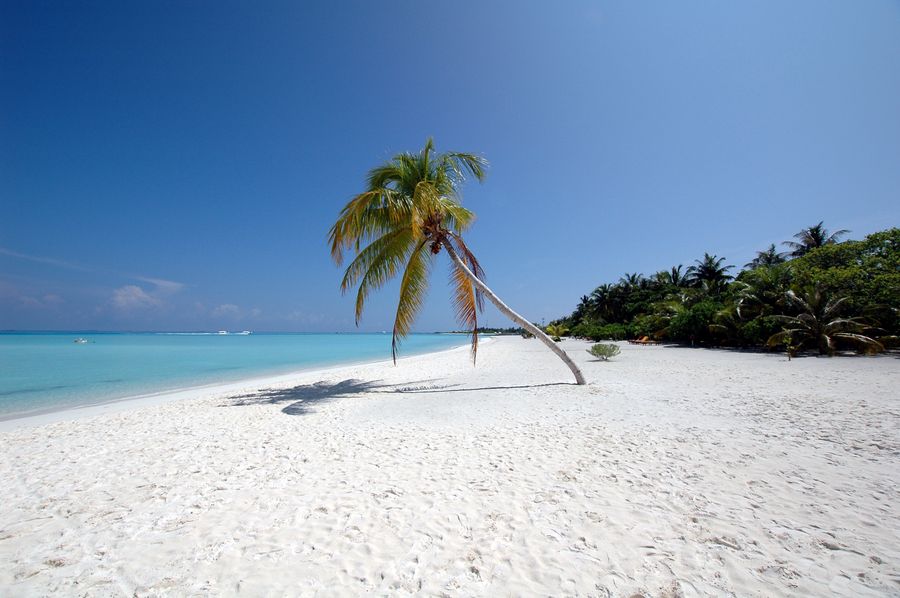
A guesthouse stay puts you in a village rather than a resort, with mosques, schools and harbours nearby. Rooms are usually plain and air-conditioned, meals come from local cafés, and alcohol is not available. The saving is real, but transfers and island choice decide how much you actually spend.
01
What a guesthouse stay involves
On an inhabited island, guesthouses are family-run or small operations with a handful of rooms. Expect air conditioning, a private bathroom and a simple breakfast, not a pool or a private beach. The village itself is the setting: narrow lanes, a harbour, a mosque, a school and a few cafés. Some islands have several guesthouses and a steady trickle of visitors; others have one or two rooms and little tourism at all.
Facilities vary widely between islands. One may have a café open all day and a well-stocked shop; another may have a single teashop and no shop at all. It is worth asking a guesthouse directly what is nearby before booking, especially if you have dietary needs or travel with children. The simpler the island, the more you rely on the guesthouse for meals and advice.
02
Ferries, speedboats and transfer costs
Transfers are where a budget can quietly disappear. Public ferries link islands within an atoll on set days and are the cheapest way to move, but they are slow, infrequent and often do not run on Fridays. Speedboats are faster and run on set schedules, but they cost more. A guesthouse can tell you which ferries and speedboats currently serve the island and help book seats.
The practical rule is to choose an island reachable by scheduled ferry from Malé or from another inhabited island, rather than one that needs a private speedboat. Atolls close to the airport, such as North and South Malé, are easier and cheaper to reach, but even there the ferry timetable shapes the trip. Allow a spare day around any tight connection, because timetables change and weather can delay boats.
If your time is short, a shared speedboat may be worth the extra cost. If it is not, build the trip around the ferry days and treat the slower crossing as part of the journey.
- Ferry: cheapest, slow, set days, rarely on Fridays.
- Shared speedboat: faster, more expensive, fixed departure times.
- Private speedboat: most flexible and most costly; avoid unless needed.
- Seaplane or domestic flight: for far atolls; costs more and needs daylight or a schedule.
03
Where the money goes
The room is usually the smallest part of the bill. Meals from local cafés are inexpensive, and a guesthouse breakfast is often included. Excursions such as snorkelling trips, sandbank visits and sunset fishing are usually arranged locally, and each carries its own charge. Diving is capped at 30 metres for recreational divers, and a dive centre on the island will set its own rates.
Transfers, excursions and any domestic flight are the lines that add up. A cheap room on an island that needs two boat legs and a flight can cost more overall than a pricier room on a ferry route. Compare the whole journey, not just the nightly rate. Book ahead in high season, when guesthouses on the more popular islands fill and speedboat seats become harder to find.
04
Beaches, dress and alcohol
Local islands are conservative. In the village, shoulders and knees are covered, and Friday midday prayers close many businesses. Swimwear is worn only on designated beaches, often called bikini beaches, which are usually marked or fenced. Public beach areas away from those zones require modest dress. A light shirt and a sarong cover most situations.
Alcohol is not available on inhabited islands, and importing alcohol or pork is not allowed. If a drink with dinner matters, that points to a resort island instead. During Ramadan, eating and drinking in public in daylight is avoided on local islands, and some cafés adjust their hours. None of this makes a guesthouse stay difficult, but it is worth knowing before you arrive.

05
Snorkelling, sandbanks and local trips
Most guesthouses run or book excursions: a snorkelling trip to a nearby reef, an afternoon on a sandbank, sunset handline fishing, or a visit to an uninhabited island. These are arranged locally and are usually small-group. A house reef close to the island makes snorkelling possible without a boat, which keeps costs down.
Reef care matters everywhere. Touching or standing on coral, collecting coral or shells, and feeding fish all harm the reef, and taking coral or shells out of the country is not allowed. Ask the guesthouse or dive centre for reef-safe guidance before you swim. A mask and fins of your own save on rental and fit better.
06
Choosing the right island
Some inhabited islands are geared to tourism, with several guesthouses, cafés and excursion operators. Others are working fishing islands with little visitor infrastructure. Neither is better; they suit different trips. A tourism-oriented island is easier for a first visit, while a quieter island rewards travellers who want village life and are content with fewer facilities.
Check three things before booking: how the island is reached and on which days, whether there is a bikini beach, and what food is available. A guesthouse can answer all three. If you plan to move between islands, keep the route simple and check ferry days first, because a chain of connections can eat a short trip.

FAQ
Questions people ask
Are local-island guesthouse stays in the Maldives really cheaper than resorts?+
Usually, yes. Rooms are simpler and meals come from local cafés, so the nightly cost is lower. The saving shrinks if the island needs an expensive speedboat or domestic flight transfer. Compare the whole journey, including transfers and excursions, rather than the room rate alone.
Can you drink alcohol on a local-island stay in the Maldives?+
No. Alcohol is not sold or served on inhabited islands, and importing it is not allowed. If a drink with dinner matters, a resort island is the alternative. Some travellers split a trip between a guesthouse and a resort, but each move adds a transfer.
How do ferries work for a budget local-island stay?+
Public ferries link islands within an atoll on set days and are the cheapest way to move. They are slow, infrequent and often do not run on Fridays. Timetables change, so ask the guesthouse for the current schedule before fixing dates, and keep a spare day around connections.
What should you wear on a local island in the Maldives?+
In the village, cover shoulders and knees. Swimwear is worn only on designated bikini beaches. Public beach areas away from those zones require modest dress. A light shirt and a sarong are useful. Friday midday prayers close many businesses, so plan around them.
Are excursions available from local-island guesthouses?+
Yes, most guesthouses arrange or book snorkelling trips, sandbank visits, sunset fishing and uninhabited-island trips. These are usually small-group and priced locally. Confirm what is included, such as equipment and lunch, before booking. A nearby house reef makes snorkelling possible without a boat.
When should you book a local-island stay in the Maldives?+
Book ahead in high season, when guesthouses on popular islands fill and speedboat seats become harder to find. Outside those months, a few days' notice is often enough. If your trip depends on a particular ferry day, book once the schedule is confirmed.
Do all local islands in the Maldives have the same facilities?+
No. Facilities vary widely from island to island. Some have several guesthouses, cafés and excursion operators, while others have one teashop and no shop. Ask the guesthouse what is nearby before booking, especially if you have dietary needs, travel with children, or need a pharmacy or clinic within reach.
Is a local-island stay suitable during Ramadan?+
Yes, but expect adjustments. During Ramadan, eating and drinking in public in daylight is avoided on local islands, and some cafés change their hours. Friday midday prayers close many businesses at any time of year. Ask the guesthouse what to expect during your dates.
How do you keep transfer costs down on a local-island stay?+
Choose an island reachable by scheduled ferry rather than one that needs a private speedboat. Atolls close to the airport are easier to reach, but the ferry timetable still shapes the trip. Compare the whole journey, including any domestic flight, before deciding.