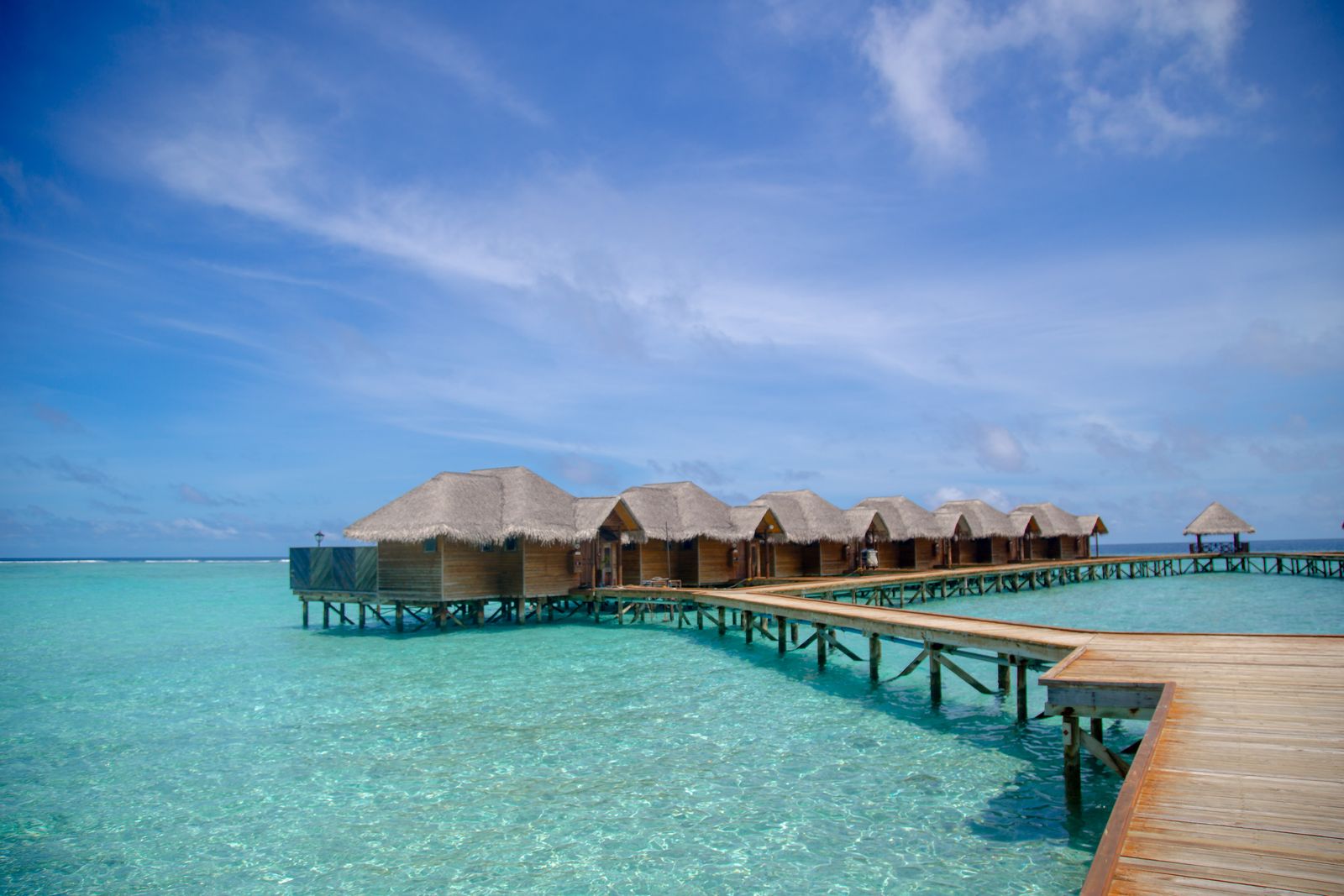
Most resort islands offer both. An overwater villa trades shade and solid ground for a deck above the water. A beach villa trades the view for trees, sand and easy walking. The right choice depends on who is travelling and when.
01
What an overwater villa gives
An overwater villa sits on stilts above the lagoon, reached by a walkway from the island. The main draw is direct access to the water: steps or a ladder lead from the deck into the lagoon, so a swim needs no walk to a beach. The view is open water in most directions.
The trade-off is exposure. Overwater structures stand clear of the island's trees, so they catch more sun and more wind. In the southwest monsoon, known as Hulhangu and roughly May to November, the water below can be choppier, and swimming from the deck is less pleasant on windy days.
Overwater villas usually cost more than beach villas on the same island. Categories vary widely, from a single room on stilts to a large suite with a private pool, so what is included differs from one island to the next.
02
What a beach villa gives
A beach villa sits on the island itself, usually among vegetation a short walk from the sand. Trees give shade through the middle of the day, which matters in a hot climate. The beach is at the door, and the main facilities are usually closer than from an overwater jetty.
Beach villas often suit families better. Children can play on sand within sight of the villa, and there is no ladder over water to watch. The ground is solid underfoot, which helps anyone unsteady on their feet or uneasy about sleeping above the lagoon.
Privacy varies. A beach villa set in dense vegetation can feel more enclosed than an overwater villa, but some beach villas sit close to a path or a neighbouring villa. The position of the individual villa matters more than the category name.
- Shade: trees and vegetation screen the sun through the day.
- Access: sand at the door, main facilities usually close by.
- Families: solid ground and no ladder over water to supervise.
- Privacy: depends on the individual villa's position, not just the category.
03
Privacy and the water below
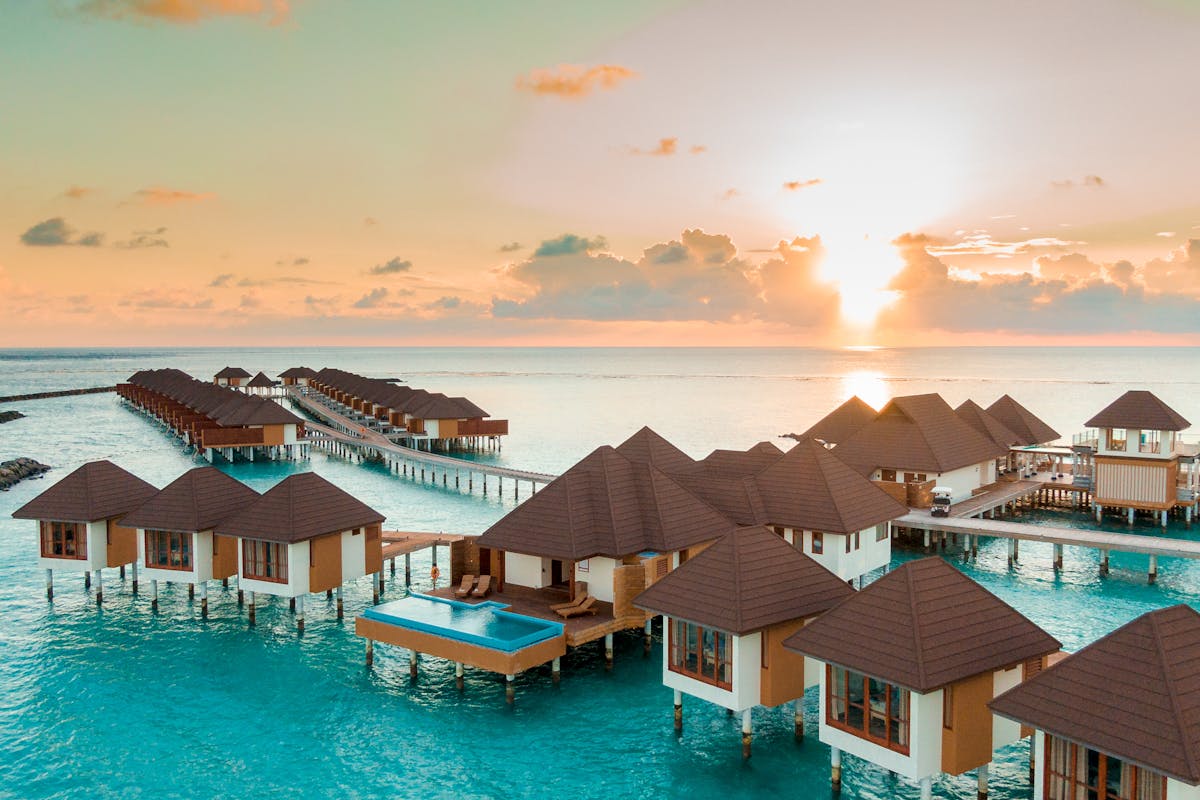
Overwater villas line up along a jetty, often close together. Neighbours can be within sight and sound from the deck, and some decks face the walkway rather than open water. Ask where a particular villa sits on the jetty before booking.
The lagoon below is not always what the photographs suggest. Some lagoons are shallow for a long way out, so swimming from the deck means wading. Others have rocky or coral patches under the steps, which are best avoided with bare feet.
Reef care applies from any deck. Touching or standing on coral harms it, and taking coral or shells out of the country is not allowed. Snorkelling from an overwater villa is easy, but the house reef may be a swim further out.
04
Wind and sea conditions
The Maldives turns on two monsoons. Iruvai, the northeast monsoon from roughly December to April, is drier and calmer. Hulhangu, the southwest monsoon from roughly May to November, is windier, with passing showers and choppier crossings.
For an overwater villa, the windier months can mean more breeze on the deck and rougher water below. Swimming from the deck may be less comfortable, and boat trips can be bumpier. A beach villa on the sheltered side of an island can feel calmer in the same weather.
Air and sea stay warm all year, so the choice is about comfort rather than temperature. If time on a private deck over the water matters most, the calmer months suit it better. If dates are fixed, ask the resort which side of the island the villa faces.
05
Families and getting around
Families with young children often prefer a beach villa. Sand play, shallow water at the shoreline and solid ground make supervision simpler. Some resorts set age limits or safety rules for overwater villas, so ask before booking.
Access matters too. An overwater villa reached by a long walkway can be a tiring walk to meals, the pool and the dive centre, particularly in heat or rain. A beach villa close to the main buildings cuts that walking.
Anyone with reduced mobility should ask about steps, walkway surfaces and ladders into the water. Overwater villas usually involve steps, and the deck edge is open. A beach villa may be easier to reach, but paths and sand can also be uneven.
- Young children: beach villas are usually easier to supervise.
- Walking: a long jetty adds distance to meals and facilities.
- Mobility: ask about steps, walkway surfaces and ladders.
- Age rules: some resorts set limits for overwater villas.
06
What to check before booking
Villa categories and inclusions vary widely between islands, and the same name can mean different things. Check whether meals, drinks, transfers and activities are included, and whether the villa has a private pool. A fee may be charged for some extras.
Ask about the villa's position: which side of the island, how far along the jetty, and whether it faces open water or the walkway. Ask about the lagoon below, the depth at the steps and whether the seabed is sandy.
Rules, inclusions and transfer arrangements change. Confirm the current details with the resort before booking, and read the cancellation terms. The resort is the official source for what a particular villa includes.

FAQ
Questions people ask
Is an overwater villa in the Maldives worth the extra cost?+
It depends on how much time is spent on the deck and in the water below. An overwater villa gives direct lagoon access and open views, but costs more and is more exposed to wind. A beach villa gives shade and sand access for less. Check what each category includes before deciding.
Are overwater villas in the Maldives private?+
Not always. Overwater villas often line a jetty close together, so neighbours can be within sight and sound. Some decks face the walkway rather than open water. Ask the resort where a particular villa sits on the jetty, and whether it faces the lagoon or the path.
Which is better for families, an overwater or beach villa?+
A beach villa is usually easier with young children. There is solid ground, sand to play on and no ladder over water to supervise. Some resorts set age limits or safety rules for overwater villas. Ask the resort about its rules before booking either category.
Can you swim from an overwater villa in the Maldives?+
Usually yes, from steps or a ladder on the deck. But some lagoons are shallow for a long way out, and others have rocky or coral patches under the steps. Ask the resort about the depth and the seabed below the villa before booking, and wear footwear if the bottom is rough.
Is the water choppier at an overwater villa in the wet season?+
In Hulhangu, the southwest monsoon from roughly May to November, the water can be choppier and the deck more exposed to wind. Swimming from the deck may be less pleasant on windy days. Iruvai, roughly December to April, is drier and calmer. Check conditions with the resort for your dates.
Do beach villas in the Maldives have more shade?+
Often yes. Beach villas usually sit among vegetation, and trees screen the sun through the middle of the day. Overwater villas stand clear of the trees and catch more sun. The amount of shade varies with the individual villa's position, so ask the resort which villas sit under cover.
How far is an overwater villa from the rest of the resort?+
It varies. Some overwater villas sit at the end of a long jetty, which means a walk to meals, the pool and the dive centre. Others are closer to the main buildings. Ask the resort for the distance from a particular villa to the restaurants and facilities before booking.
What is included with an overwater or beach villa in the Maldives?+
Inclusions vary widely. Some rates cover meals, drinks or transfers, and some villas have a private pool. The same category name can mean different things on different islands. Check the current inclusions with the resort, since a fee may be charged for extras, and confirm before booking.
Should I ask about the lagoon below an overwater villa?+
Yes. The lagoon may be shallow, rocky or sandy, and that affects swimming from the deck. Ask the resort about the depth at the steps and the seabed. Reef care still applies: do not touch or stand on coral, and do not take coral or shells out of the country.


