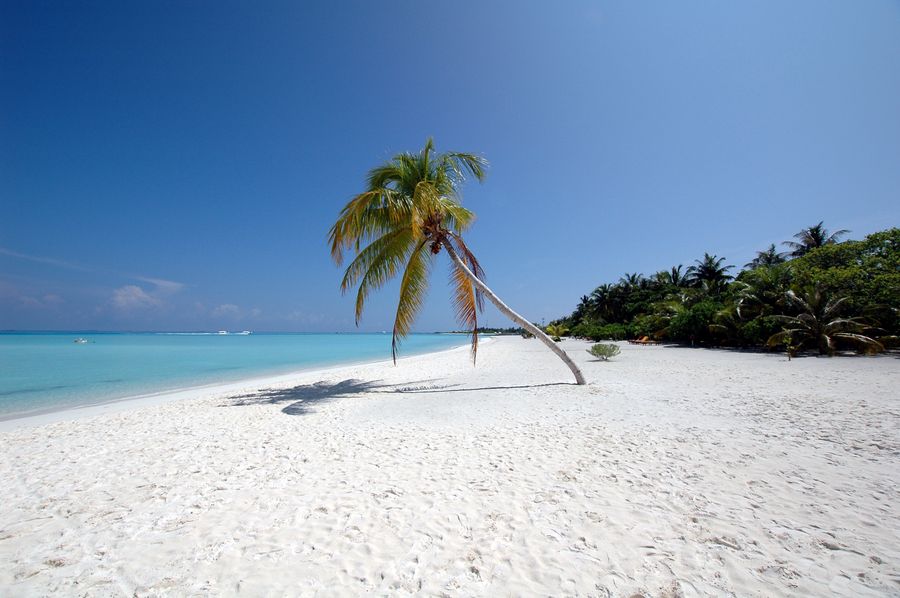
Addu Atoll sits at the southern end of the archipelago. Its link road runs across reclaimed causeways and bridges, connecting Hithadhoo, Maradhoo and Feydhoo among others. The route is flat and paved, and cycling is a practical way to see how the islands fit together.
01
The route and its islands
The link road in Addu is a continuous paved route that joins several inhabited islands. Hithadhoo is the largest of these and the administrative centre of the atoll. From there the road runs across to Maradhoo and on to Feydhoo, with other islands connected along the way. The surface is flat throughout, with no significant climbs.
Because the road crosses water between islands, the ride has a rhythm of its own: a stretch through a village, a causeway over the lagoon, then another village. You pass harbours, shops, mosques and beaches. It is a grounded view of island life rather than a resort experience, and that is the point of cycling it.
The distance is manageable for most riders, but the heat is the real factor. Plan a route that suits your fitness and the time of day, and do not treat the whole road as a single outing unless you are used to riding in tropical conditions.
- Hithadhoo: the main island, with shops, cafés and the atoll's administrative offices.
- Maradhoo: a smaller community linked by causeway, with quiet streets and a harbour.
- Feydhoo: close to the airport island and the end of the link road for many riders.
- Causeways: open stretches over the lagoon where there is little shade.
02
Bikes and what to carry
Bicycles can usually be hired locally on the larger islands, though availability varies and it is worth asking your guesthouse before you arrive. The bikes on offer are typically simple town bikes rather than touring machines. Check the brakes and tyres before you set off, and make sure the saddle height is right for you.
Carry more water than you think you need. The climate is hot and humid all year, and the open causeways offer no shade. A hat, sunglasses and a light long-sleeved layer help with the sun. Apply sunscreen before you leave and reapply during the ride.
A basic repair kit and a pump are useful if you are riding far from the main settlements. Mobile coverage is generally good on the linked islands, but it is sensible to tell your guesthouse where you are going and when you expect to be back.
03
When to ride
The link road can be cycled all year. The two monsoons shape the weather: Iruvai, the northeast monsoon from roughly December to April, is drier and calmer; Hulhangu, the southwest monsoon from roughly May to November, brings windier conditions and passing showers. Air and sea stay warm throughout.
The best hours are early morning and late afternoon, when the sun is lower and the heat is less intense. Midday is best avoided. If you are riding during Hulhangu, keep an eye on the sky and be prepared for a short, heavy shower.
Ramadan affects the rhythm of the day on local islands. Eating and drinking in public in daylight is avoided, and some businesses close or change hours. If you are cycling during Ramadan, plan around these changes and be considerate.

04
Traffic and road rules
Traffic on the link road is light but not absent. Motorbikes are common, and there are cars and small vehicles, especially near the main settlements and the harbour areas. Ride predictably, keep to the left and signal your turns.
Local road rules apply. Helmets are not always worn by local riders, but wearing one is sensible if you have one. At junctions and in villages, slow down and watch for pedestrians, children and animals.
The causeways are exposed to wind, which can be stronger than it feels in the villages. Keep a steady line and allow space for vehicles to pass. At night, lights are essential; if your hired bike does not have them, plan to be back before dark.
- Keep left. Ride with the flow of traffic and signal before turning.
- Watch for motorbikes. They are the most common vehicles on the road.
- Slow in villages. Pedestrians, children and animals may be on the road.
- Use lights at night. If riding after dark, make sure you are visible.
05
What you pass
The road passes through the everyday life of the atoll. You will see harbour walls where fishing boats tie up, small shops selling provisions, mosques with their minarets, and schools. On the edges of the islands there are beaches, some used by local families and some designated for swimwear.
The vegetation is dense in places, with breadfruit trees, coconut palms and gardens. Between the settlements, the causeways open up views across the lagoon and towards the reef. It is not a wilderness ride, but it is a varied one.
There are places to stop for a drink or a snack in the main settlements. On local islands, alcohol is not available. Dress modestly in the villages, covering shoulders and knees, and keep swimwear for the designated beaches.

06
Practical points
Addu is reached by scheduled domestic flights to Gan, which also has an international airport. From Gan, the link road connects onwards. A boat transfer is not usually needed for the linked islands, which is part of what makes cycling here practical.
Accommodation is on local islands, with guesthouses in the main settlements. Your guesthouse can advise on bike hire, routes and current conditions. Public ferries link other islands in the atoll on set days, but the link road covers the main ones.
There is no fee to use the road. Bike hire, food and drinks cost extra. Check with your guesthouse about the current situation for hire and any local rules that may affect cyclists.
FAQ
Questions people ask
Which islands does the Addu link road connect?+
The link road connects several inhabited islands in Addu Atoll, including Hithadhoo, Maradhoo and Feydhoo. Hithadhoo is the largest and the administrative centre. The road crosses causeways and bridges between the islands, so you can cycle from one community to the next without taking a boat.
Can I hire a bicycle on Addu for the link road?+
Bicycles can usually be hired locally on the larger islands, but availability varies and is not guaranteed. Ask your guesthouse before you arrive. The bikes are typically simple town bikes. Check the brakes and tyres before setting off, and confirm the hire period and any deposit with the provider.
Is the Addu link road flat enough for easy cycling?+
Yes. The link road is flat and paved throughout, with no significant climbs. The main challenge is the heat and humidity rather than the terrain. Ride early or late, carry water, and use sunscreen. The causeways are exposed, so wind can be a factor even on a flat route.
What is the best time of year to cycle the Addu link road?+
The road can be cycled all year. The drier northeast monsoon, roughly December to April, brings calmer conditions. The southwest monsoon, roughly May to November, is windier with passing showers. Whatever the season, early morning and late afternoon are the most comfortable times to ride.
Is it safe to cycle the Addu link road with traffic?+
Traffic is light but includes motorbikes and some vehicles, especially near settlements. Ride predictably, keep left and signal turns. Slow down in villages and watch for pedestrians and animals. If riding after dark, use lights. Local road rules apply, and wearing a helmet is sensible if you have one.
What should I wear when cycling the Addu link road?+
Wear light, modest clothing that covers shoulders and knees, especially when passing through villages. A hat and sunglasses help with the sun. Swimwear is only for designated beaches, not the road or village. Bring a light long-sleeved layer for sun protection and a rain jacket in the wetter months.
Can I cycle the Addu link road during Ramadan?+
Yes, but be aware that eating and drinking in public in daylight is avoided on local islands during Ramadan, and some businesses close or change hours. Plan your ride around these changes, carry water but drink discreetly, and respect local customs. Your guesthouse can advise on the current situation.
How do I get to the Addu link road from Velana airport?+
Scheduled domestic flights connect Velana International Airport to Gan in Addu, and Gan also has an international airport. From Gan, the link road connects to the other islands. A boat transfer is not usually needed for the linked islands. Check current flight schedules with the airline or your guesthouse.
Are there places to stop for food and water along the Addu link road?+
Yes. The road passes through settlements with small shops and cafés where you can buy drinks and snacks. On local islands, alcohol is not available. Carry enough water for the exposed causeways, where there are no shops. Opening hours may vary, especially on Fridays and during Ramadan.