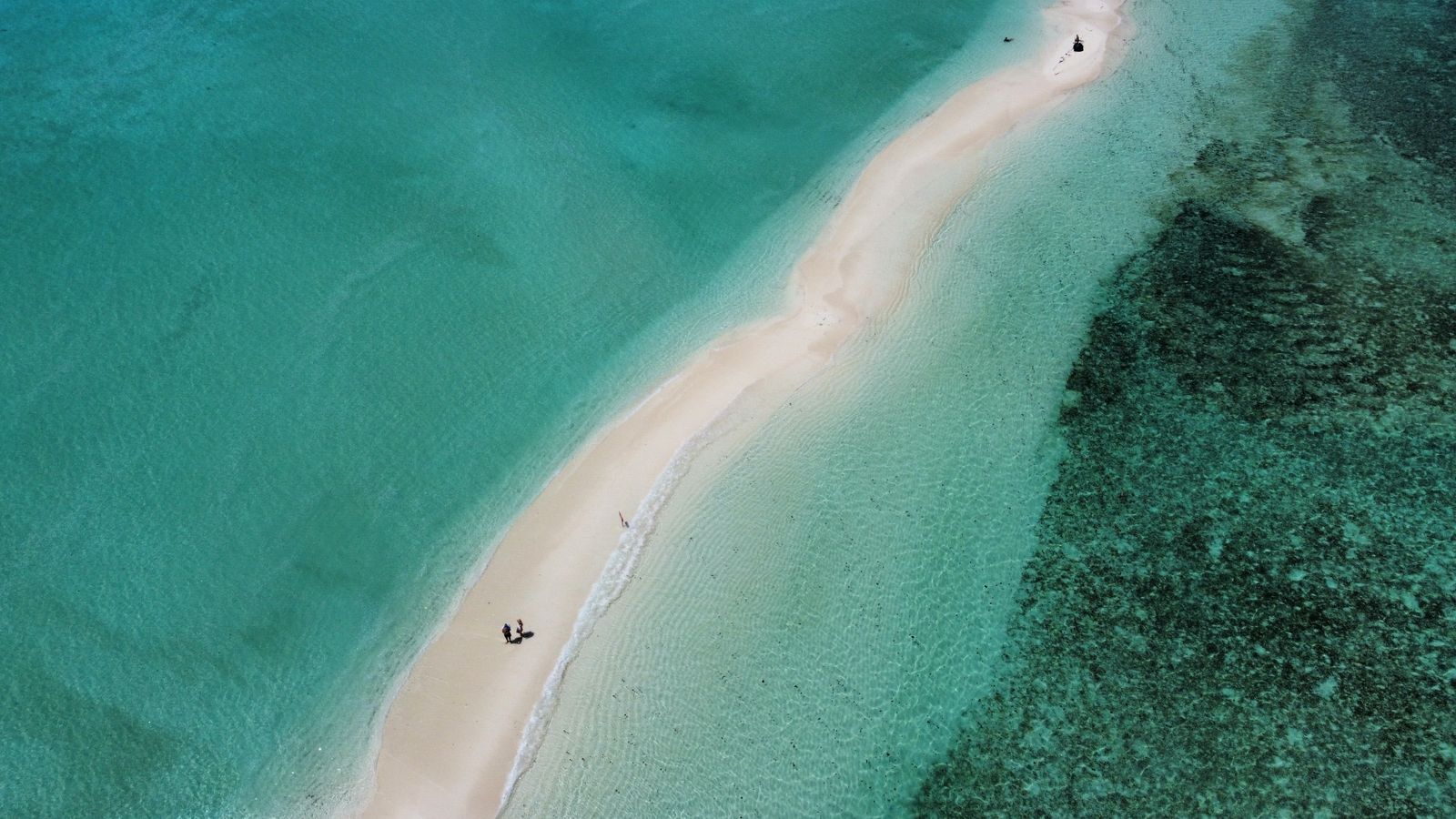
Sandbanks form where currents and tides drop sand in the lagoon. Some are permanent enough to hold a few palms; others appear only at low tide and vanish under the swell. A boat trip out is a simple half day: shade is scarce, so bring water, a hat and sun protection, and take everything back with you.
01
What a sandbank is
A sandbank is a shallow accumulation of sand in the lagoon, built up where currents slow and drop their load. Some sit just below the surface at high tide and emerge as a low white strip as the water falls. Others are larger and hold vegetation, though most trip destinations are bare sand.
Because they are made of loose sand, they move. A bank can shift position over a season, grow, or disappear after a run of rough weather. The bank a guesthouse uses this year may not be the same one it used a few years ago, and a bank that is walkable at low tide may be underwater by mid-afternoon.
That is part of the appeal. A sandbank afternoon is not a fixed attraction with an entrance; it is a patch of lagoon that happens to be dry for a few hours, chosen by the crew on the day.
02
How the trip works
Trips are run by guesthouses on inhabited islands and by resorts, usually in the afternoon when the tide is low. A dhoni or speedboat takes a small group out, often with snorkelling gear and a cooler, and returns after a couple of hours. Some trips combine the sandbank with a snorkel stop on the way back.
The crew pick the bank and the timing. Tides move each day, so departure times shift through the week; the guesthouse or resort will tell you when to be at the jetty. Trips may be cancelled or moved if the sea is choppy or the bank is not exposed.
There is no facilities on a sandbank: no toilet, no shade, no fresh water. Everything comes in the boat and goes back in it. Groups are usually small, and some operators carry a sunshade or umbrella, but you should not count on it.
- Timing. Afternoons at low tide, set by the crew each day.
- Boat. Dhoni or speedboat from the guesthouse or resort jetty.
- Duration. Usually a couple of hours on the sand, plus the crossing.
- Facilities. None. No shade, toilet or fresh water on the bank.
03
What to bring
The sun on an open bank is strong and there is nothing to stand behind. A wide-brimmed hat, a long-sleeved shirt or rash guard, and plenty of drinking water are the basics. Apply sun protection before you leave the boat and reapply during the afternoon; a mineral sunscreen is easier on the reef.
Footwear helps. The sand is hot and the shallows may hold rubble or a few urchins, so sandals or reef shoes make walking to the waterline easier. A dry bag keeps phones and cameras safe from spray on the crossing.
Take a bag for rubbish. Nothing should be left on the bank, including fruit peel and cigarette ends. Whatever you carry out, carry back.

04
Snorkelling nearby
Many sandbanks sit near a reef edge, and the snorkelling can be good. The reef drop-off may be close to the bank, with coral and fish along the slope. The crew know where the current runs and which side is sheltered.
Currents around a bank can be stronger than they look from the sand, especially as the tide turns. Snorkel with the crew's advice, stay near the boat, and do not swim off alone. If the crew say the current is running, stay on the bank.
The usual reef rules apply: do not touch or stand on coral, do not collect shells or coral, and do not feed fish. These habits protect the reef that makes the trip worth making.
05
From a local island
On inhabited islands, guesthouses run sandbank trips as a standard excursion. The boat leaves from the island harbour and the crew handle the timing around the tide. This is a straightforward way to spend an afternoon on the water without booking a resort.
Local island rules still apply on the boat and on the bank. Swimwear is for designated beaches and the sandbank itself; shoulders and knees are covered in the village. Alcohol is not available on local islands, and importing it is not allowed.
Friday midday prayers close many businesses, and some trips may not run around that time. During Ramadan, eating and drinking in public in daylight is avoided on local islands, which can affect how a trip is organised. The guesthouse will explain what applies.
- Swimwear. Fine on the sandbank and bikini beaches, not in the village.
- Alcohol. Not available on local islands and not allowed to be imported.
- Friday. Midday prayers close many businesses; trips may shift.
- Ramadan. Eating and drinking in public in daylight is avoided.
06
Practical points
Sandbank trips run in many atolls, and the crossing is usually short. Atolls close to Velana, such as North and South Malé, are reached by speedboat, which can run day or night. Farther atolls need a domestic flight or seaplane first, with a boat transfer after.
Seaplanes fly in daylight only, so an afternoon sandbank trip on a far atoll is best planned for a day when you are already settled on the island. The resort or guesthouse arranges the boat and knows the tide.
Weather matters. The northeast monsoon, roughly December to April, is drier and calmer; the southwest monsoon, roughly May to November, brings windier days and choppier crossings. Air and sea stay warm all year, but a calm day makes the afternoon far more pleasant.

FAQ
Questions people ask
Will the sandbank be there when I visit?+
Not always. Sandbanks shift with tides and currents, and some are exposed only at low tide. The crew choose a bank that is dry for the afternoon, but rough weather or an unusual tide can change the plan. The guesthouse or resort will tell you if a trip is going ahead.
Do I need to book a sandbank afternoon in advance?+
Usually a day or two is enough. Guesthouses and resorts run trips when there is demand and the tide suits, so ask at reception or the dive desk when you arrive. In busy periods, booking earlier is sensible, and the operator will confirm the departure time once the tide is checked.
Is there any shade on the sandbank?+
Generally no. Most banks are bare sand with nothing to stand behind, and some operators carry an umbrella or sunshade but you should not rely on it. Bring a hat, a long-sleeved shirt and plenty of water, and plan to spend part of the afternoon in the water or on the boat.
Can I snorkel from the sandbank?+
Often yes, if the reef edge is close and the current is manageable. The crew know the local conditions and will say where it is safe to enter and which side is sheltered. Stay near the boat, do not swim off alone, and follow their advice if the current is running.
What should I take on a sandbank afternoon?+
Water, a hat, sun protection, a long-sleeved shirt, sandals or reef shoes, and a dry bag for valuables. Take a rubbish bag as well, since nothing should be left on the bank. Snorkelling gear is often provided, but a well-fitting mask of your own is worth bringing.
Are sandbank trips suitable for children?+
Many are, but it depends on the crossing and the sea state. Guesthouses and resorts set their own age and swimming requirements, and a short speedboat ride in choppy water is not for everyone. Ask the operator what they recommend for your group before booking.
Can I visit a sandbank from a local island?+
Yes. Guesthouses on inhabited islands run sandbank trips as a regular excursion, leaving from the island harbour. Local island rules apply: swimwear on the sandbank and designated beaches, shoulders and knees covered in the village, and no alcohol. The guesthouse will explain what applies during Ramadan and on Fridays.
What happens if the weather is bad on the day of my sandbank trip?+
The operator may cancel or move the trip. Choppy seas make the crossing uncomfortable and can cover the bank, so the crew watch conditions and the tide. If a trip is cancelled, ask about another day; staying several nights gives more chances of a calm afternoon.
Is a sandbank afternoon worth doing in the southwest monsoon?+
It can be, but the southwest monsoon, roughly May to November, brings windier days and passing showers, so crossings are choppier and trips are more likely to be moved. The northeast monsoon, roughly December to April, is drier and calmer. Air and sea stay warm all year.


