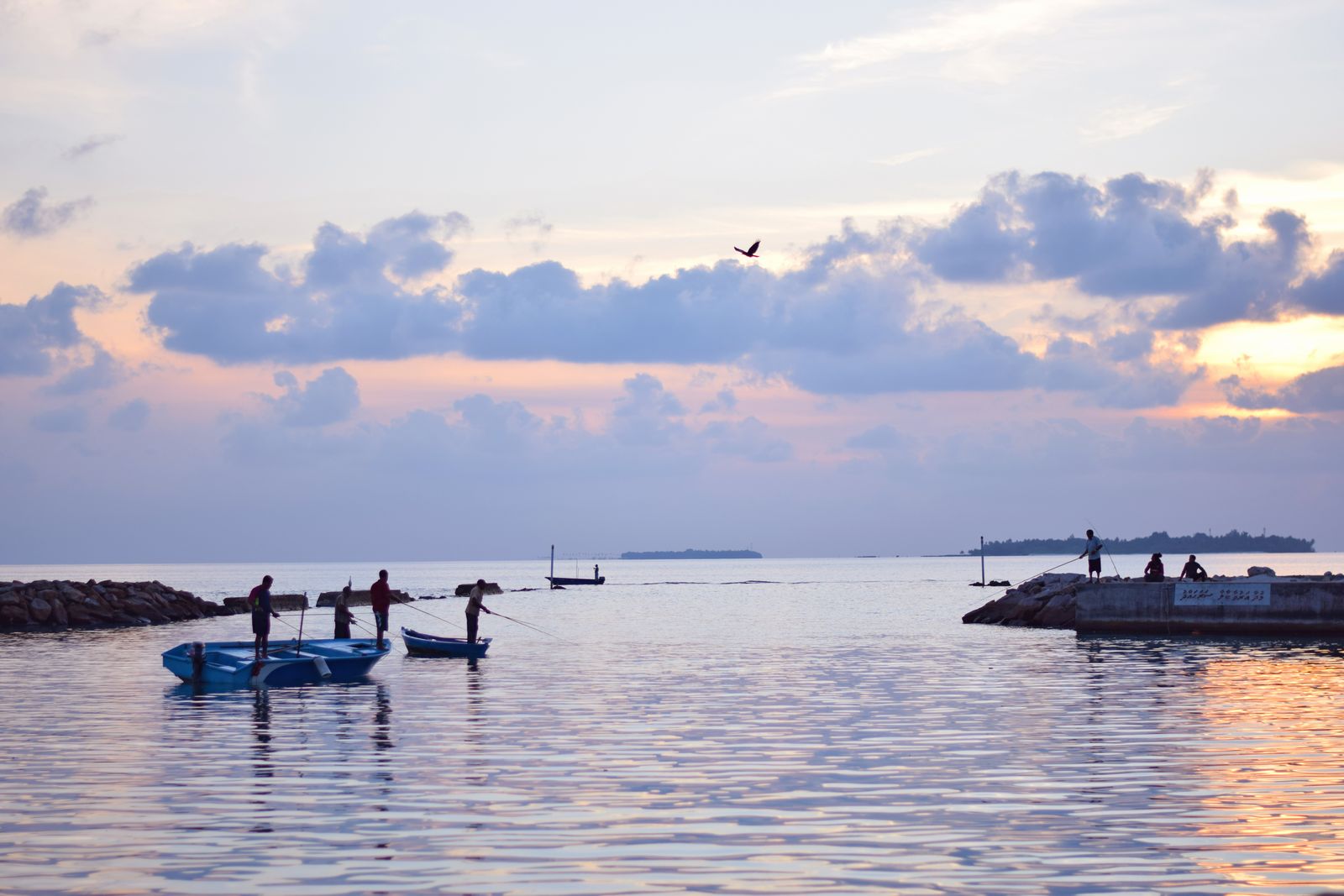
Sunset handline fishing is a simple, slow excursion run from many inhabited and resort islands. A small boat heads for the reef edge, lines are dropped by hand, and the catch often ends up on the dinner table.
01
What happens on a trip
Most sunset handline trips leave in the late afternoon and return after dark. The boat, usually a dhoni or a small open vessel, runs to the outer edge of the reef or a nearby channel. The engine slows, the crew hands out lines, and everyone fishes over the side as the light fades.
The gear is basic: a handline wound on a spool, a weighted hook, a sinker and bait. You drop the line to the bottom or let it drift, then wait for a tug. The crew show you how to hold the line and how to bring a fish up without losing it. No casting or reels are involved.
Trips usually last two to three hours. The return run is often in darkness, with the island lights ahead. Sea conditions vary from flat calm to a working chop, so the ride can be wet or dry depending on the evening.

02
What you might catch
The usual catch is reef fish: snapper, grouper, emperor and similar species that feed near the bottom. Some evenings produce several fish per person; others are quiet. The crew know the ground and will move if nothing is biting.
On many trips the catch is kept and cooked for dinner, either at the resort or by the guesthouse kitchen. If you are staying on a local island, ask whether the fish can be prepared for you. On resort islands, the kitchen often handles it as part of the excursion.
Catch rules and handling practices vary by operator and island. Some crews release small fish or species that are not eaten. Follow the crew's guidance on what to keep and what to return, and do not handle fish yourself unless shown how.
- Reef fish: snapper, grouper and emperor are common.
- Dinner: the catch is often cooked for you.
- Release: small or unwanted fish go back.
- Guidance: follow the crew on what to keep.
03
Where and when it runs
Sunset handline fishing is offered on inhabited and resort islands across most atolls. It is not tied to one location. If your island has a harbour and a boat, there is a good chance a trip can be arranged.
Trips run all year. The northeast monsoon, roughly December to April, brings drier and calmer evenings on average. The southwest monsoon, roughly May to November, is windier with passing showers, and crossings can be choppier. Air and sea stay warm in both seasons.
On local islands, guesthouses arrange trips with local crews. On resort islands, the resort organises the excursion and the transfer to the boat. In both cases, ask at reception or the guesthouse desk a day or two ahead.
04
What to bring
Bring water, sun protection for the early part of the trip, and a light layer for the return run after dark. A cap and sunglasses help while the sun is still up. Non-slip footwear is useful on a wet deck.
A small dry bag protects a phone or camera from spray. If you plan to photograph the sunset, keep the camera out of the salt until you are ready to use it. Many crews are happy to show you how to hold the line for a photo, but ask first.
On local islands, wear modest clothing in the village and on the boat. Swimwear is for designated beaches only. A light long-sleeved shirt covers shoulders and knees and doubles as sun protection on the water.
- Water: bring a bottle; the air stays warm.
- Sun protection: hat, sunglasses and a shirt.
- Light layer: for the return run after dark.
- Dry bag: for phone and camera.
05
Beginners and safety
No experience is needed. The crew bait the hook, show you how to lower the line and help when a fish is on. Children can usually join with a parent, but operators set their own minimum ages, so ask when you book.
The main things to watch are the boat's movement and the line itself. Keep fingers clear of the hook and coil, and hold the line away from the engine and propeller. Wear the life jacket if one is offered, especially in choppy conditions.
The sun sets quickly near the equator, so the light goes fast. Keep your footing on the deck and follow the crew's instructions when moving around the boat after dark.

06
Booking and etiquette
Book through your resort or guesthouse rather than approaching a boat directly. They know which crews run trips, what is included and whether the evening is suitable. Confirm whether bait, gear and water are provided, and whether the fish can be cooked afterwards.
On a local island, the boat may leave from the harbour in the late afternoon. Arrive on time and follow the crew's lead on where to sit. Tipping is not required, but a small thank-you to the crew is common if you are happy with the trip.
Catch rules, handling practices and any fees for the excursion are set by the operator and can change. Check the current arrangements with your guesthouse or resort before you go, and follow local guidance on the water.
FAQ
Questions people ask
Do I need fishing experience for sunset handline fishing?+
No. The crew bait the hook and show you how to lower the line and bring a fish up. It is a simple method and most people pick it up within the first drop. Children can usually join with a parent, but operators set their own minimum ages, so ask when you book.
What fish are caught on a sunset handline fishing trip?+
The usual catch is reef fish such as snapper, grouper and emperor, taken near the bottom over the reef edge. Some evenings are quiet and others produce several fish per person. The crew may move to another spot if nothing is biting. Small or unwanted fish are usually released.
Can the fish from sunset handline fishing be cooked for dinner?+
Often yes. On many trips the catch is kept and cooked by the resort kitchen or the guesthouse. Ask when you book whether this is included and whether there is a charge for preparation. On local islands, confirm that the kitchen can prepare the fish for you.
How long does a sunset handline fishing trip last?+
Most trips last two to three hours, leaving in the late afternoon and returning after dark. The exact timing depends on the operator and the sunset. Ask your guesthouse or resort for the departure time when you book, and allow for the boat ride back in darkness.
Is sunset handline fishing suitable for children?+
Many families join these trips, but operators set their own minimum ages and safety requirements. The boat is small and the deck can be wet, so young children need close supervision. Ask your resort or guesthouse about age limits and life jackets before you book.
What should I bring on a sunset handline fishing trip?+
Bring water, sun protection for the early part of the trip and a light layer for the return after dark. Non-slip footwear helps on a wet deck, and a small dry bag protects a phone or camera from spray. On local islands, wear modest clothing on the boat and in the village.
Does sunset handline fishing run all year?+
Yes, trips run all year in most atolls. The northeast monsoon, roughly December to April, tends to bring calmer evenings. The southwest monsoon, roughly May to November, is windier with passing showers, and crossings can be choppier. Air and sea stay warm in both seasons.
Can I join sunset handline fishing from a local island?+
Yes. Guesthouses on inhabited islands arrange trips with local crews, usually leaving from the harbour in the late afternoon. Book through the guesthouse rather than approaching a boat directly. Confirm what is included, such as gear, bait and water, and whether the catch can be cooked.
What happens if the sea is rough on the evening of my sunset handline fishing trip?+
The crew decide whether it is safe to go. If conditions are too rough, the trip is usually postponed or cancelled, and your guesthouse or resort will tell you about alternatives. Accept the decision and ask about the next available date before you leave the island.


