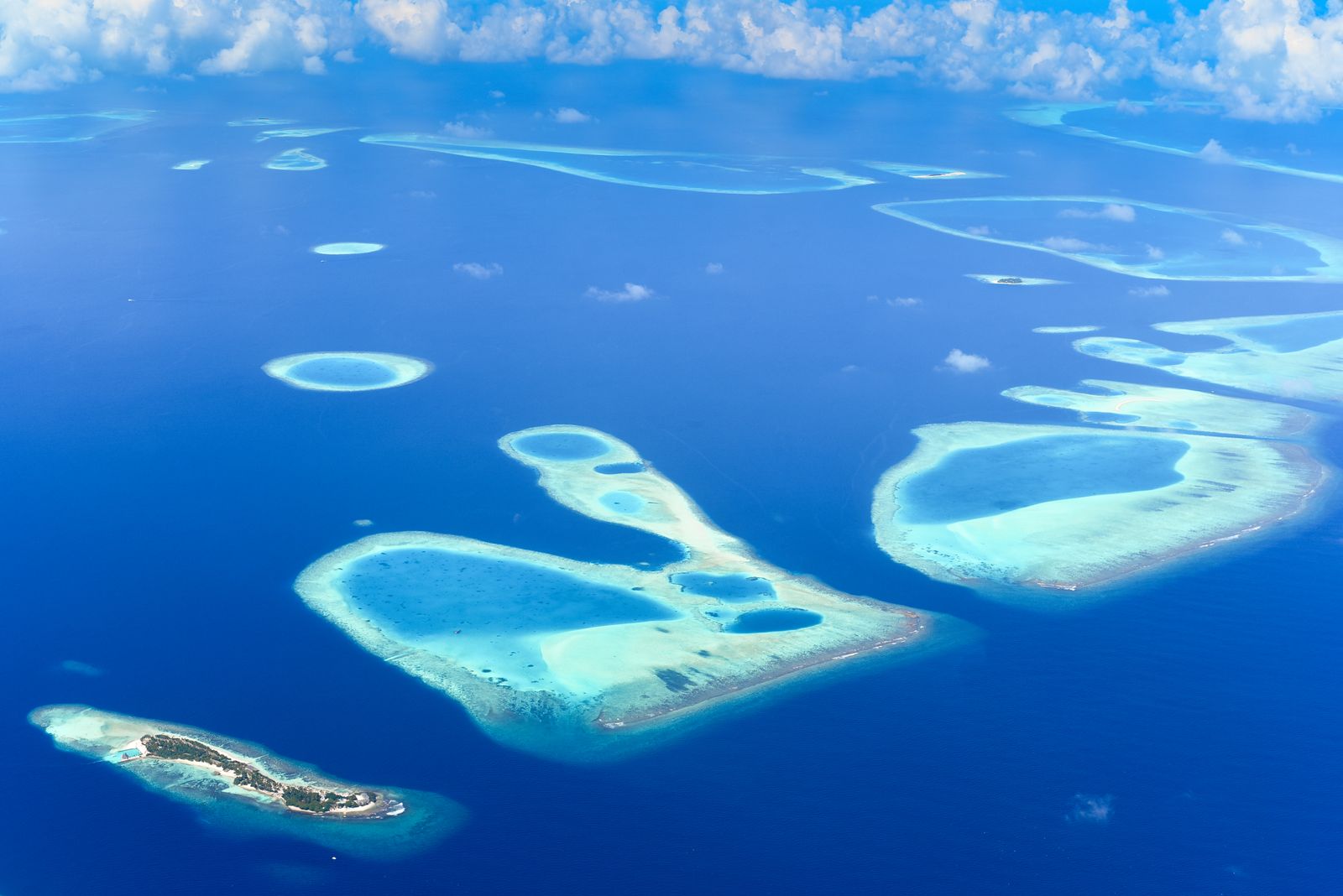
Lhaviyani Atoll, called Faadhippolhu in Dhivehi, lies northeast of Malé. It is a small atoll with a mix of resort islands and inhabited fishing islands. The capital is Naifaru, and Hinnavaru is a densely populated fishing island. Felivaru has a fish-processing plant, and wrecks lie near it.
01
Lhaviyani in brief
Lhaviyani Atoll sits northeast of Malé and is reached by seaplane in daylight. The atoll is small enough that resort islands are within a short flight, and the seaplane terminal is on the same airport island as Velana International Airport. Transfers are arranged by the resort.
The atoll has three inhabited islands of note. Naifaru is the capital, a busy island with schools, mosques and a harbour. Hinnavaru is densely populated and known for fishing. Felivaru has a fish-processing plant, and the wrecks near it are a draw for divers.
Reef channels cut through the atoll, and currents in these channels create drift dives. The atoll is not on the main tourist circuit, so resort islands are quiet and local islands keep their own rhythm.
- Capital: Naifaru, with government offices and a harbour.
- Fishing island: Hinnavaru, densely populated and known for its fishing fleet.
- Wrecks: Near Felivaru, beside the fish-processing plant.
02
Getting there
The usual transfer to Lhaviyani is by seaplane from the seaplane terminal on the airport island. Seaplanes operate in daylight hours, so an international arrival after dark means a first night near Malé or in Hulhumalé before the flight out. Resorts arrange the seaplane and confirm the timing.
There is no scheduled domestic airport inside Lhaviyani. For guesthouse stays on inhabited islands, the route is usually a public ferry or a shared speedboat from Malé, and timetables change. Guesthouses know the current schedules and can advise.
Speedboats can run day and night, but Lhaviyani is beyond comfortable speedboat range from the airport for most travellers. The seaplane is the standard option for resort islands.

03
Reef channels and wrecks
The reef channels of Lhaviyani are the main reason divers come. Currents sweep through these channels and bring nutrients, and drift dives along the channel edges are the usual pattern. The Maldives regulations cap recreational diving at 30 metres, and dive centres in the atoll plan profiles within that limit.
Near Felivaru, the fish-processing plant, several wrecks lie in the area. These are artificial and accidental wrecks that have become reef structures. Dive centres on resort islands run trips to them, and the depth and conditions vary, so local guidance matters.
Diving is arranged through the dive centre on your resort island. There is no dive centre on the inhabited islands for visitors, so divers usually base themselves on a resort island. Check certification requirements and recent dive history with the dive centre before booking.
- Drift dives: Along reef channel edges, with current.
- Wrecks: Near Felivaru, dived with a local guide.
- Depth limit: 30 metres for recreational diving.
04
Naifaru and Hinnavaru
Naifaru is the capital of Lhaviyani and the administrative centre. It has a harbour, schools, mosques and a hospital. The island is densely built and has a working feel. Visitors can walk through the streets, but shoulders and knees should be covered in the village, and swimwear is only for designated beaches.
Hinnavaru is a short boat ride from Naifaru and is one of the most densely populated islands in the country. Fishing is the main activity, and the harbour is busy with dhoni and fishing boats. There are guesthouses on both islands, and alcohol is not served on inhabited islands.
During Ramadan, eating and drinking in public in daylight is avoided on local islands. Friday midday prayers close many businesses. Importing alcohol and pork is not allowed. Check with your guesthouse for current local rules.

05
When to go
The year turns on two monsoons. Iruvai, the northeast monsoon, runs roughly from December to April and is drier and calmer. Hulhangu, the southwest monsoon, runs roughly from May to November, with more wind, passing showers and choppier crossings. Air and sea stay warm all year.
For diving, the northeast monsoon often brings calmer seas, which can make channel crossings and boat rides more comfortable. The southwest monsoon can bring more plankton and current, which some divers prefer for drift dives, but conditions vary.
Surf is not a major draw in Lhaviyani, but the surf season is roughly March to October, with the biggest swells around June to August. Check with the resort or dive centre for current conditions.
06
Practical notes
Resort islands in Lhaviyani are one island, one resort, and alcohol is served. Transfers are arranged by the resort. Inhabited islands have guesthouses, no alcohol, and swimwear only on designated beaches. The choice between the two is a choice between privacy and local life.
Public ferries link islands within the atoll on set days, and timetables change. Guesthouses know the current ones. There is no domestic airport in Lhaviyani, so seaplane is the main transfer for resorts, and speedboat or ferry for local islands.
Touching or standing on coral, collecting coral or shells, and feeding fish all harm the reef. Taking coral or shells out of the country is not allowed. Reef-safe habits apply everywhere in the atoll.
FAQ
Questions people ask
How do I get to Lhaviyani Atoll from Velana International Airport?+
The usual route is a seaplane from the seaplane terminal on the airport island. Seaplanes fly in daylight only, so if you land after dark you will need a first night near Malé or in Hulhumalé. Resorts arrange the seaplane. For local islands, public ferries or shared speedboats run from Malé, and guesthouses know the current timetables.
Are there wrecks to dive in Lhaviyani Atoll?+
Yes, several wrecks lie near Felivaru, where the fish-processing plant is. They have become reef structures and are dived with local guides from resort dive centres. Conditions and depth vary, so check with the dive centre. Recreational diving in the Maldives is capped at 30 metres.
Can I stay on a local island in Lhaviyani Atoll?+
Yes, Naifaru and Hinnavaru have guesthouses. Alcohol is not served on inhabited islands, and swimwear is only for designated beaches. Shoulders and knees should be covered in the village. During Ramadan, eating and drinking in public in daylight is avoided. Check with your guesthouse for current rules and ferry timetables.
What is the diving like in Lhaviyani Atoll?+
The atoll is known for reef channels and drift dives. Currents bring nutrients, and dives are planned along channel edges. Near Felivaru there are wrecks. Dive centres on resort islands run trips, and the Maldives regulations cap recreational diving at 30 metres. Conditions vary with the monsoon, so ask the dive centre for current advice.
Is Naifaru the capital of Lhaviyani Atoll?+
Yes, Naifaru is the capital of Lhaviyani Atoll. It has government offices, a harbour, schools and mosques. It is a working island rather than a resort, and visitors can walk through the streets. Dress should cover shoulders and knees in the village, and swimwear is only for designated beaches.
What is Felivaru known for in Lhaviyani Atoll?+
Felivaru has a fish-processing plant, and the wrecks near it are a draw for divers. The island is not a resort or guesthouse island, but dive centres run trips to the wrecks. The plant is a working facility, so access to the island itself is limited. Check with your dive centre for trip details.
When is the best time to visit Lhaviyani Atoll?+
The northeast monsoon, roughly December to April, is drier and calmer. The southwest monsoon, roughly May to November, is windier with passing showers. Air and sea stay warm all year. For diving, calmer seas in the northeast monsoon can be easier, but conditions vary. Check with your resort or dive centre for current weather.
Do I need a seaplane to reach resort islands in Lhaviyani Atoll?+
Most resort islands in Lhaviyani are reached by seaplane from the airport island. Seaplanes fly in daylight only, and resorts arrange the transfer. There is no scheduled domestic airport inside the atoll. For local islands, public ferries or shared speedboats from Malé are the usual route, and timetables change.
What rules apply on local islands in Lhaviyani Atoll?+
On inhabited islands such as Naifaru and Hinnavaru, alcohol is not served, and swimwear is only for designated beaches. Shoulders and knees should be covered in the village. During Ramadan, eating and drinking in public in daylight is avoided. Importing alcohol and pork is not allowed. Check with your guesthouse for current local rules.


