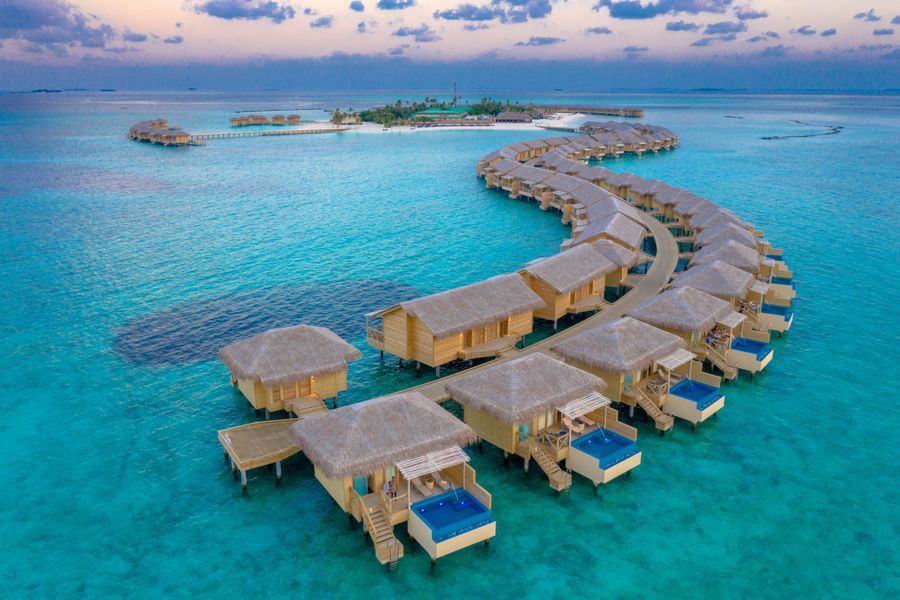
Raa lies north of Baa and is known in Dhivehi as North Maalhosmadulu. Its capital is Ungoofaaru. The atoll has large, shallow lagoons, a growing number of resort islands and a domestic airport at Ifuru, which makes it easier to reach than its distance suggests.
01
Raa in two minutes
Raa Atoll sits in the north of the country, north of Baa. Its Dhivehi name is North Maalhosmadulu, and the capital island is Ungoofaaru, which has the harbour, schools and offices that go with the role.
The atoll is built around large lagoons. Shallow water stretches between the reefs, and the islands are scattered across it rather than lined up in a single chain. That shape gives the atoll its character: long horizons, sheltered water and plenty of room between islands.
Several resort islands here are newer than the older resorts further south, so the accommodation is often recent. Alongside them are inhabited islands with guesthouses, and a domestic airport at Ifuru that puts the atoll within reach of scheduled flights.
- Dhivehi name: North Maalhosmadulu.
- Capital island: Ungoofaaru.
- Usual transfer: seaplane in daylight, or a domestic flight to Ifuru and a boat.
- Known for: large lagoons and several newer resort islands.
02
Getting there
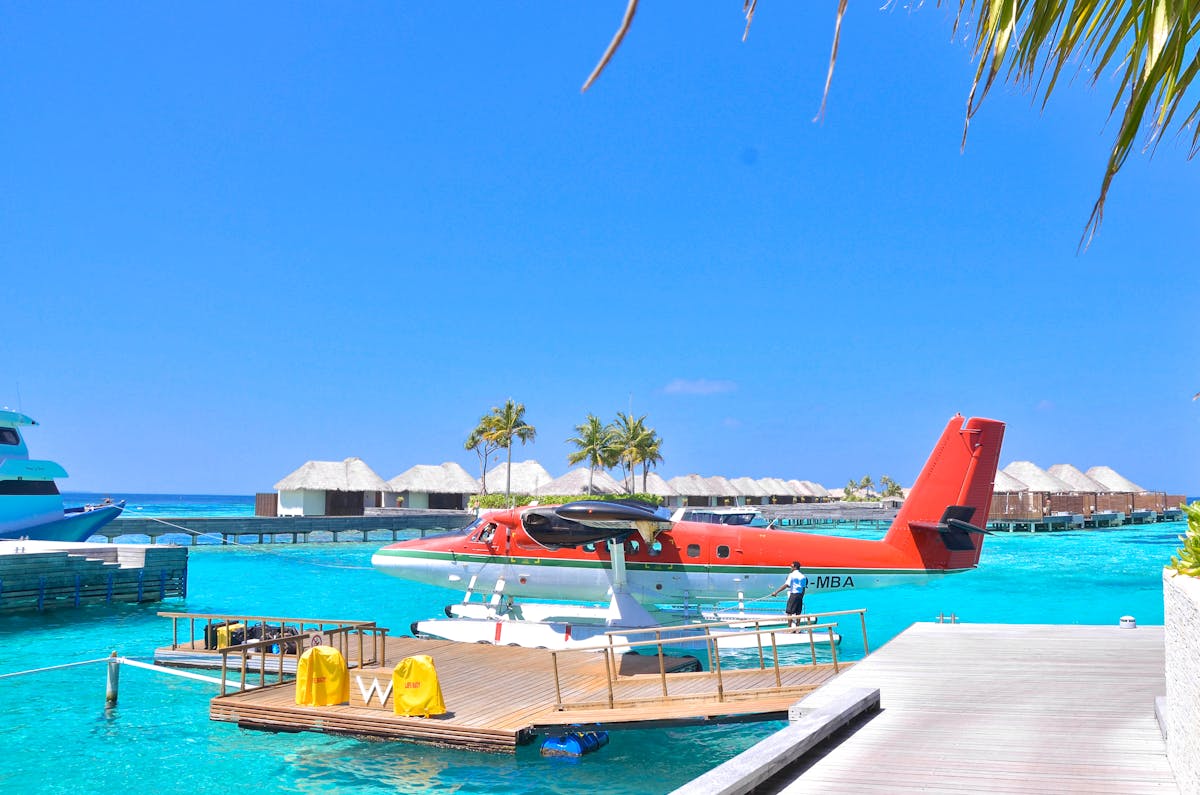
Raa lies beyond comfortable speedboat range from the airport for most travellers, so the usual transfer is by air. Seaplanes leave from the seaplane terminal on the airport island and fly in daylight only. If your international flight lands after dark, plan a first night near Malé or in Hulhumalé.
The second option is a scheduled domestic flight to Ifuru, the airport inside the atoll, followed by a boat transfer. This suits guesthouse stays and some resorts, and it can work when a seaplane does not fit your arrival time.
Resorts arrange their own transfers, and guesthouses can advise on the current domestic flight and boat connections. Timetables change, so confirm the details with the property before booking.
03
Vaadhoo and the glowing shore
Vaadhoo in Raa is often photographed at night, when the water along the shore can glow. The light comes from bioluminescent plankton, tiny organisms that flash when the water is disturbed. It is a natural effect, not a fixture, and it depends on the plankton being present and the night being dark.
Sightings are never guaranteed. The glow is strongest on dark nights with little moonlight, and it can come and go with currents and the season. Anyone promising a display on a particular date is overstating what can be known.
Vaadhoo is an inhabited island, so the usual local-island rules apply: no alcohol, modest dress in the village, and swimwear only on the designated beach. Visitors should ask their guesthouse about access to the shore at night and about any local guidance.
04
Reefs and marine life
The atoll's large lagoons and its channels between reef and open water suit a range of marine life. Mantas and other large animals pass through in season, following plankton and currents. Sightings vary with the time of year and with conditions on the day, so no trip can promise a particular animal.
Diving follows the country's rules, with recreational diving capped at 30 metres. Dive centres on the resort islands and some guesthouse islands run boat dives to channels, reefs and cleaning stations, and can advise on what is being seen that week.
Reef care matters everywhere in the atoll. Touching or standing on coral, collecting coral or shells, and feeding fish all harm the reef, and taking coral or shells out of the country is not allowed. Snorkellers should keep off the coral even in shallow water.
- Mantas in season. Large animals pass through, but sightings depend on currents and plankton.
- Diving limit. Recreational diving is capped at 30 metres.
- No touching. Do not stand on coral, collect shells or feed fish.
- Ask locally. Dive centres know what has been seen in the past week.
05
Where to stay
Raa has two ways to stay. Resort islands are one island, one property, with alcohol served and transfers arranged for you. Several of the resorts here are newer, which shows in the accommodation and facilities.
Inhabited islands have guesthouses, cafes, mosques and harbours, and Ungoofaaru, as the capital, is the largest of them. Alcohol is not served on inhabited islands, swimwear is for designated beaches, and shoulders and knees are covered in the village.
Ifuru, with the domestic airport, is the simplest base for a short stay or for a first or last night in the atoll. Guesthouses there and on neighbouring islands can arrange boat trips to reefs and sandbanks.

06
When to go
The year turns on two monsoons. Iruvai, the northeast monsoon, runs roughly from December to April and is the drier, calmer half of the year. Hulhangu, the southwest monsoon, runs roughly from May to November, with more wind, passing showers and choppier crossings. Air and sea stay warm all year.
For Raa, the choice depends on what matters more. Calm crossings and dry days point to the northeast monsoon. The southwest monsoon brings more wind and rain, but it is also when plankton and currents can draw larger animals into the atoll's channels.
Seaplanes fly in daylight only, so whichever season you choose, an arrival late in the day may mean a night near the airport first.
07
Getting around the atoll
Inside the atoll, everything moves by boat. Resorts run their own boats for diving and excursions. On inhabited islands, guesthouses can put together speedboat outings to reefs, sandbanks and neighbouring islands, and public ferries link some islands on set days.
The lagoons are wide, so crossings can take time even between nearby islands. Sea conditions decide how comfortable a ride is, and mornings are often calmer than afternoons. Guesthouses know the current ferry days and can help plan around them.
For anyone combining a resort stay with a local island, the domestic flight to Ifuru and the boat connections from there are worth checking early, since schedules are limited and can change.
FAQ
Questions people ask
How do you reach Raa Atoll from Velana International Airport?+
Most travellers take a seaplane from the seaplane terminal on the airport island, which flies in daylight only. The alternative is a scheduled domestic flight to Ifuru inside the atoll, followed by a boat transfer. Resorts arrange their own transfers, and guesthouses can advise on current flight and boat connections.
Can you see the glowing plankton at Vaadhoo in Raa Atoll at any time of year?+
No. The glow comes from bioluminescent plankton and depends on the organisms being present, on currents and on a dark night with little moonlight. Sightings are never guaranteed. Ask your guesthouse whether the plankton have been visible recently before planning a night on the shore.
Is Raa Atoll a good place to see manta rays?+
Mantas and other large animals pass through Raa in season, following plankton and currents, but sightings vary with the time of year and conditions on the day. Dive centres in the atoll can say what has been seen recently. No trip can promise an encounter.
Which island is the capital of Raa Atoll?+
Ungoofaaru is the capital of Raa Atoll, known in Dhivehi as North Maalhosmadulu. It is an inhabited island with a harbour, schools, a mosque and local businesses. It is larger than most inhabited islands in the atoll and has guesthouses, though many visitors stay on the resort islands or near the airport at Ifuru.
Is there a domestic airport in Raa Atoll?+
Yes. Ifuru has a domestic airport served by scheduled flights, and a boat transfer usually follows to reach the island where you are staying. This route can suit travellers who land after dark, when seaplanes cannot fly, or who prefer a fixed flight time over a seaplane.
What is the difference between resort islands and local islands in Raa Atoll?+
Resort islands are one island, one property, with alcohol served and transfers arranged for you. Inhabited islands have guesthouses, villages, mosques and harbours, with no alcohol, swimwear only on designated beaches, and shoulders and knees covered in the village. Ungoofaaru and Ifuru are the main inhabited islands for visitors.
When is the best time to visit Raa Atoll?+
The northeast monsoon, roughly December to April, is drier and calmer, which suits crossings and seaplane flights. The southwest monsoon, roughly May to November, brings more wind and passing showers, and is when plankton and currents can draw larger animals into the channels. Air and sea stay warm all year.
Can you dive in Raa Atoll?+
Yes. Dive centres on the resort islands and some guesthouse islands run boat dives to channels, reefs and cleaning stations. Recreational diving in the Maldives is capped at 30 metres. Divers should not touch or stand on coral, and taking coral or shells out of the country is not allowed.
Do you need a seaplane to reach Raa Atoll?+
Not necessarily. A scheduled domestic flight to Ifuru followed by a boat is the alternative, and some travellers use it in both directions. Seaplanes fly in daylight only, so a late arrival may mean a first night near Malé or in Hulhumalé. Confirm the options with your resort or guesthouse before booking.