
Not every island has a reef you can swim to. Some have a shallow shelf a short wade from the beach; others need a long swim, or have no usable reef at all and run boat trips instead. The details below help you compare islands honestly.
01
What a house reef is
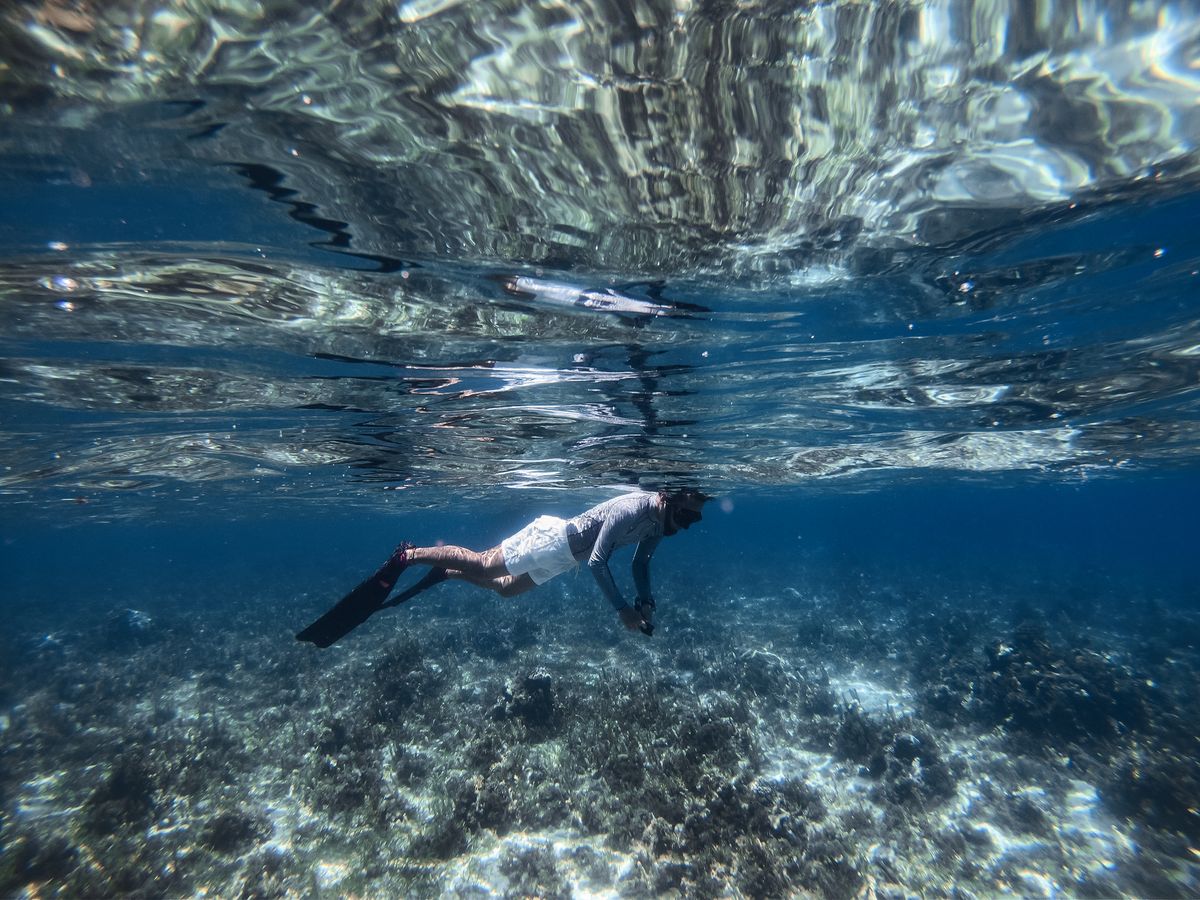
A house reef is the coral reef you can reach from the shore of the island where you are staying, without a boat. It may begin at the water's edge or a short swim out. The term says nothing about quality: two islands an hour apart can have very different reefs.
On resort islands the house reef is usually the main snorkelling ground, marked with entry points and sometimes a channel through the shallows. On local islands the reef may be less formally managed, and access can depend on the beach and the tide.
Because the reef is close, it is easy to visit often: early morning, late afternoon, at high tide. That flexibility is the main reason people choose an island by its reef rather than by its rooms.
- Reef edge: where the shallow flat meets deeper water.
- Drop-off: a steeper wall where the reef falls away.
- Lagoon: the sheltered shallow water between beach and reef.
- Channel: a gap in the reef used by boats and fish.
02
Reef edge and drop-off
Ask how far the reef edge is from the beach. On some islands you wade in and the coral starts within a few strokes. On others the lagoon is wide and shallow, and the reef is a long swim away, which matters in wind or for weaker swimmers.
A drop-off is where the reef slope falls steeply into deeper water. It brings larger fish and better diving, but it also means deeper water close to the reef top. Snorkellers should stay on the shallow side and never follow the wall down.
Reef depth and structure also shape what you see. A shallow flat with scattered coral suits gentle snorkelling. A wall with overhangs and ledges rewards divers. Decide which you want before comparing islands.

03
Currents and monsoon exposure
Currents are the detail most often left out of a booking. Reefs on the sheltered side of an island can be calm while the opposite side runs hard. Ask which side of the island the house reef lies on, and how that changes through the year.
The country turns on two monsoons. Iruvai, the northeast monsoon from roughly December to April, is drier and calmer. Hulhangu, the southwest monsoon from roughly May to November, is windier with passing showers and choppier crossings. Exposure shifts with the wind.
A reef that is easy in one season can be unsuitable for snorkelling in another. Divers may welcome a current that brings fish to a channel; families with children usually do not. Ask the dive centre or guesthouse which entry points are used in which conditions.
04
Reef health and bleaching
Reef health varies from island to island and can change over time. Coral bleaching events, warm water and storms all leave marks, and a reef that was rich a few years ago may be recovering or altered now. Recovery is slow and uneven.
Older marketing photographs are a poor guide. They may show a reef in better condition, or a different site entirely. Ask for recent guest reports and recent photographs, and treat undated images with caution.
Good practice helps. Touching or standing on coral, collecting coral or shells, and feeding fish all harm the reef, and taking coral or shells out of the country is not allowed. Choose operators that brief guests on this before entry.
- Ask for dates: when were the guest photos taken?
- Ask which site: house reef or a boat trip reef?
- Ask about entry: sandy channel, steps or a wall?
- Ask about briefings: does the operator cover reef-safe habits?
05
Islands without a usable reef
Some islands have no house reef worth swimming to. The lagoon may be sandy and empty, or the reef too far or too shallow. These islands rely on boat trips to nearby reefs, which is a perfectly good arrangement if you plan for it.
Boat trips add cost and a schedule. You may go out once or twice a day rather than snorkel whenever you like. Ask how often trips run, how long they take, and whether they are included or charged extra.
For divers, a boat-based island can still be excellent, because the best sites are often channels and walls that no shore entry reaches. The trade is convenience: less spontaneous, more organised.
06
Questions to ask before booking
Write to the resort or guesthouse with specific questions. Ask how far the reef edge is from the beach, whether there is a drop-off, and which side of the island the reef lies on. Ask about currents at the usual entry points.
Ask for recent photographs and recent guest comments about the reef, with dates. Ask whether snorkelling gear is provided and whether guided reef walks or briefings are offered. On local islands, ask where swimwear is allowed.
Finally, ask what happens when conditions are poor. A good answer names alternative sites, boat trips or a pool. A vague answer tells you something too. Then compare two or three islands on the same questions.
FAQ
Questions people ask
What counts as a house reef in the Maldives?+
It is the coral reef reachable from the shore of the island where you stay, without a boat. It may start at the beach or a short swim out. The term describes access, not quality, so two islands with house reefs can differ greatly in coral cover, fish life and ease of entry.
How do I find out if an island has a drop-off?+
Ask the resort or guesthouse directly, and ask for recent photographs of the reef edge. A drop-off is a steep slope into deeper water. It suits divers and stronger snorkellers, but families may prefer a shallow reef flat with a gentle entry and calmer water.
Do currents affect house reef snorkelling?+
Yes. Currents vary with the tide and the monsoon, and one side of an island can run hard while the other is calm. Ask the dive centre or guesthouse which entry points are used in your travel months, and follow any briefing on where to swim and where not to.
Which side of the island is best for a house reef?+
It depends on the island and the season. Iruvai, the northeast monsoon from roughly December to April, is drier and calmer, while Hulhangu, the southwest monsoon from roughly May to November, is windier. Exposure shifts with the wind, so ask which entries work in your months.
Can reef health change after bleaching?+
Yes. Bleaching events, warm water and storms affect reefs, and recovery is slow and uneven. A reef described warmly a few years ago may look different now. Ask for recent guest reports and dated photographs rather than relying on older marketing images, which may show another site.
What if the island has no usable house reef?+
Some islands have sandy lagoons or reefs too far from shore, and rely on boat trips to nearby sites. That can still be excellent, especially for divers, but trips add cost and a schedule. Ask how often they run, how long they take and whether they are included.
Should I ask for recent photos of the house reef?+
Yes. Ask when the photographs were taken and whether they show the house reef or a boat-trip site. Undated images are hard to judge. Recent guest comments help too, particularly about coral condition, visibility, currents and how easy the entry point is to use.
How does the 30 metre dive limit relate to house reefs?+
Maldives regulations cap recreational diving at 30 metres. House reef slopes often continue deeper than that, so divers should stay within the limit and follow the dive centre's briefing. Snorkellers should stay on the shallow side of the reef edge and avoid following the wall down.
Is snorkelling from a local island house reef different?+
On inhabited islands there are guesthouses, mosques and harbours, and no alcohol. Swimwear is allowed only on designated beaches, often called bikini beaches, and shoulders and knees are covered in the village. Ask the guesthouse about reef access, tide and any local beach rules before you book.


