
Lankan Manta Point is a cleaning station on the reef of North Malé Atoll. Reef manta rays visit to have parasites and dead skin picked off by cleaner wrasse. Divers and snorkellers sometimes watch from a respectful distance. The site is reached by boat from nearby islands and by liveaboard.
01
What happens at the site
A cleaning station is a patch of reef where small fish, mainly cleaner wrasse, pick parasites and dead skin from larger animals. Reef manta rays visit such stations regularly. At Lankan Manta Point, the station sits in North Malé Atoll, and mantas come to be attended by the wrasse that live there.
The behaviour is quiet and slow. A manta may hover almost still over the coral while the wrasse work along its body and gills. Divers and snorkellers who keep low and still may watch the process from a distance. The animals are wild and come and go on their own schedule.
The site is not a feeding station like Hanifaru Bay in Baa Atoll. There is no plankton bloom to draw dozens of rays at once. What you may see is a few individuals at a time, using the reef as a grooming place.

02
When to go
Sightings at Lankan Manta Point are seasonal and not guaranteed. Divers and snorkellers report mantas more often in the wetter months, when the southwest monsoon, Hulhangu, brings windier weather and passing showers. That season runs roughly May to November, but the timing varies from year to year.
Even in a good month, a single visit may produce nothing. Mantas move around the atoll and use several cleaning stations. A dive centre that works the site regularly will know the recent pattern and can choose a day when conditions look promising.
The practical advice is to allow several days in North Malé Atoll rather than pinning a trip on one boat ride. Ask the dive centre what has been seen in the past week, and treat any sighting as a bonus rather than a certainty.
03
Diving and snorkelling
Lankan Manta Point is visited by both divers and snorkellers. The station is shallow enough for snorkelling in good conditions, but the site is often affected by current. Moving water is part of what makes a cleaning station work, since it brings the small fish their food.
Divers should be comfortable with drift entries and with holding a position in current. Snorkellers should be strong swimmers and used to open water. A guide will brief the group on where to enter and where to wait.
Maldives regulations cap recreational diving at 30 metres. The cleaning station itself is well within that limit, and there is no need to go deep. The best viewing is often from a steady position near the reef, not from swimming after the animals.
- Current: often present; be ready to drift or hold position.
- Level: suits divers and snorkellers comfortable in moving water.
- Depth: shallow station, well within the 30 metre limit.
- Guide: follow the dive centre briefing on entry and exit.
04
Manta etiquette in the water
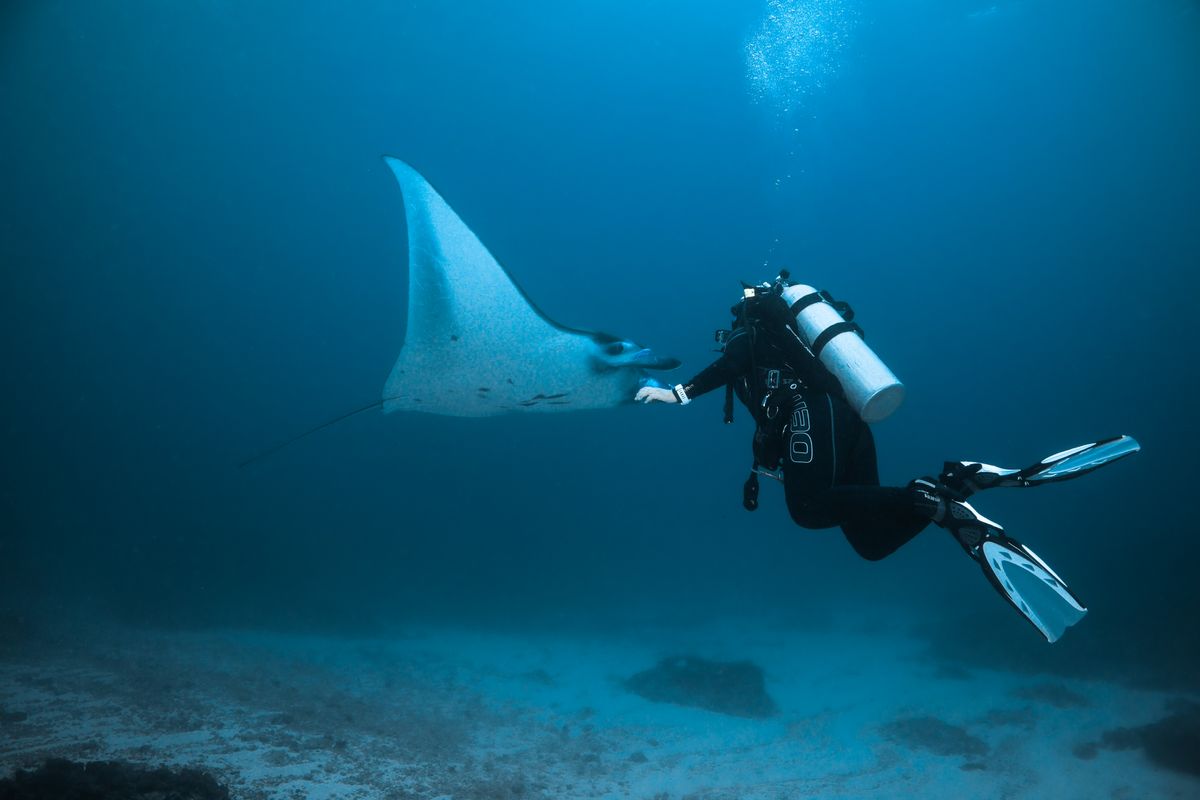
Mantas are large, curious animals, but they should not be chased or touched. The aim is to let them approach on their own terms. Keep low in the water, stay still where possible, and give the animals room to pass or to settle at the station.
Do not block the cleaning station itself. If a manta is being cleaned, watch from the side and slightly above, and leave the wrasse to work. Flash photography and sudden movement can interrupt the cleaning and drive the animal away.
Touching or standing on coral harms the reef, and so does feeding fish. These rules apply at every site in the Maldives, and they matter here because the cleaning station depends on a healthy reef. Take nothing from the water, and leave no trace on the reef.
05
Getting to Lankan Manta Point
The site is reached by boat from islands in North Malé Atoll and by liveaboard. North Malé Atoll lies close to Velana International Airport, so speedboats can run day and night. That makes the atoll one of the easier ones to reach from the airport.
Resorts arrange transfers for their guests. Guesthouses on local islands can book dive and snorkel trips with a dive centre, and the dive centre usually handles the boat. Liveaboards include the site in their North Malé itineraries when conditions allow.
Seaplanes fly in daylight only, so arrivals late in the day may need a speedboat or an overnight near the airport. Confirm the transfer plan with the resort or guesthouse before you travel, since timings and arrangements change.
- By speedboat: from nearby resort or local islands, day or night.
- By liveaboard: included in some North Malé itineraries.
- By seaplane: daylight only, then a short boat ride.
06
Practical notes for a visit
Bring a well-fitting mask and snorkel, and a rash guard or thin wetsuit for sun and current. Fins help in moving water. Many dive centres provide gear, but a mask that fits well makes the day more comfortable.
Sunscreen should be mineral-based where possible, and applied well before entering the water. Reef-safe habits matter at a cleaning station, where the animals are close and the coral is shallow.
The site is not a guaranteed tick on an itinerary. Build in a spare day, listen to the dive centre's advice, and accept that the mantas keep their own schedule. A quiet visit with no sighting is still a day on a healthy reef.
FAQ
Questions people ask
What is Lankan Manta Point and why do mantas visit?+
Lankan Manta Point is a cleaning station on the reef of North Malé Atoll. Reef manta rays visit to be attended by cleaner wrasse, small fish that pick parasites and dead skin from their skin and gills. The station is a natural grooming site, not a feeding station, and the mantas come and go on their own schedule.
When is the best time to see mantas at Lankan Manta Point?+
Sightings are seasonal and not guaranteed. Mantas are more often reported in the wetter months, roughly May to November, when the southwest monsoon brings windier weather. Timing varies from year to year, so ask the dive centre about recent sightings rather than relying on the calendar alone.
Can you snorkel at Lankan Manta Point or is it for divers only?+
Both divers and snorkellers visit the site. The cleaning station is shallow, but the site is often affected by current, so snorkellers should be strong swimmers comfortable in open water. A guide will brief the group on where to enter and where to wait. Divers should be comfortable with drift entries.
How do you reach Lankan Manta Point from Malé?+
The site is reached by boat from islands in North Malé Atoll and by liveaboard. North Malé Atoll is close to Velana International Airport, and speedboats can run day and night. Resorts arrange transfers for guests, and guesthouses can book dive or snorkel trips with a dive centre.
What should you do if a manta approaches at Lankan Manta Point?+
Keep low and still, and let the manta approach on its own terms. Do not chase or touch it, and do not block the cleaning station. Watch from the side and slightly above, and leave the wrasse to work. Sudden movement or flash photography can interrupt the cleaning and drive the animal away.
Is a manta sighting at Lankan Manta Point guaranteed?+
No. The mantas are wild and their visits are seasonal. Even in a good month, a single trip may produce no sighting. Allow several days in North Malé Atoll and ask the dive centre what has been seen recently. Treat any encounter as a bonus rather than a certainty.
What depth is Lankan Manta Point and does it suit new divers?+
The cleaning station is shallow, well within the Maldives recreational diving limit of 30 metres. New divers should be comfortable with current and with holding a position near the reef. The dive centre will assess conditions on the day and brief the group accordingly.
Are there other manta cleaning stations near Lankan Manta Point?+
Yes. Reef manta rays use several cleaning stations around North Malé Atoll and elsewhere in the Maldives. Dive centres working the area know the local sites and can choose one based on recent sightings and conditions. Lankan Manta Point is one option among several, not the only place to look.
What reef rules apply at Lankan Manta Point?+
Do not touch or stand on coral, collect coral or shells, or feed fish. These rules apply at every Maldivian reef and matter here because the cleaning station depends on a healthy reef. Keep low and still, give mantas space, and follow the dive centre briefing. Taking coral or shells out of the country is not allowed.


