
Freediving is taught on several atolls, from introductory sessions to certification levels. Training usually starts in a sheltered lagoon before moving to open water. Standards vary between operators, so choose a course with recognised certification and a clear safety focus.
01
What a course covers
A freediving course teaches you to hold your breath and go underwater on a single breath, safely. Most courses begin with breathing and relaxation work, because a calm body uses less oxygen. You then learn equalisation, the technique for easing pressure in the ears and sinuses as you descend.
Safety is built into every level. You learn to recognise the signs of a blackout and how to rescue a buddy at the surface. Courses usually include a theory session, a confined-water session in a lagoon, and open-water dives once your instructor is satisfied.
Introductory sessions suit curious swimmers who want a taste without committing to a certification. Certification courses take longer and cover depth, rescue and theory in more detail. Ask the operator what each level includes before you book.
- Breathing: relaxation and breath-hold technique.
- Equalisation: easing pressure in ears and sinuses.
- Safety: buddy rescue and blackout awareness.
- Open water: dives after lagoon practice.
02
Where courses run
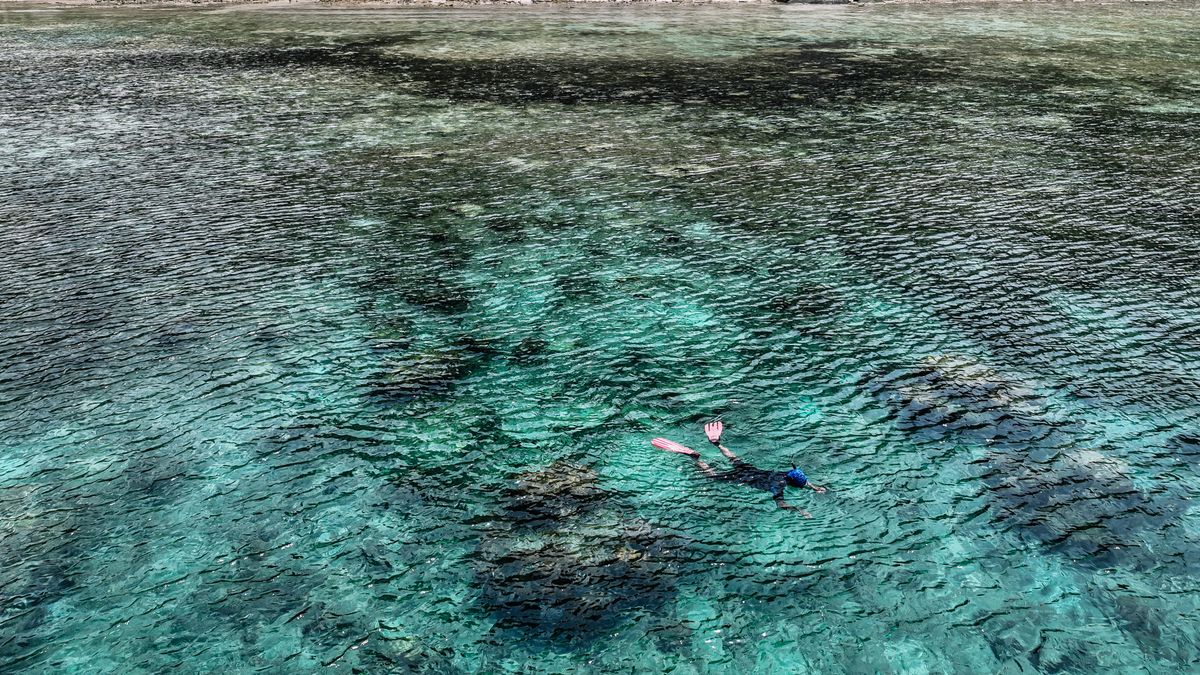
Freediving is taught on several atolls, often where resorts or dive centres already run watersports. Calm lagoons inside the reef are the usual training ground, because they are sheltered from swell and have good visibility. Which islands currently offer courses changes, so check with the resort or dive centre on your chosen island.
Atolls close to Velana International Airport are convenient for a short course. Speedboats can run day and night, which suits Kaafu, North and South Malé. Further atolls need a domestic flight or seaplane, and seaplanes fly in daylight only. A boat transfer usually follows the flight.
If you are staying on a local island, guesthouses can often arrange a course with a nearby centre. Ask before you book whether training is available during your dates and whether equipment is included.

03
Choosing an operator
Operators vary in standards. Look for a course that follows a recognised certification system and an instructor who holds a current teaching qualification. Ask how many students each instructor takes into the water, and whether a safety diver is present during open-water sessions.
A safety-focused approach matters more than depth. A good course will not rush you to deeper water and will stop a session if conditions are poor. Ask what happens if you struggle with equalisation, since some students need extra time.
Equipment should fit properly, especially the mask and fins. Ask whether a wetsuit is provided and whether you can try gear before the course starts. If you have a medical condition, mention it when you enquire.
04
Health and safety
Freediving carries risks, so never dive alone and always follow your instructor. The main hazards are blackout underwater and pressure injury to the ears and lungs. Training reduces these risks but does not remove them.
Medical fitness matters, particularly for ears and lungs. A cold, congestion or a history of ear problems can make equalisation difficult. If you are unsure, see a doctor before you travel. Some operators ask for a medical declaration before the course.
The Maldives caps recreational diving at 30 metres. Freediving courses usually work well within that limit, and beginners stay much shallower. Depth is not the goal of a first course; control and safety are.
- Never alone. Always dive with a buddy or instructor.
- Ears and lungs. Get medical advice if unsure.
- No pushing. Stop if equalisation is difficult.
- Follow the brief. Instructor instructions apply in the water.
05
Reef awareness
Freediving brings you close to the reef, so combine it with reef awareness and respect for marine life. Touching or standing on coral, collecting coral or shells, and feeding fish all harm the reef. Taking coral or shells out of the country is not allowed.
Practise buoyancy and keep your fins away from the coral. A fin kick can break coral that took years to grow. If you want to look closer, hover above the reef rather than holding on to it.
Marine life may approach you out of curiosity. Do not chase or block an animal's path. Give turtles, rays and sharks space, and let them move away on their own terms.
06
Practicalities
Courses run all year. The northeast monsoon, roughly December to April, is drier and calmer, which can make lagoon sessions easier. The southwest monsoon, roughly May to November, is windier with passing showers and choppier crossings. Air and sea stay warm all year.
On resort islands, the resort arranges transfers and the course. On local islands, guesthouses can help with bookings and public ferry timetables, which change and are best confirmed locally. Alcohol is not allowed on local islands, and swimwear is only for designated beaches.
Bring your own mask if you have one, and a rash guard for sun protection. Book a course early in your stay so that bad weather or a rest day does not use up all your time.
FAQ
Questions people ask
Do I need to be a strong swimmer to learn to freedive in the Maldives?+
Operators set their own swimming requirements, and most ask for basic comfort in deep water. You should be able to swim a short distance and tread water. Tell the instructor about your experience when you enquire, and ask what the course expects before you book.
Which atolls offer freediving courses in the Maldives?+
Freediving is taught on several atolls, often where resorts or dive centres run watersports. Which islands currently offer courses changes, so check with the resort or dive centre on your chosen island. Atolls close to Velana International Airport are convenient for short courses.
What depth will I reach on a freediving course in the Maldives?+
Beginners usually stay shallow, and depth is not the goal of a first course. The Maldives caps recreational diving at 30 metres, and courses work within that limit. Your instructor will set depths based on your equalisation and comfort, and will not rush you deeper.
Is freediving safe for beginners in the Maldives?+
Freediving carries risks, so never dive alone and always follow your instructor. Training covers safety and rescue, which reduces risk but does not remove it. Choose an operator with recognised certification and a safety-focused approach, and mention any medical concerns before you start.
Do I need a medical check before a freediving course in the Maldives?+
Medical fitness matters, particularly for ears and lungs. Some operators ask for a medical declaration before the course. If you have a cold, congestion or a history of ear problems, see a doctor before you travel. Equalisation can be difficult when you are unwell.
When is the best time to learn to freedive in the Maldives?+
Courses run all year. The northeast monsoon, roughly December to April, is drier and calmer, which can make lagoon sessions easier. The southwest monsoon, roughly May to November, is windier with passing showers. Air and sea stay warm all year, so conditions are rarely a barrier.
Can I learn to freedive while staying on a local island in the Maldives?+
Guesthouses on local islands can often arrange a course with a nearby centre. Ask before you book whether training is available during your dates and whether equipment is included. Alcohol is not allowed on local islands, and swimwear is only for designated beaches.
What should I bring to a freediving course in the Maldives?+
Bring your own mask if you have one, and a rash guard for sun protection. Operators usually provide fins and a wetsuit, but ask in advance. Book a course early in your stay so that bad weather or a rest day does not use up all your time.
How does freediving affect the reef in the Maldives?+
Freediving brings you close to the reef, so combine it with reef awareness and respect for marine life. Touching or standing on coral, collecting coral or shells, and feeding fish all harm the reef. Taking coral or shells out of the country is not allowed. Keep your fins clear of coral.


