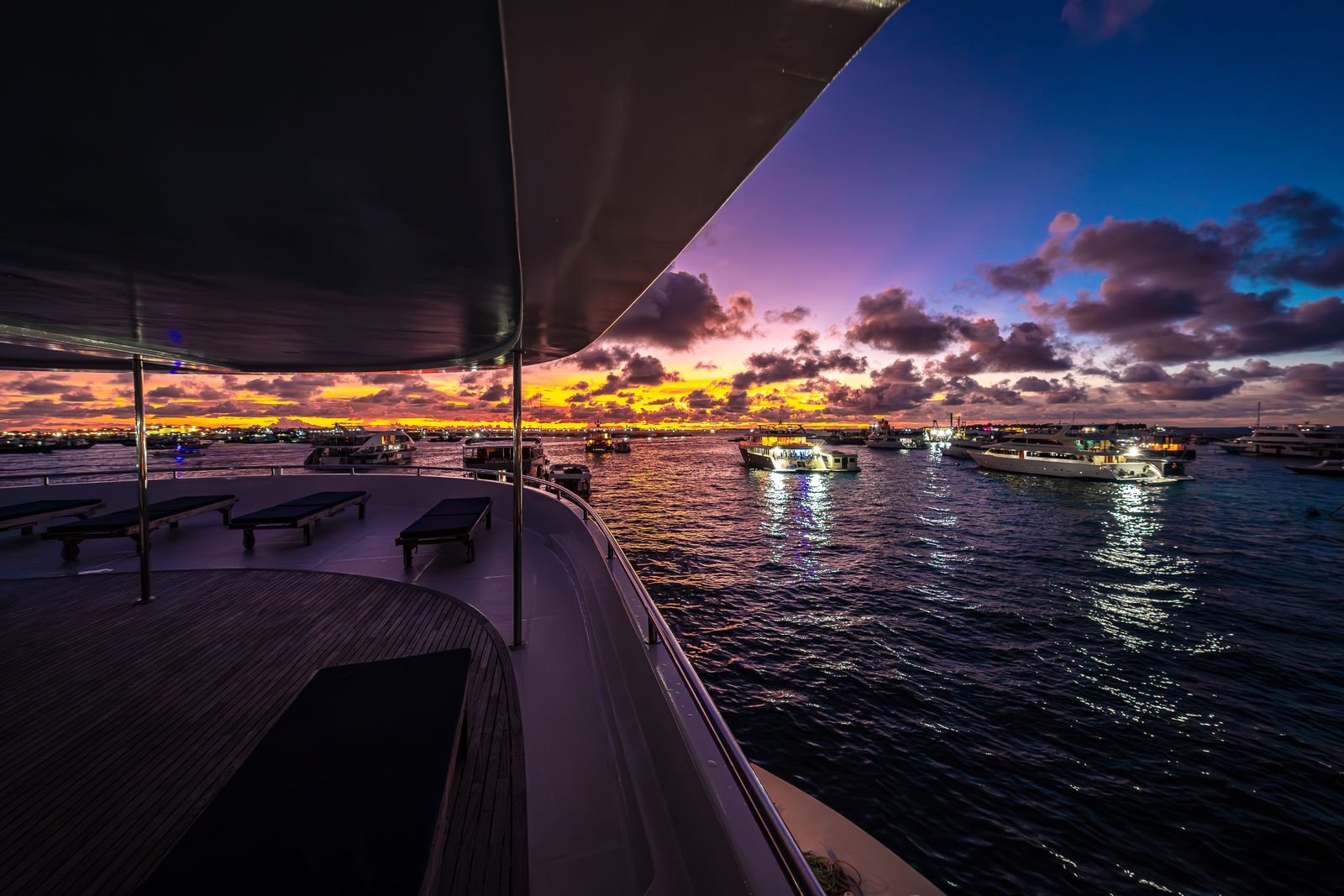
A liveaboard week suits divers who want variety and remote sites without packing and unpacking. The boat is your transport, your base and your bed. Routes vary by season and operator, so treat any itinerary as a plan rather than a promise.
01
How a week runs
Most liveaboard weeks in the central atolls start and end near Malé, where you board on the first day and disembark on the last. Between those points the boat moves at night or over lunch, so the days settle into a rhythm: a briefing, a dive, breakfast, another dive, lunch, a third dive, then perhaps a night dive.
The exact pattern depends on the boat and the route. Some weeks concentrate on North and South Malé and Vaavu, with short crossings and plenty of reef dives. Others push west to Ari for its channels and cleaning stations. Itineraries vary by season and operator, so ask what a typical week looks like before you book.
Days are full but not frantic. Surface intervals are spent eating, sleeping, reading or watching the sea. Non-divers on board usually snorkel, and some boats run introductory courses.
- Diving: usually two to four dives a day, including night dives.
- Crossings: often overnight or during meals, so the days are for water time.
- Snorkelling: available on most boats for non-divers.
02
Where it goes
The central atolls are the classic liveaboard circuit because they pack variety into short distances. North and South Malé have sheltered reefs, wrecks and easy check dives. Vaavu is known for its channels and night diving. North and South Ari add whale sharks, mantas and stronger currents.
Routes are not fixed. Operators shift them with the monsoon, with currents and with what guests want to see. A week in the northeast monsoon may look different from the same week in the southwest monsoon. Ask the operator what is likely for your dates rather than assuming a brochure route.
Because the boat moves at night, you wake up at a new site. That is the main appeal: no day boats, no repeated house reefs, and access to sites that are a long ride from any resort.
03
Cabins and comfort
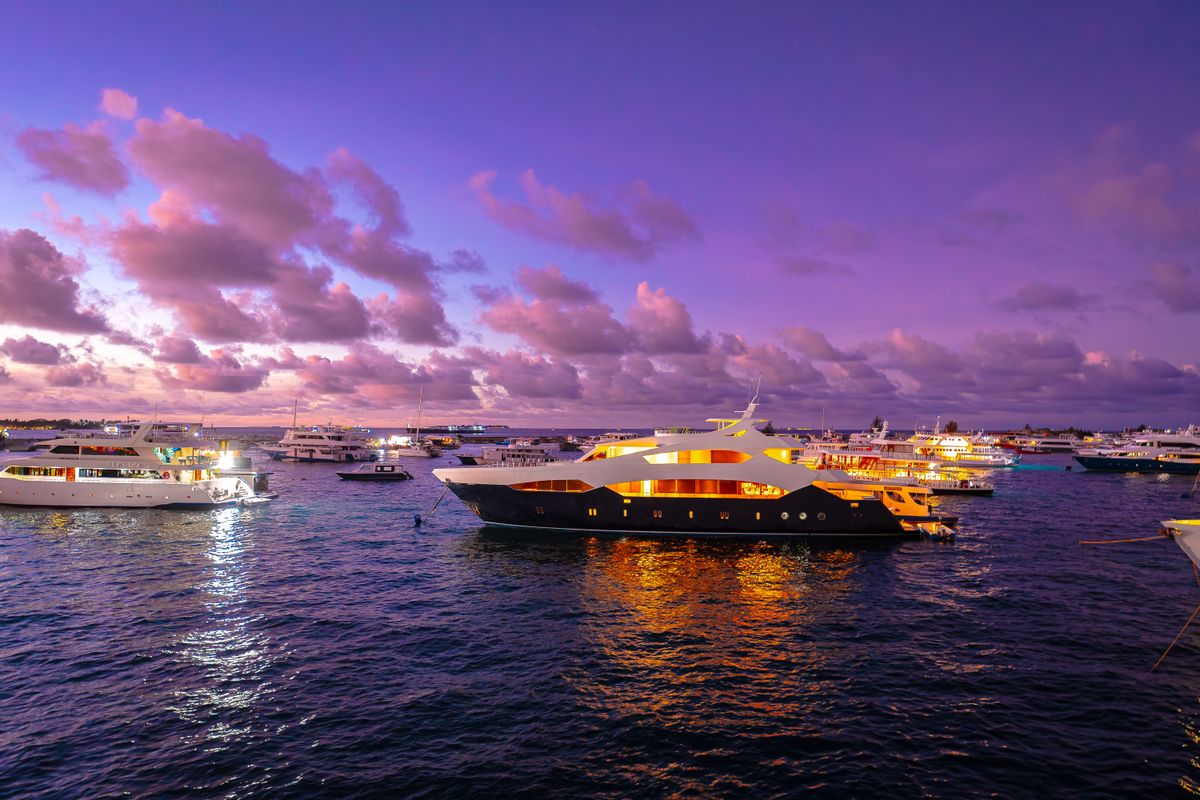
Cabins range from basic twin bunks with shared bathrooms to comfortable doubles with air conditioning and en-suite showers. The boat matters as much as the cabin: deck space, a shaded lounge, a camera table and a place to dry gear all affect how a week feels.
Check what is included before you compare. Diving, tanks, weights, equipment hire, marine-park fees and transfers may or may not be part of the price. Some boats include everything; others charge extra for gear, courses, alcohol or island visits.
Seasickness is a real consideration on longer crossings, especially in the southwest monsoon. If you are prone to it, ask about the route, the crossing lengths and whether the boat has stabilisers. Cabins low and mid-ship move least.
04
Diving and safety
A liveaboard week is diving-heavy, so safety standards matter. Boats should carry oxygen, first-aid equipment and a qualified dive guide or instructor. Ask about diver-to-guide ratios, dive briefings and whether the boat has a decompression chamber nearby or an evacuation plan.
Currents in the central atolls can be strong, particularly in the channels of Vaavu and Ari. Guides use reef hooks and drift techniques, but you should be comfortable with your own buoyancy and able to follow a briefing. Maldivian regulations cap recreational diving at 30 metres.
Travel and dive insurance are worth arranging before you go. Check that your policy covers liveaboard diving, and confirm the boat's own insurance and safety record with the operator.
- Oxygen and first aid: should be on board; ask to see the setup.
- Guide ratios: ask how many divers each guide takes.
- Evacuation plan: confirm how a medical emergency is handled.
- Insurance: check your policy covers liveaboard diving.
05
Seas and seasons
The year turns on two monsoons. Iruvai, the northeast monsoon from roughly December to April, is drier and calmer. Hulhangu, the southwest monsoon from roughly May to November, brings windier weather and passing showers. Air and sea stay warm all year.
Calmer seas in Iruvai suit longer crossings and make life on board easier for those prone to seasickness. Hulhangu can bring choppier conditions, but it also brings plankton and the marine life that feeds on it, including mantas and whale sharks in Ari.
Either season can produce good diving. The difference is in comfort and in what you are likely to see. Ask the operator how the route changes with the monsoon and what conditions to expect for your dates.

06
Booking and practicalities
Book with a reputable operator and confirm safety standards, insurance and the experience level expected. Ask for the boat's certification, the guide's qualifications and whether the week is suitable for your certification level. Some routes include deeper or more current-heavy dives than others.
Trips usually start and end near Malé, so you need to reach the capital or the airport island first. Seaplanes fly in daylight only, while speedboats can run day and night. If your flight arrives late, plan an overnight near the airport before boarding.
Pack light and practical: dive certification cards, logbook, reef-safe sunscreen, a rash guard and any personal gear. Boats usually provide tanks and weights, but confirm what is available on board.
FAQ
Questions people ask
Do I need to be an experienced diver to join a liveaboard week in the central atolls?+
Most boats ask for an open water certification and a minimum number of logged dives, often around 20 to 30, because some sites have currents. Some weeks suit newer divers. Ask the operator what level is expected for the route and whether a check dive is included before you book.
What is included in a liveaboard week in the central atolls?+
Inclusions vary by boat. Many cover accommodation, meals, tanks, weights and guided dives. Equipment hire, marine-park fees, alcohol, courses and transfers may cost extra. Ask for a full written list before booking and confirm exactly what is not included, so there are no surprises on board.
Can non-divers join a liveaboard week in the central atolls?+
Some boats welcome non-divers who snorkel, and a few run introductory courses on board. Space and activities vary, so check with the operator. Non-divers usually join snorkelling trips while divers are in the water, and the daily rhythm of the boat is built around the diving schedule.
When is the best time for a liveaboard week in the central atolls?+
Both monsoons work. Iruvai, roughly December to April, is drier and calmer. Hulhangu, roughly May to November, is windier but brings plankton and marine life. The right choice depends on whether you prefer calm crossings or specific wildlife, so ask the operator what your dates are likely to bring.
How do I get to a liveaboard week in the central atolls?+
Most trips start and end near Malé. Velana International Airport is on Hulhulé island beside the capital. Seaplanes fly in daylight only, while speedboats run day and night. If you arrive late, stay near the airport and board the next day rather than rushing a same-day connection.
What should I pack for a liveaboard week in the central atolls?+
Bring certification cards, logbook, reef-safe sunscreen, a rash guard, personal dive gear if you have it, and light clothing for the evenings. Boats usually provide tanks and weights. Confirm what equipment is available on board before you travel, so you do not carry unnecessary luggage or arrive without something essential.
Is seasickness a problem on a liveaboard week in the central atolls?+
It can be, especially on longer crossings in the southwest monsoon. Cabins low and mid-ship move least. Ask about crossing lengths and whether the boat has stabilisers. If you are prone to seasickness, consider the calmer northeast monsoon months and speak to your doctor about medication before travelling.
What safety standards should I check for a liveaboard week in the central atolls?+
Ask about oxygen, first-aid equipment, diver-to-guide ratios, evacuation plans and the guide's qualifications. Confirm the boat's insurance and your own dive insurance, and check that your policy covers liveaboard diving. Reputable operators answer these questions directly and are happy to show you the equipment on board.
How deep will I dive on a liveaboard week in the central atolls?+
Maldivian regulations cap recreational diving at 30 metres. Most dives are shallower, but some sites may approach the limit. Guides brief each dive and set a maximum depth for the group. Follow their instructions and stay within your own certification and comfort level throughout the week.


