
Malé occupies roughly two square kilometres, so almost everything on the main island is walkable. The old harbour and Boduthakurufaanu Magu form the northern edge, where the fish market, the president's office and the ferry terminals cluster; Chaandhanee Magu and Majeedhee Magu run through the commercial middle. Most guesthouses and small hotels sit in Henveiru and Maafannu, the two central districts, which puts you five to fifteen minutes on foot from the jetties. The Hulhumalé link is different: that island is reclaimed land north-east of the airport, connected to Malé by the Sinamalé Bridge, and it has its own broad, planned streets that are far easier to walk than the narrow lanes of the capital.
01
The Shape of Malé and Where to Stay
If you have one night before a resort transfer or a liveaboard, book in Henveiru within a few blocks of the old harbour rather than on Hulhumalé. It costs you nothing in walking and saves a taxi or bus ride at an awkward hour. In Malé, expect a modest, concrete guesthouse rather than a resort; the city hotels that line Boduthakurufaanu Magu and the lanes off Majeedhee Magu are functional and priced by the room, not by the view. If you have a long layover and want space, Hulhumalé is the better base.
02
Crossing Malé on Foot
Nearly all of central Malé is flat and shaded by neither trees nor arcades, so the heat is the real constraint. Walk early, before about ten in the morning, or after four in the afternoon, and carry water. The main routes are Majeedhee Magu, which cuts east to west through the shops, and Chaandhanee Magu, which runs parallel a block north; use them as your spines and the lanes between them as shortcuts. Sidewalks are narrow and often occupied, so watch for motorbikes — they are the dominant vehicle and they do not slow for pedestrians.
The Sultan Park and the Grand Friday Mosque area in the north-west is the easiest long stretch of walking, and the artificial beach on the north-east shore gives you a path along the water. Cross the Sinamalé Bridge only by bus or taxi — it is a highway with no pedestrian footway. For the airport, use the public bus from Malé or the ferry from the old harbour to Velana International, but confirm the current terminal and schedule at the jetty on arrival; services run frequently through the day and thin out overnight.
03
The Ferries That Matter
Three ferry systems cover most travellers' needs. Public ferries from the old harbour and the Villingili terminal link Malé with Hulhumalé, Villingili and the airport island on set timetables, generally a few times an hour between about six in the morning and late evening, with a gap overnight. They are cheap, crowded and reliable in good weather. The Malé–Hulhumalé crossing is short, ten to fifteen minutes on the water, and drops you at a terminal within walking distance of Hulhumalé's main streets. Local island ferries, run by the atoll councils, are slower and less frequent; the ones to Maafushi, Gulhi and Guraidhoo take roughly thirty to ninety minutes depending on the route and do not run every day on every leg.
Speedboat transfers are a separate market, run by resorts and independent operators, and they are the only practical way to reach most resort islands and the atolls beyond. They are not walk-up services; book them through your hotel with your flight details, because the operators schedule around arrivals. For a hotel booking site, this matters: a guesthouse on Maafushi with a scheduled speedboat is a different proposition from one on a quieter island reached twice a week. Ask the property which jetty and which operator before you pay, and confirm the return leg on your departure morning.
04
When to Go and What to Skip
The dry north-east monsoon, roughly December to April, is the comfortable window: calmer crossings, less rain, more reliable speedboats. May to November brings the south-west monsoon, with heavier rain and rougher water on the crossings, especially the longer local ferry routes; the sea can cancel the smaller boats, so build slack into any transfer day. Even in the wet season, most days have long dry spells. Ferries and speedboats do not run on published schedules you should assume are fixed, particularly around public holidays, so check the day before you travel and again on the morning.
Skip the idea of walking between Malé and the airport — it is a bridge-and-causeway route with no pedestrian access, and the ferry is simpler. Skip the local island ferries if you have a same-day international flight; the speedboat is worth the higher cost for the certainty. And skip staying in Malé for more than a night or two if you came for the water. For the capital itself, stay near the old harbour; for a beach base with ferry access, Maafushi is the practical choice, and I would book it through a property that arranges the speedboat as part of the stay.
Where to stay
Hotels to consider
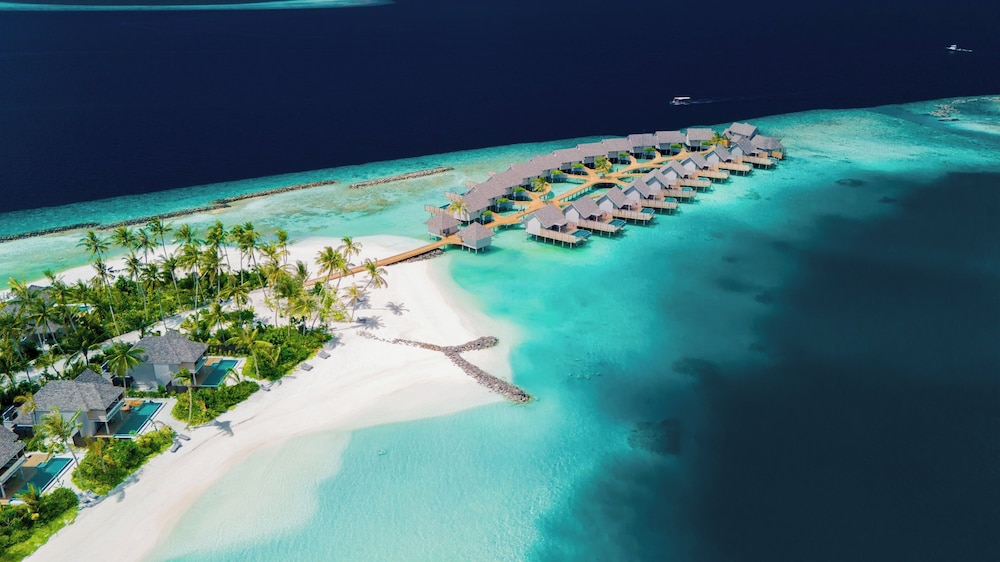
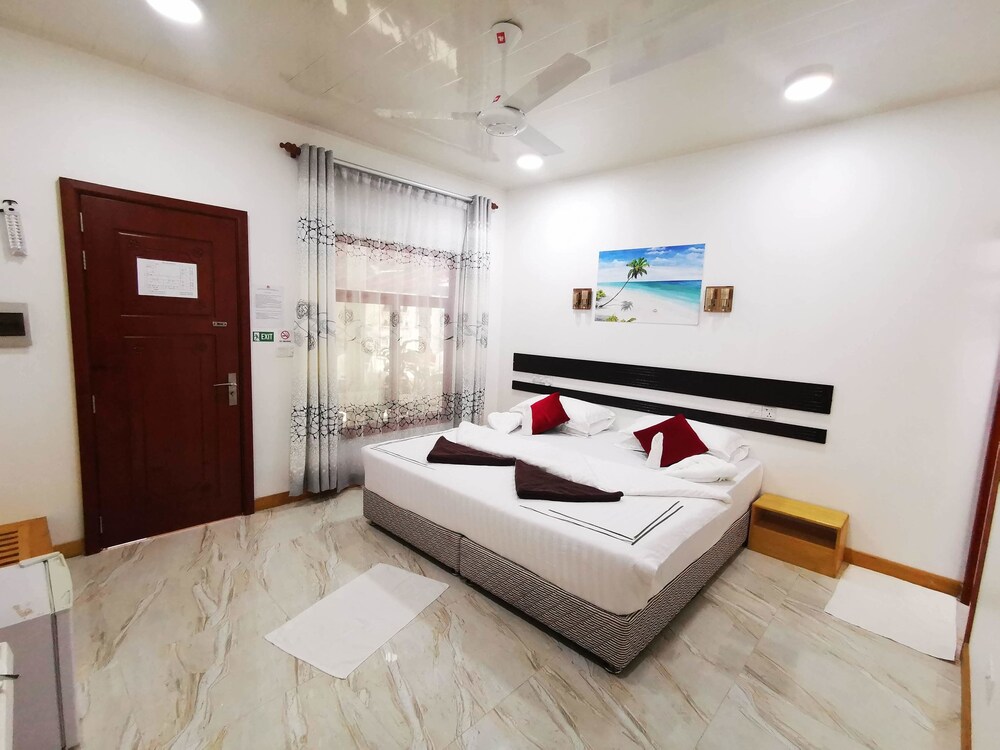
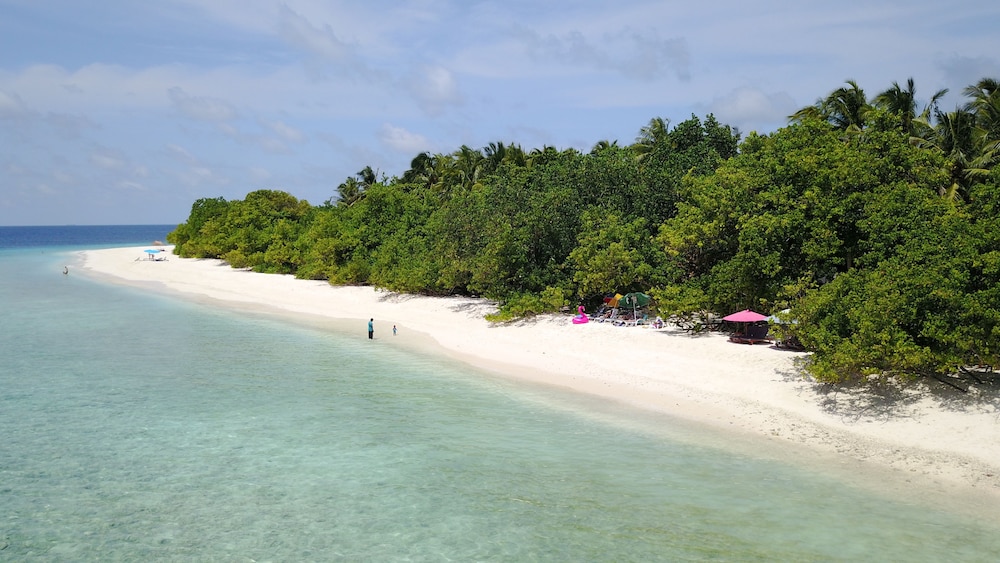
Where to stay
Hotels to consider
FAQ
Questions people ask
Can I walk from Malé to the airport?+
No. Velana International sits on a separate island reached by the Sinamalé Bridge, which carries road traffic but has no pedestrian footway. Take the public ferry from the old harbour, the airport bus, or a taxi. The ferry crossing is short and runs frequently through the day but thins out overnight.
How long does the ferry from Malé to Hulhumalé take?+
Roughly ten to fifteen minutes on the water, with departures several times an hour from early morning to late evening. The terminal on Hulhumalé is a short walk from the main streets. Confirm the last departure time at the jetty on the day, as evening services can be less frequent.
Do I need to book local island ferries in advance?+
Generally no — you buy a ticket at the terminal. The constraint is frequency, not capacity: many routes run only a few times a week, and some skip Fridays. Check the timetable at the jetty on arrival and plan your onward travel around it rather than assuming a daily service.
Which part of Malé should I stay in for walking?+
Henveiru, near the old harbour, puts the ferry terminals, fish market and main commercial streets within ten minutes on foot. Maafannu is quieter but still central. Hulhumalé has wider, easier streets but is a ferry ride from the capital's sights, so it suits a layover rather than sightseeing.
How do I get to Maafushi or Gulhi from Malé?+
Scheduled public ferries from the Villingili terminal serve Maafushi, Gulhi and Guraidhoo, taking roughly thirty to ninety minutes depending on the route, but they do not run daily on every leg. Speedboats are faster and more frequent; most guesthouses arrange them, so ask the property before booking.
Is Malé safe to walk around at night?+
The central streets and the old harbour area are busy into the evening and generally fine for ordinary caution: stick to lit main roads, avoid unlit lanes, and use common sense about your belongings. Heat and traffic, not crime, are the main practical hazards. Ask your hotel which streets they recommend after dark.
What should I pack for walking in Malé?+
Light, loose clothing that covers shoulders and knees, comfortable sandals or shoes, a refillable water bottle and sun protection. The city is hot and humid year-round with little shade. A light rain layer helps in the south-west monsoon months from May to November, when showers are frequent.
When is the best time to visit for calm ferry crossings?+
December to April, the dry north-east monsoon, brings calmer seas and more reliable speedboat schedules. The wetter months from May to November can roughen the water and occasionally cancel smaller boats, so allow extra time on any transfer day and confirm departures the morning you travel.


