
Fuvahmulah sits alone in the southern Maldives, a single island with no lagoon ring around it. Its reef drops steeply into deep water, and that drop is what brings the sharks. Diving here is boat based, advanced and weather dependent.
01
Why the sharks are here
Fuvahmulah is a one-island atoll in the far south, separated from the rest of the country by a long stretch of open ocean. Unlike most Maldivian islands, it has no shallow lagoon ring. The reef edge falls away steeply into deep water close to shore.
That geography brings pelagic life within reach of divers. Tiger sharks are the draw, seen regularly enough that the island has a reputation among divers, but they are wild animals moving through open water. Other large fish pass through the same drop-offs.
The island itself is inhabited, with villages, mosques and schools. It is not a resort island, and that shapes how a diving trip here works.
02
How the diving works
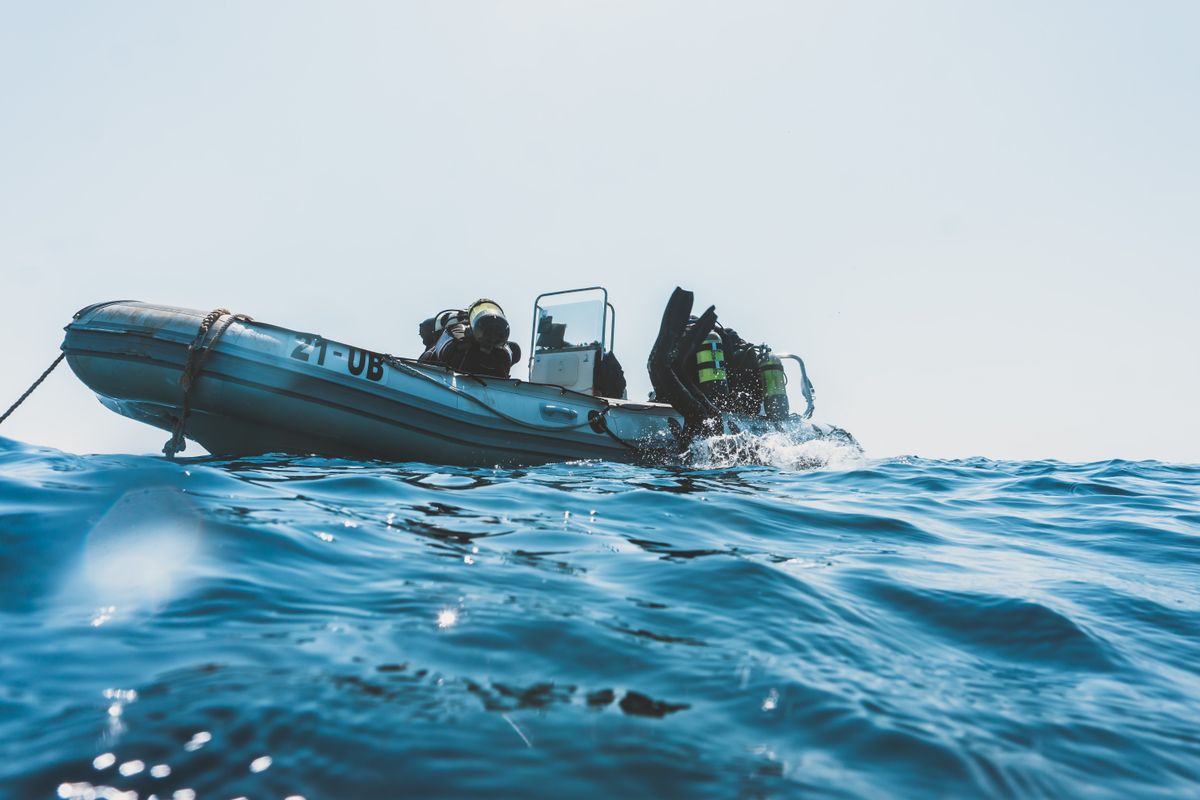
Diving is typically from boats, at sites on the outer reef. Some are known among divers by names such as Tiger Harbour and Tiger Zoo, though exact site names and access arrangements vary between operators and should be confirmed locally.
A typical dive is a blue-water drift or a stationary watch at the reef edge, depending on conditions. The guide briefs the group on where to position, how to stay low and what to do if a shark approaches. Groups are kept small.
Encounters are not guaranteed. Sightings depend on season, current, water temperature and plain luck. Operators generally run multiple dives over several days to improve the odds.
- Boat diving. Sites are reached by boat from the harbour.
- Advanced only. Deep, exposed water and often current.
- Briefing first. Follow the guide's instructions in the water.
- No feeding. Do not feed or touch any animal.
03
Conditions and experience
This is advanced diving. The sites are deep and exposed, with currents that can be strong. Visibility is often good, but the open water and the presence of large sharks mean that buoyancy control and calm matter more than distance covered.
Divers are usually asked to show certification and logged experience before joining these dives. A reputable guide will assess the group and may decline to take divers who are not ready. That is a safety decision, not a judgement.
Maldives regulations cap recreational diving at 30 metres. The dive centre sets its own limits within that, and the guide's briefing takes precedence over any plan made on the boat.

04
Rules in the water
Shark diving here follows strict protocols. Divers keep low, stay close to the reef or seabed where the guide directs, and avoid sudden movements. The aim is to be predictable and uninteresting, so the sharks pass rather than investigate.
Feeding and touching are not permitted. Chasing a shark for a photograph is also discouraged, both for safety and because it changes the animal's behaviour. Guides enforce these rules and may end a dive if they are broken.
General reef rules apply too. Touching or standing on coral harms it, and taking coral or shells out of the country is not allowed. A few simple habits protect the reef that supports the diving.
05
Getting to Fuvahmulah
Fuvahmulah is in the far south and is not reached by speedboat from the airport. Travel usually involves a scheduled domestic flight from Velana International Airport, followed by a short boat transfer to the island.
Domestic flights in the Maldives serve regional airports, and the southern route is long enough that seaplane is not the usual option. Flight schedules and baggage allowances are set by the operators, so confirm details when booking.
The island has guesthouses and dive operators that arrange transfers. Staying several nights is the practical approach, since a single day gives one chance at conditions and sightings.
- Fly, then boat. Domestic flight from Velana, then a short transfer.
- Stay a while. Several nights give more dives and better odds.
- Book through the dive centre. They know current schedules and transfers.
06
Practical points
Fuvahmulah is an inhabited island, so the usual local-island customs apply. Swimwear belongs on designated beaches, shoulders and knees are covered in the village, and alcohol is not available. Importing alcohol and pork is not allowed.
Friday midday prayers close many businesses, and during Ramadan eating and drinking in public in daylight is avoided. These are ordinary courtesies rather than obstacles, and guesthouses explain them on arrival.
The dive centre will advise on equipment, certification cards and insurance. Travel insurance that covers diving to the depths involved is worth arranging before the trip.
FAQ
Questions people ask
Will I definitely see a tiger shark at Fuvahmulah?+
No. Tiger sharks are wild animals and sightings depend on season, current, water conditions and chance. Operators run multiple dives over several days to improve the odds, but no dive can guarantee an encounter. Booking a stay of several nights rather than a single day gives the best chance of being in the water when conditions line up.
What experience do I need for tiger shark diving at Fuvahmulah?+
This is advanced diving in deep, exposed water, often with current. Dive centres usually ask to see certification and logged experience before taking divers to the outer reef sites. Good buoyancy control and comfort in open water matter more than the number of dives on your card. The dive centre sets its own requirements, so ask before booking.
When is the best time to dive with tiger sharks at Fuvahmulah?+
Sightings are reported across the year, and the brief for this page gives no single peak season. Conditions vary with the monsoons, and the dive centre tracks them day by day. Rather than picking a month on the strength of a claim, ask the operator you plan to dive with about recent sightings and typical conditions for your dates.
How do I get to Fuvahmulah from Velana International Airport?+
The usual route is a scheduled domestic flight from Velana International Airport, followed by a short boat transfer. Fuvahmulah is in the far south, so seaplane is not the standard option. Flight schedules, baggage allowances and transfer arrangements are set by the operators, so confirm them with the guesthouse or dive centre when booking.
Is Fuvahmulah a resort island or a local island?+
Fuvahmulah is an inhabited local island, with villages, mosques and schools. There is no resort on the island. Guests stay in guesthouses, alcohol is not available, and swimwear is worn only on designated beaches. Shoulders and knees are covered in the village, and Friday midday prayers close many businesses.
Can I feed or touch the tiger sharks at Fuvahmulah?+
No. Feeding and touching are not permitted, and chasing a shark for a photograph is discouraged. Divers keep low, stay where the guide directs and avoid sudden movements. Guides enforce these rules and may end a dive if they are broken. The approach protects both the divers and the animals, and it is standard practice at the sites.
What depth do the Fuvahmulah tiger shark dives reach?+
Maldives regulations cap recreational diving at 30 metres. The dive centre sets its own limits within that, and the guide's briefing takes precedence over any plan made on the boat. The sites are on the outer reef drop-off, so the profile is often deep and exposed. Divers should be comfortable at depth and carry appropriate insurance.
Do I need special insurance for diving at Fuvahmulah?+
Travel insurance that covers recreational scuba diving to the depths involved is worth arranging before the trip. Policies vary in what they cover, and some exclude diving below a stated depth or require a certain certification level. Check the terms before you travel, and ask the dive centre what documentation they expect to see.
How many nights should I stay on Fuvahmulah for the sharks?+
Several nights is the practical approach. Encounters are not guaranteed on any single dive, and weather can keep boats in harbour. A stay of several nights gives the operator room to choose the best days and to run multiple dives. A single day gives one chance, and the flight and transfer make that a poor use of the journey.


