A seaplane is how many resorts in Baa, Raa and Lhaviyani are reached. The flight is short, low and scenic, and it doubles as the first proper look at the country from above. It also comes with rules on baggage, timing and weather that are worth knowing before you pack.
01
Where it leaves from
Seaplanes leave from the seaplane terminal on Hulhulé, the airport island beside Malé. You do not cross to the capital to board. Arriving passengers are met at the airport and moved to the terminal, and the resort arranges the connection as part of the transfer.
The terminal handles several operators, and desks are assigned by resort rather than by destination alone. Staff direct you to the right counter, weigh bags and give a departure time. There is a waiting area with shade and water while aircraft are loaded and rotated.
Flights are not tied to your international arrival time. Departures are grouped through the day, so a wait at the terminal is normal, and a long one is possible when many guests land at once.
02
The flight itself
The aircraft are small float planes, seating a handful of passengers, and they fly low. Cruising height is modest by airline standards, which keeps the reef visible for most of the journey. On a clear day the water shows its full range of colours, from pale sand to deep blue.
Routes are not always direct. A flight may set down at more than one island to drop and collect passengers, so the same journey can take longer than the map suggests. Stops are normal and are not a sign of a problem.
Window seats are the point of the trip. The seating layout varies by aircraft, and the resort or operator decides who sits where. Ask at the terminal rather than on the pontoon.

03
Baggage and loading
Space and weight on a small aircraft are limited, and allowances are strict. The figure is set by the resort or the operator, not by the international airline, so a generous long-haul allowance means little here. Bags are weighed at the terminal.
Excess baggage is usually handled in one of two ways: a charge to carry it, or a later flight for the bag. Which applies depends on the operator and the day. Soft bags load more easily than hard cases in the small holds.
Anything you need on the first afternoon is better kept in hand luggage. If the hold is tight, a bag can follow on a later rotation, and the resort will usually forward it to your room.
- Weigh-in. Every bag is weighed at the terminal before boarding.
- Soft bags. They stow more easily in the small holds.
- Hand luggage. Keep essentials with you in case a bag follows later.
- Excess. A charge or a later flight, depending on the operator.
04
Weather and delays
Seaplanes fly in daylight only, so the flying day has fixed edges. Departures are also affected by wind, cloud and rain, and by visibility over the water. A passing squall can hold aircraft on the ground for a while.
Delays are part of the system rather than a fault. If a flight cannot run, the operator rebooks passengers, and the resort adjusts the boat transfer at the other end. In the southwest monsoon, windier weather makes a hold more likely.
Build slack into the return. A seaplane transfer on the same day as an international departure is tight, and many resorts advise leaving a night in Malé or Hulhumalé at the end of a trip rather than cutting it fine.
05
What you see below
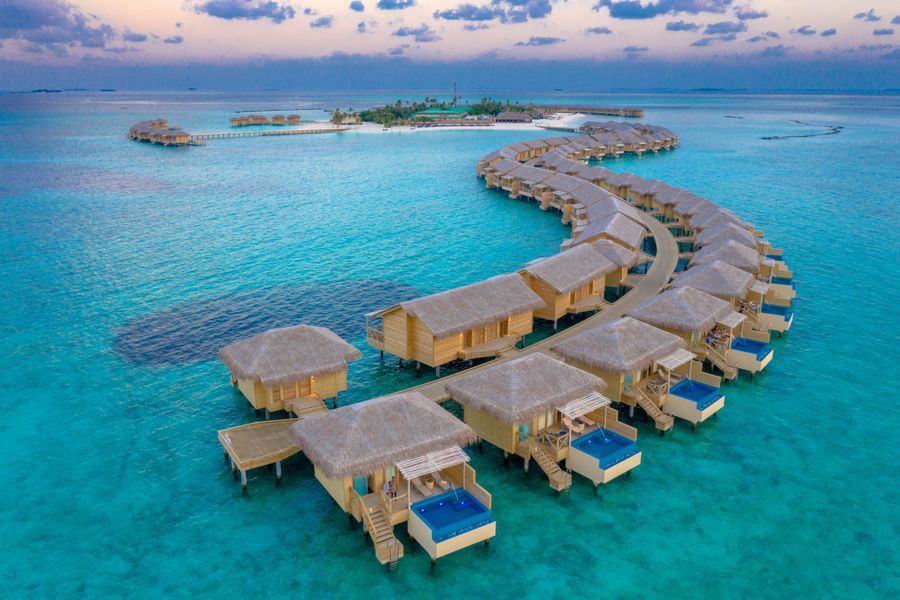
The view is the reason many people choose a seaplane over a domestic flight. From low altitude the atoll structure is clear: a ring of reef with islands along it, a shallow lagoon inside and deep water outside. Sandbanks show as pale patches that shift with the tide.
Reef passes and channels appear as darker lines cut through the rim, and boats working the channels are visible as small wakes. Over Baa and Raa the pattern of islands and reef is easy to follow, and the scale of the atolls is clearer than from the ground.
Light matters. Early and late flights give softer colour and longer shadows on the reef, while the middle of the day is bright and flat. Neither is a reason to choose a time, since the schedule is set by the operator.

06
Sightseeing flights
Some resorts also arrange sightseeing flights, where the aircraft is taken up for the view rather than for a transfer. These are separate from the transfer and are usually booked through the resort. Availability depends on the operator and on the day.
A sightseeing flight follows a set route rather than a schedule of island stops, and the duration is short. Whether one runs at your resort, and what it covers, is best asked on arrival rather than assumed from a brochure.
The same daylight rule applies, and the same weather holds. If a sightseeing flight is cancelled, the resort or operator will explain the options, which may include moving it to another day of the stay.
- Booked through the resort. Ask on arrival, not in advance of the trip.
- Separate from transfer. It is an extra, not part of getting to the island.
- Daylight and weather. The same limits apply as to transfer flights.
- Ask about cover. Routes and duration vary; confirm what is included.
FAQ
Questions people ask
Do seaplane flights in the Maldives run at night?+
No. Seaplanes fly in daylight only, so the flying day has fixed start and end times. Arrivals after dark are usually moved to the next morning, with a night near the airport in the meantime. Speedboats can run day and night, which is one reason atolls close to Velana are often reached by boat.
How much baggage can I take on a Maldives seaplane?+
The allowance is set by the resort or the seaplane operator and is strict, because the aircraft are small. It is separate from your international airline allowance. Confirm the current figure, whether hand luggage is included, and how excess weight is handled before you pack for the trip.
Where does the seaplane leave from in the Maldives?+
Seaplanes leave from the seaplane terminal on Hulhulé, the airport island beside Malé. You do not need to cross to the capital to board. Staff meet arriving passengers at the airport and move them to the terminal, and the resort arranges the connection as part of the transfer.
Does a Maldives seaplane flight stop at other islands?+
Sometimes. A flight may set down at more than one island to drop and collect passengers, so the journey can take longer than the distance suggests. Stops are normal and are planned by the operator. The resort or operator will tell you the expected routing when you check in at the terminal.
Can weather delay a seaplane transfer in the Maldives?+
Yes. Wind, rain, cloud and poor visibility over the water can all hold aircraft on the ground. Delays are part of the system, and operators rebook passengers when a flight cannot run. The southwest monsoon, roughly May to November, brings windier weather and makes a hold more likely.
Which atolls are reached by seaplane in the Maldives?+
Seaplanes serve resorts in Baa, Raa and Lhaviyani among others, wherever the distance from Velana makes a boat impractical. Atolls close to the airport, such as North and South Malé, are usually reached by speedboat instead. The resort confirms which transfer applies to your island.
Should I book a seaplane for the same day as my flight home?+
It is tight. A weather hold on the transfer day can put an international departure at risk, and many resorts advise a night in Malé or Hulhumalé at the end of a trip. Confirm the current cut-off for same-day connections with your resort before booking flights home.
Can I take a sightseeing flight by seaplane in the Maldives?+
Some resorts arrange sightseeing flights, separate from the transfer and usually booked through the resort on arrival. Availability depends on the operator and the day. Whether one runs at your island, and what route it covers, is best asked locally rather than assumed in advance.
What can I see from a seaplane over the Maldives?+
From low altitude the atoll structure is clear: a ring of reef with islands along it, a shallow lagoon inside and deep water outside. Sandbanks show as pale patches, and passes appear as darker lines through the reef. Light and cloud change the view through the day.